
Everything You Need to Know About the Upcoming Honda EVs for India
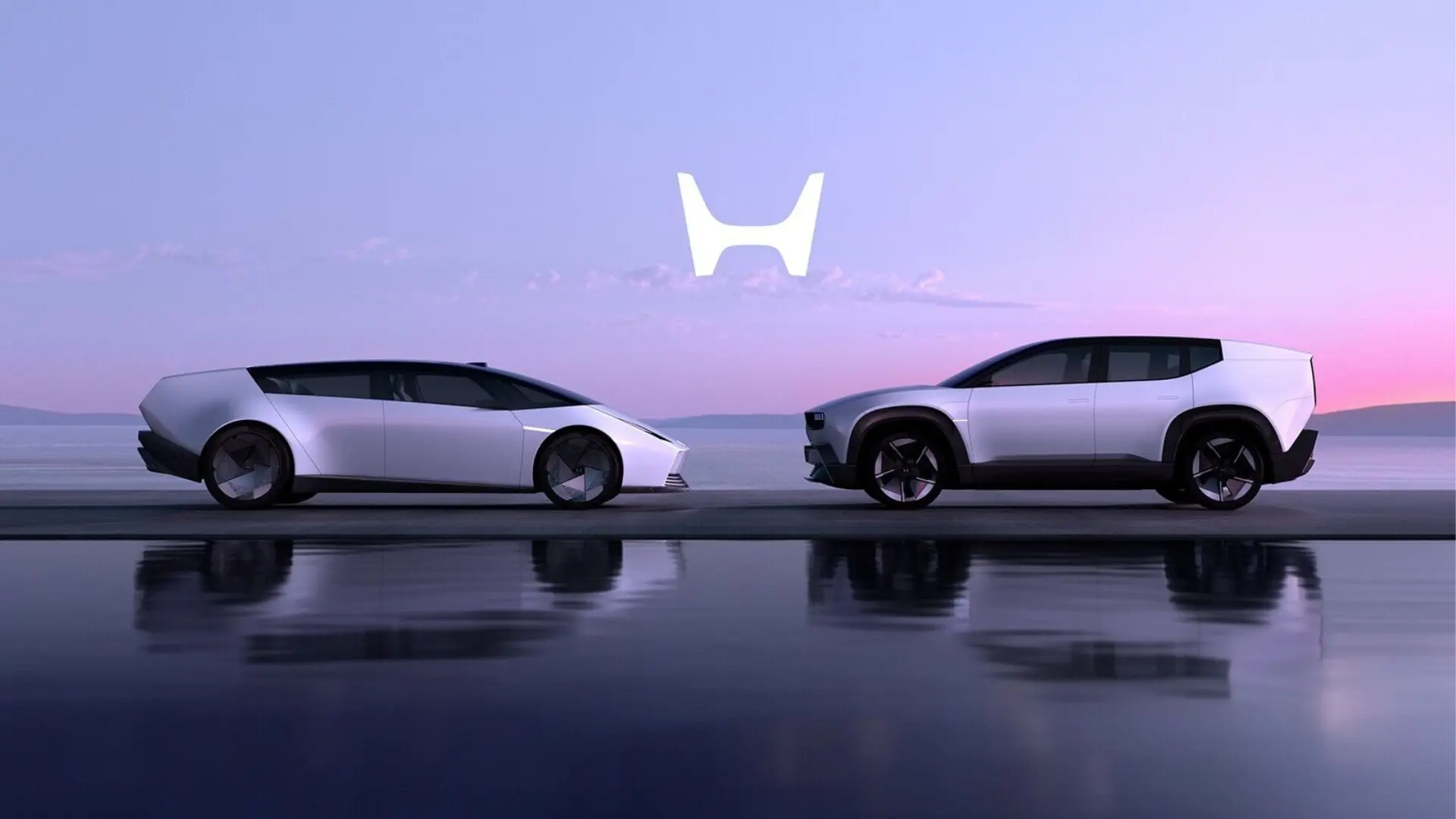
Operating under the internal codename DG9D and anchored within the broader Project ACE (Asian Compact Electric), Honda Cars India is deep into the development of its first few models of localized battery-electric vehicles


Category:
Tag:
- Honda
- Honda EV
- Honda 0 Alpha
For years, Honda approached the global electric vehicle transition with measured caution. While domestic rivals in India like Tata Motors and Mahindra rushed out dedicated EV architectures, and Hyundai solidified its early lead with localized crossovers, Honda kept its focus firmly anchored on petrol i-VTEC reliability and strong hybrid systems.
Rather than rushing a compromised battery-converted model to market, Honda is engineering a multi-pronged EV rollout spanning localized architectures under Project ACE, brand-new ground-up concepts under the global Honda 0 Series, including the 0 Alpha, and high capacity production retooling out of Rajasthan.
Here is a look at what Honda is developing, who is building and testing these electric vehicles, when they are slated to arrive, and what they mean for Indian car buyers.
Project ACE
The core of Honda's mass-market electrification strategy for emerging Asian markets is internally codenamed Project ACE (Asian Compact Electric).
Who Is Building It?
Project ACE is being co-engineered by Honda R&D teams in Tochigi, Japan, in close collaboration with Indian engineers at Honda Cars India Limited (HCIL). The engineering focus is tailored to emerging market constraints like extreme ambient temperatures, unpredictable monsoon waterlogging, and demand for competitive pricing without sacrificing safety ratings and tech features.
The Target Manufacturing Hub
Honda has decided to invest over ₹1,200 crore to retool its Tapukara plant in Alwar, Rajasthan. The facility is being upgraded to handle high-voltage battery pack assembly, localized power electronic integration, and structural underbody welding.
Who Is It Built For?
Unlike traditional localized cars built purely for domestic sales, Honda is planning an initial annual production volume of around 100,000 electric vehicles under this program, with 50% to 70% aimed for export. Just as the petrol Elevate achieved strong export success back to Japan under the badging of the WR-V, Honda’s upcoming made-in-India EVs will be shipped to key right-hand-drive global markets across Southeast Asia, Africa, and Japan.
Possible Upcoming Models
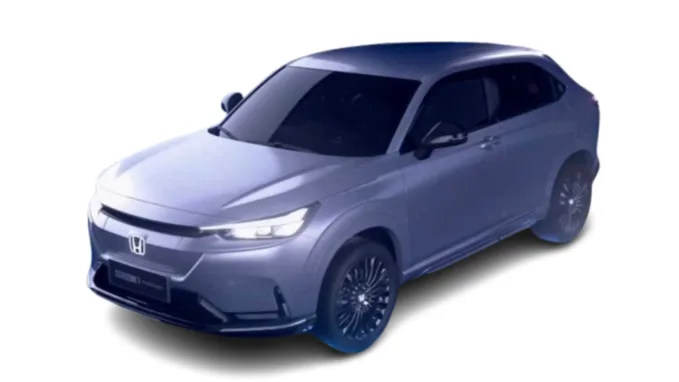
Initial industry reports suggested Honda would simply swap out the petrol powertrain from the Elevate to create a direct EV conversion (codenamed DG9D). Honda's global leadership has shifted focus toward more dedicated, aerodynamic electric concepts.
The Mid-Size Electric SUV Derived from the 0 Alpha Concept
Previewed through Honda’s global "0 Series" showcases, the 0 Alpha-derived electric SUV is emerging as the prime candidate for Honda’s first localized mass-market EV in India.
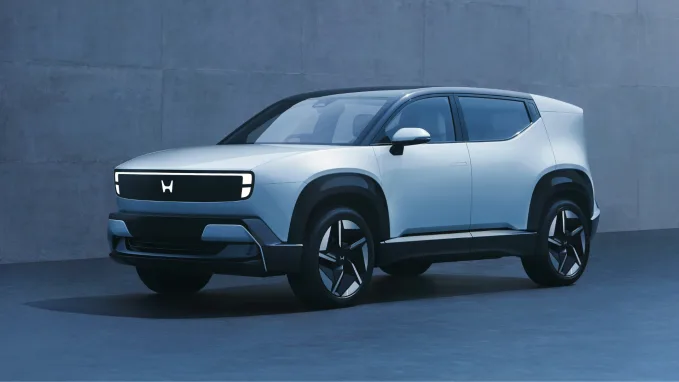
The Design Philosophy: Moving away from boxy traditional SUV silhouettes, the 0 Alpha embraces low drag, extremely short overhangs, a cab-forward glass area, and thin LED lighting signatures.
Target Segment: Measuring roughly 4.3 to 4.4 meters in length, it will slot into the mid-size electric crossover bracket to take on the Hyundai Creta EV, Maruti Suzuki e Vitara, Tata Curvv.ev, and Skoda's upcoming CMP21 EV. Now with the introduction of BaaS with the Mahindra BE 6 Sporteq, the upcoming Honda EV might face very tough competition from that upper end too. (To read more about the Mahindra BE 6 Sporteq and its variant-wise features and pricing, click here)
The unveil and then launch of the 0 Alpha EV might be closer than expected, with testing mules being spotted frequently.
Sub-Compact Urban Crossovers
Beneath the mid-size crossover, Honda's Project ACE framework is engineered to support smaller, sub-4-meter urban crossover bodies. Designed for tier-1 and tier-2 city driving, these entry-level concepts aim to offer an electric alternative to the Tata Punch.ev and globally, the Hyundai Inster EV.
Premium Halo Imports
At the upper end, Honda is evaluating limited Completely Built Unit (CBU) imports of its flagship 0 Series. Serving as a tech showcase for high net-worth buyers, this flagship model should feature ultra-thin battery packaging, steer-by-wire technology, and next-generation autonomous driving software.
How and Where Are They Being Tested?
Honda is subjecting its electric development mules to validation testing across multiple climates:
- Extreme Thermal Testing in Rajasthan: Development prototypes are being tested across extreme 45°C+ summer heat cycles to test battery cooling performance and prevent thermal throttling during rapid DC fast-charging sessions.
- Water Wading and Monsoonal Sealing: Battery enclosures are undergoing IP67/IP69K intrusion testing to withstand severe Indian monsoon flooding and road splash conditions.
- Chassis & Pothole Durability: Because battery packs add significant curb weight, Honda's chassis engineers are recalibrating suspension damping rates, anti-roll bars, and subframe mountings to handle heavily rutted roads without compromising the brand's trademark supple ride quality.
Expected Specifications & Engineering Targets
While final battery chemistries remain under development, Honda is aiming for real-world usability over spec-sheet bragging rights:
- Battery Packaging: Expected pack sizes will likely range between 48 kWh and 60 kWh, leveraging localized Lithium Iron Phosphate (LFP) cells or thermal-stable nickel chemistries.
- Real-World Range: Honda’s engineering benchmark is a realistic driving range of 350 km to 450 km on a single charge, minimizing range drop-off when the high-capacity climate control is running.
- Drivetrain Layout: A front-mounted single electric motor (FWD) delivering between 135 bhp and 170 bhp, tuned for linear, progressive throttle response rather than jerky, neck-snapping acceleration.
- Cabin Experience: Minimalist dashboards featuring dual digital screens, intuitive physical HVAC toggles, eco-friendly interior materials, and Level 2 ADAS powered by camera-and-radar fusion.
Timeline & Expected Launch Window
Honda’s phased electrification roadmap runs alongside its broader 10-model strategy for India leading up to 2030. The rollout begins in 2026 with hybrid and combustion consolidation through halo CBU models like the ZR-V Hybrid and mid-life refreshes for existing nameplates. Between late FY 2026 and 2027, Honda is slated to take the wraps off its maiden localized electric vehicle, marking the production debut of the 0 Alpha and Project ACE-derived electric crossover.
Commercial showroom availability and volume assembly at the Tapukara plant will scale through 2027 and 2028 to satisfy domestic demand and global export quotas. Looking further ahead between 2028 and 2030, Honda plans to expand the architecture into secondary body styles, including sub-compact city EVs and premium flagship electric vehicles.
When the production crossover reaches Indian showrooms around 2027, pricing is expected to sit between ₹17.5 lakh and ₹23 lakh ex-showroom.
The Bottom Line
Honda may not have been the first to the EV party in India, but their methodical, export-driven strategy suggests they are playing the long game. By tying together Japanese engineering, ₹1,200+ crore in factory retooling at Tapukara, and fresh styling from the global 0 Series, Honda’s upcoming EV lineup aims to offer long-term reliability, real-world range, and European-rivalling build quality.
To comment and participate in discussion Click Here
Trending Articles


Recent Articles

India Clears ₹1.86 Lakh Crore Green Energy Corridor Plan With ₹50,000 Crore for Battery Storage
Porsche Cayenne Electric Launched in India at ₹1.77 Crore: 642 Km Range, 400 kW Charging and More
Government's CAFE III Norms Give EVs a 3x Credit, PHEVs 2.5x
Creta Electric Owners Approach Hyundai - File Petition for Lifetime Battery Warranty