Electric Scooter Battery Warranties Compared: What Do Ather, TVS, Bajaj and VIDA Actually Cover?
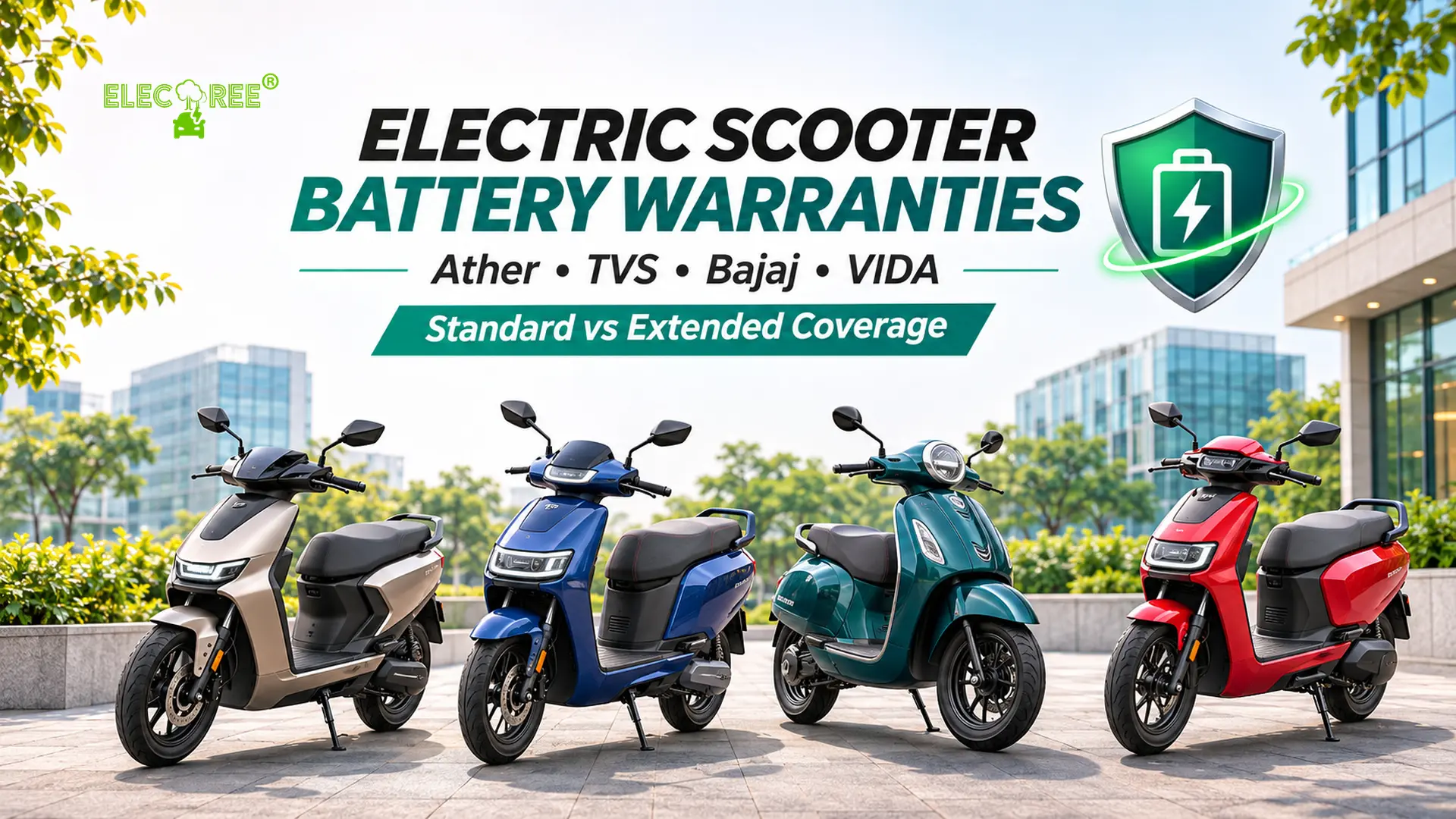
Electric scooter battery warranties can extend up to 10 years, but longer coverage is not always included in the purchase price. We compare the terms offered by Ather, TVS, Bajaj Chetak and VIDA, including battery-health guarantees, extended warranty costs and important exclusions.


Category:
Tag:
- Electric Scooter Battery Warranty
- Ather Energy
- TVS iQube
- Bajaj Chetak
- VIDA VX2
- EV Ownership
A battery warranty is one of the most important things to consider when buying an electric scooter. Yet comparing the protection offered by different manufacturers is not as straightforward as looking at the number of years advertised.
Ather offers extended battery coverage of up to 10 years or 1,00,000 km on eligible scooters. TVS iQube buyers can extend their coverage to five years, while Bajaj Chetak and VIDA also provide additional protection beyond their standard warranty periods.
But these figures do not tell the complete story.
Some warranties protect against manufacturing defects, while others explicitly cover battery degradation below a specified state-of-health threshold. Extended coverage may also require an additional payment, and the kilometre limit can bring the warranty to an end well before the advertised number of years.
For buyers planning to keep their scooters for several years, understanding these differences is essential.
| Scooter / Brand | Standard Battery Warranty | Extended Coverage | Important Detail |
|---|---|---|---|
| Ather Konarc | 3 years / 30,000 km | Up to 10 years / 1,00,000 km | Requires AtherStack Pro plus paid extension; 70% battery-health guarantee on eligible plans |
| Ather Rizta / 450 | 3 years / 30,000 km | 5 years / 60,000 km with Pro; 8-year plan shown for Rizta | Rizta marketing also mentions 10 years; confirm offer for exact scooter |
| TVS iQube 2.3 kWh | 3 years / 30,000 km | Up to 5 years / 50,000 km | Paid two-year / 20,000 km extension; defect-based coverage |
| TVS iQube 3.1, 3.5 & listed ST | 3 years / 50,000 km | Up to 5 years / 70,000 km | Battery-only and wider electrical-component plans cost differently |
| Bajaj Chetak | 3 years / 50,000 km | Up to 5 years / 70,000 km on eligible plans | Authorised servicing and plan eligibility apply |
| VIDA | 3 years / 30,000 km | Up to 5 years / 60,000 km on eligible Battery+ plans | Plan-specific and variant-specific limits; check Warranty++ certificate |
Ather: Up to 10 Years, but the Standard Warranty Is Shorter
Ather offers one of the longest extended battery warranty options among these manufacturers.
Its Konarc electric scooter comes with a standard battery warranty of three years or 30,000 km, whichever comes first.
With AtherStack Pro, battery coverage increases to five years or 60,000 km. Buyers can then choose additional extended battery warranty options.
Ather currently lists two extended coverage options for eligible Konarc scooters:
Eight years or 80,000 km: An additional ₹4,999 with AtherStack Pro.
Ten years or 1,00,000 km: An additional ₹8,999 with AtherStack Pro.
The cost of AtherStack Pro itself is separate from these extension prices.
An important feature is the 70% battery state-of-health guarantee under eligible plans. If the battery's measured health falls below the specified threshold during the covered period, it can qualify for repair or replacement under the warranty terms.
Ather also provides idle-state assurance under applicable extended plans, covering certain deep-discharge situations when the scooter has remained unused for an extended period.
However, the ten-year option should not be treated as standard coverage on every Ather scooter.
For the Rizta, Ather's promotional material advertises ten-year battery protection, while its online configurator currently displays an eight-year extended warranty option. Buyers should confirm the specific plan available for their selected model and variant before purchasing.
TVS iQube: Battery Size Affects Warranty Coverage
TVS provides a useful example of why buyers should check the exact scooter variant.
The TVS iQube 2.3 kWh comes with a standard warranty of three years or 30,000 km, while the manufacturer's published terms list three years or 50,000 km for its 3.1 kWh, 3.5 kWh and selected ST variants.
These warranties cover manufacturing defects affecting components including the battery, motor, controller and charger.
TVS also offers an additional two years and 20,000 km of extended coverage for eligible scooters.
For the iQube 2.3 kWh, this increases the total limit to five years or 50,000 km. For eligible variants with a 50,000 km standard limit, coverage can extend to five years or 70,000 km.
The cost depends on the variant, the protection selected and when the customer purchases it.
For example, TVS lists battery-only extended coverage for the iQube 3.1 kWh at ₹5,999 when purchased within the first 12 months and 10,000 km. The listed price increases for later purchases.
TVS also offers a broader plan covering the battery and certain critical electrical components.
However, its published extended warranty primarily focuses on manufacturing defects. The reviewed terms do not establish an equivalent explicit 70% battery-health guarantee.
That distinction matters for owners concerned about gradual battery degradation rather than a complete battery failure.
Bajaj Chetak: Three-Year Standard Warranty With Optional Extension
Bajaj Chetak provides a standard warranty of three years or 50,000 km, whichever comes earlier, on the lithium-ion battery and covered vehicle components.
The manufacturer also offers extended warranty options.
Customers can purchase an additional year or 10,000 km of coverage, or extend the warranty by two years and 20,000 km.
For eligible scooters, the longer option can take total coverage to five years or 70,000 km.
The cost depends on the selected plan and applicable purchase conditions.
There are two important details in Chetak's published terms.
First, the warranty requires periodic maintenance at authorised service centres according to the recommended schedule.
Second, Bajaj states that replacement parts used during covered repairs may be new, refurbished or reconditioned genuine parts.
The published warranty information does not establish an explicit 70% battery-health guarantee comparable to Ather's extended plans.
Buyers should therefore distinguish coverage for a defective battery from protection against ordinary capacity degradation.
VIDA: Extended Battery Protection, but Check the Variant
Hero MotoCorp's VIDA range has a published standard traction-battery warranty of three years or 30,000 km, whichever comes first.
Its general vehicle warranty is longer at five years or 50,000 km, but this does not automatically mean the battery receives the same standard coverage.
VIDA also offers extended battery protection through its Battery+ programme.
Under eligible plans, the total battery coverage can increase to five years or 60,000 km.
An important feature is protection against battery-performance degradation. VIDA's published Battery+ terms include coverage when battery state of health falls below 70% during the applicable warranty period.
The plan also covers eligible battery failures, repair or replacement labour costs, and transfer of remaining protection to a subsequent owner.
However, customers should pay attention to the exact warranty product offered with their scooter.
VIDA also markets a separate Warranty++ programme, whose provisions and kilometre limits can differ by variant. Buyers of the VX2 Go should particularly confirm which programme applies to their chosen model.
Before purchasing an extension, customers should obtain written confirmation of the battery kilometre limit, degradation coverage, cost and eligibility period.
Why the 70% Battery-Health Guarantee Matters
A battery can continue functioning even after losing a noticeable amount of its original capacity.
For example, imagine an electric scooter that originally provided approximately 100 km of usable range under a particular set of riding conditions.
As the battery ages, its usable capacity may gradually decline. However, a reduction in range does not automatically establish that the battery is defective or eligible for replacement.
A battery-health warranty works differently from a conventional manufacturing-defect warranty.
Where the applicable terms guarantee a minimum 70% state of health, the manufacturer assesses the battery using its prescribed diagnostic process.
If the measured health falls below the specified threshold during the warranty period, the owner may qualify for a covered repair or replacement.
This is why an eight-year warranty with a clear degradation guarantee may provide different protection from a five-year warranty covering manufacturing defects alone.
Battery state of health is also not identical to the percentage of claimed range achieved on the road. Temperature, riding speed, tyre pressure, rider weight and traffic conditions can all affect real-world range.
The Kilometre Limit Can Matter More Than the Number of Years
Most battery warranties end when either the time limit or kilometre limit is reached, whichever happens first.
Consider someone riding approximately 20,000 km annually.
An eight-year warranty limited to 80,000 km could expire after roughly four years of that usage, even though the scooter is nowhere near eight years old.
Someone commuting shorter distances might receive protection for much closer to the full advertised period.
This makes annual mileage an important consideration when evaluating whether an extended warranty is worth purchasing.
The purchase deadline also matters. Some manufacturers allow owners to add protection after delivery, but eligibility may be restricted by vehicle age or kilometres already covered.
Waiting until the standard warranty is about to expire could be too late.
Does the Warranty Transfer When You Sell the Scooter?
Warranty transferability is another important consideration, particularly for owners concerned about resale value.
Ather states that its applicable extended battery warranty can transfer to the next owner. TVS also provides a transfer process for its iQube extended warranty through the dealership and vehicle documents.
VIDA's Battery+ programme explicitly allows the remaining protection to be transferred.
For Chetak, prospective used-scooter buyers should obtain confirmation of the exact transfer terms and remaining coverage for the vehicle concerned.
Transferable warranty protection may make an older electric scooter more attractive, especially when substantial battery coverage remains.
However, the original time limit, kilometre allowance and warranty conditions still apply.
Which Electric Scooter Battery Warranty Makes More Sense?
There is no universal winner simply based on the longest advertised coverage.
Ather makes a strong case for buyers prioritising long-term battery-health protection, particularly through its extended plans that guarantee a minimum state of health. However, the total price must include any required AtherStack Pro package.
TVS iQube offers different coverage limits depending on the battery variant, along with published extended warranty pricing. Buyers should compare battery-only coverage with the broader electrical-component plan.
Bajaj Chetak provides a straightforward three-year standard warranty with additional protection options. Buyers should check maintenance requirements and the exact scope of battery coverage.
VIDA offers transferable battery protection and degradation coverage under eligible extended plans, but the differences between Battery+ and variant-specific Warranty++ provisions deserve attention.
For someone planning to keep an electric scooter beyond its standard warranty period, an extension may be worth considering. But the decision should depend on annual usage, total plan cost, eligibility, battery-health protection and after-sales support.
Before making the final payment, buyers should request the written warranty certificate for their exact scooter variant, including the battery's coverage conditions and any additional plan charges.
The warranty that matters is not necessarily the longest one advertised. It is the one that provides the protection an owner is most likely to need.
Trending Articles
JSW MG Motor Hikes MG Hector Tomahawk EV Prices by ₹75,000 Just Months After Launch
Top 4 Best Selling EVs in October 2026: Punch EV Leads Again
VIDA VX2 and Ather Grid: Which Chargers Work, and Why Charging Stops at 80%
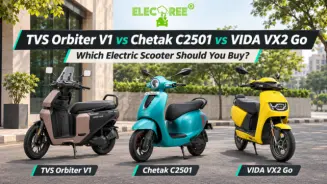
TVS Orbiter V1 vs Bajaj Chetak C2501 vs VIDA VX2 Go: Which Electric Scooter Should You Buy?
Recent Articles