5 Strong Hybrid & PHEV SUVs that might be on their way to India (2026–2027)
While the newly launched Renault Duster Strong Hybrid E-Tech 160 has set off alarm bells for the Maruti Suzuki Grand Vitara and Toyota Urban Cruiser Hyryder, India’s petrol-electric revolution is only getting started.



Category:
Tag:
- Hybrid SUVs India
- PHEV
- Strong Hybrid Cars
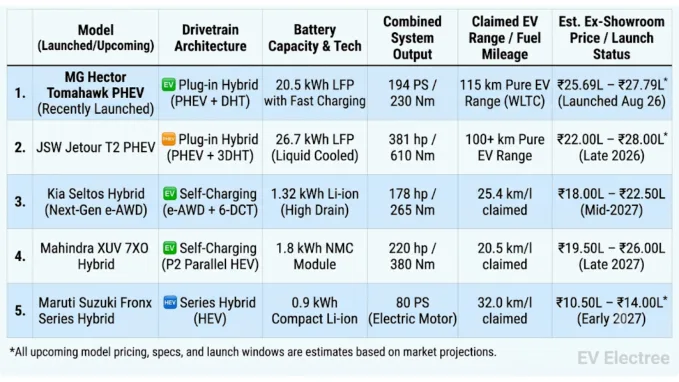
Stricter CAFE III corporate average fuel economy targets and buyer demand for range-anxiety-free efficiency are driving major automakers to deploy next-generation strong hybrids (HEVs) and plug-in hybrids (PHEVs). Here are 5 game-changing hybrid SUVs rumored to set to disrupt the Indian market between late 2026 and 2027.
JSW Jetour T2 PHEV
Target Launch Window: Late 2026 (November / December 2026)
Estimated Ex-Showroom Price: ₹22.00 Lakh – ₹28.00 Lakh
Target Rivals: Mahindra Thar Roxx, Scorpio-N, Tata Harrier, Duster Hybrid
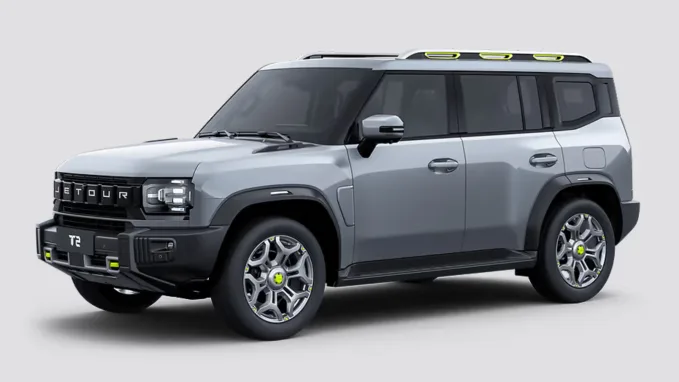
Expected specifications-
Engine Architecture | 1.5L 4-Cylinder Turbo Petrol (TGDI) |
|---|---|
Traction System | Dual Electric Motors + 3-Speed Super Hybrid Transmission (3DHT) |
Combined System Output | 381 hp (386 PS) / 610 Nm Torque |
Battery Tech | 26.7 kWh LFP Pack with Direct Liquid Cooling |
Pure EV & Total Range | Pure EV Range: 100+ km (Claimed) | Total Range: 1,000+ km |
Dimensions (L x W x H) | 4,785 mm x 2,006 mm x 1,875 mm |
Wheelbase & Clearance | Wheelbase: 2,800 mm | Ground Clearance: 220 mm |
Detailed Mechanical Architecture & Battery Engineering
The inaugural offering from the JSW Motors automotive venture brings Chery’s rugged Jetour brand to India in a distinct, boxy 4x4 posture. Unlike self-charging hybrids that rely solely on regenerative braking, the Jetour T2 features a Plug-in Hybrid Electric Vehicle (PHEV) setup. Under the hood sits a 1.5-litre 4-cylinder turbocharged direct-injection (TGDI) petrol engine paired with a dual-electric motor drive layout via a 3-speed Super Hybrid Transmission (DHT).
The powertrain is paired with a heavy-duty 26.7 kWh LFP battery pack mounted along the ladder-frame floor. The electric setup pushes out an immense combined system output of 381 hp (386 PS) and 610 Nm of torque, delivering sports-car-level throttle response while retaining heavy off-road capability.
Chassis, Utility & Features
Built on a high-strength cage body structure using 80% high-strength steel, the T2 PHEV offers 220 mm of unladen ground clearance, a 28-degree approach angle, and a 30-degree departure angle.
The interior is anchored by a 15.6-inch central touchscreen powered by a Qualcomm Snapdragon 8155 chipset, a 10.25-inch digital gauge cluster, a 64-inch panoramic sunroof, 50W wireless fast charging, and a 12-speaker Sony surround-sound audio system. It also comes equipped with an L2 ADAS suite supported by a 540-degree transparent-chassis camera system.
What to Watch out for
The T2 PHEV packs enough onboard energy to deliver 100+ km of pure EV range on a single charge. This allows buyers to conduct daily urban commutes entirely on electric power using home charging, while keeping the 1.5L turbo-petrol engine ready for multi-state highway road trips without range anxiety.
MG Hector Tomahawk PHEV (Already Launched| Deliveries to commence)
Status / Launch: Launched August 26, 2026 | Deliveries to commence November 2026
Ex-Showroom Price: ₹25.69 Lakh – ₹27.79 Lakh (BaaS starting at ₹21.79 Lakh)
Target Rivals: Mahindra XUV 7XO, Hyundai Alcazar, Toyota Innova Hycross
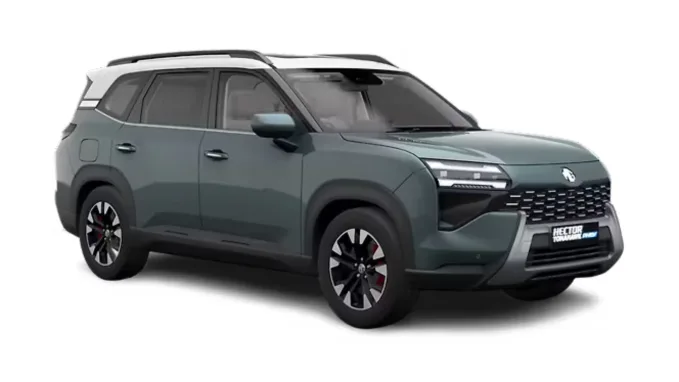
Mechanical Architecture & Battery Tech
Based on SAIC’s global Starlight 560 platform, the Hector Tomahawk is India's first mass-market 3-row Plug-in Hybrid. It pairs a 1.5-litre naturally aspirated 4-cylinder petrol engine with a front-mounted electric drive motor and a 20.5 kWh LFP battery pack. The setup generates a combined output of 194 bhp (197 PS) and 230 Nm of torque.
Why It’s a Game-Changer
It offers a claimed 115 km of pure EV range for zero-emission city driving, alongside a combined driving range exceeding 1,100 km. Features include a 15.6-inch touchscreen, 7-seater layout, panoramic sunroof, and Level-2 ADAS.
Engine Architecture | 1.5L 4-Cylinder Naturally Aspirated Petrol (105 PS / 130 Nm) |
|---|---|
Electric Drive Motor | Front-Axle Synchronous Motor (134 hp / 205 Nm) |
Combined System Output | 194 hp (197 PS) / 230 Nm Torque |
Battery Tech | 20.5 kWh LFP Pack with Fast Charging |
Pure EV & Total Range | Pure EV Range: 110 km (CLTC) | Total Range: 1,100 km |
Dimensions (L x W x H) | 4,745 mm x 1,850 mm x 1,755 mm |
Wheelbase & Seating | Wheelbase: 2,810 mm | Seating Capacity: 6 or 7 Passengers |
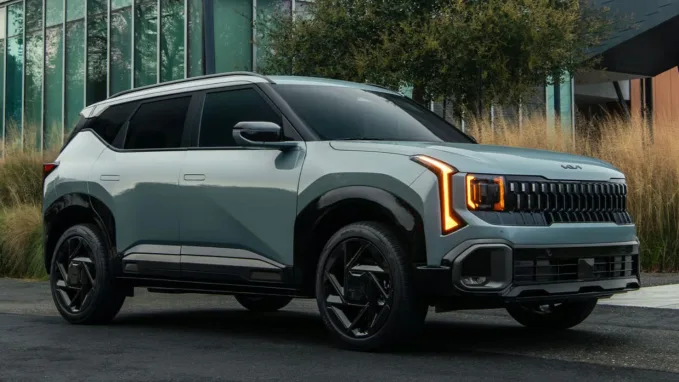
Next-Gen Kia Seltos Hybrid (e-AWD)
Target Launch Window: Mid-2027
Estimated Ex-Showroom Price: ₹18.00 Lakh – ₹22.50 Lakh
Target Rivals: Renault Duster Hybrid, Maruti Suzuki Grand Vitara Hybrid, Hyundai Creta Hybrid
Engine Architecture | 1.6L 4-Cylinder GDI Petrol (102 hp / 141 Nm) |
|---|---|
Traction System | Front Motor (44 hp) + Independent Rear E-Axle Motor (32 hp) |
Combined System Output | 178 hp (178 PS) / 265 Nm Torque |
Transmission Tech | 6-Speed Dual-Clutch Transmission (6-DCT) |
Battery & Drivetrain | 1.32 kWh High-Drain Lithium-Ion (270V) | Smart e-AWD |
Performance & Mileage | Claimed Mileage: 25.4 km/l | 0–100 km/h: 8.8 seconds |
Detailed Mechanical Architecture & Battery Engineering
The second-generation Kia Seltos Hybrid introduces Hyundai-Kia’s global 1.6-litre Smartstream GDI hybrid powertrain. The core power unit is a 1.6-litre 4-cylinder direct-injection petrol engine generating 102 hp and 141 Nm. It is paired with a 6-speed dual-clutch transmission (6-DCT) instead of a traditional CV-type gearbox, preserving stepped-gear shifts.
The headline mechanical feature is the smart e-AWD system. Instead of using a heavy mechanical propeller shaft and transfer case running down the center tunnel, the front axle is powered by a combination of the ICE engine and a 44 hp primary traction motor, while an independent 32 hp electric motor is mounted directly to the rear axle. The combined output reaches 178 hp (178 PS).
Interior Tech & Chassis Dynamic Updates
The Seltos Hybrid features Kia's updated interior design, including dual 12.3-inch curved displays for the instrument cluster and infotainment screen. It introduces Vehicle-to-Load (V2L) capability, allowing owners to run external 220V electronics directly off the vehicle's hybrid battery. Additional features include a shift-by-wire dial, Level-2 ADAS with 17 active features, a 360-degree camera, and dynamic torque vectoring via the rear e-motor.
What to Watch out for
While segment rivals rely on front-wheel-drive CVTs, the Seltos Hybrid combines a 6-speed DCT with an intelligent electronic AWD layout. It delivers instant rear-wheel traction on wet roads and mud without the fuel penalty or weight of a traditional AWD setup, achieving a low 8.8-second 0–100 km/h acceleration time alongside 25+ km/l efficiency.
Mahindra XUV 7XO Hybrid
Target Launch Window: Late 2027
Estimated Ex-Showroom Price: ₹19.50 Lakh – ₹26.00 Lakh
Target Rivals: Tata Safari, MG Hector Plus, Hyundai Alcazar
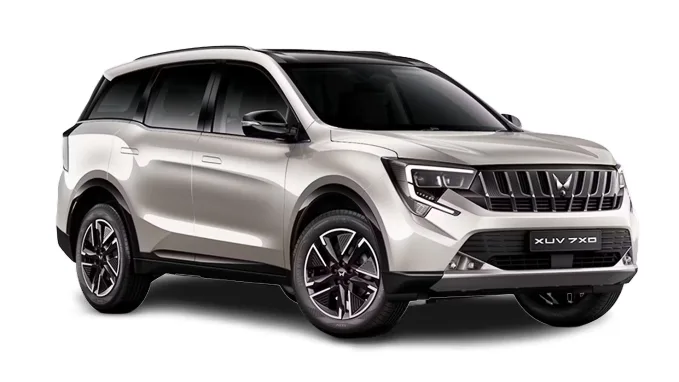
Engine Architecture | 2.0L mStallion TGDI Turbo-Petrol (Miller Cycle Tuned) |
|---|---|
Traction System | High-Output P2 Parallel Hybrid Motor (40 hp) |
Combined System Output | 220 hp (223 PS) / 380 Nm Torque |
Transmission Tech | 6-Speed Torque Converter Automatic |
Battery & Drivetrain | 1.8 kWh High-Rate NMC Battery Module | FWD / Optional AWD |
Performance & Range | Claimed Mileage: 20.5 km/l | Total Fuel Tank Range: ~1,200 km |
Detailed Mechanical Architecture & Battery Engineering
Developed as part of Mahindra's strategy to navigate tightening emission regulations, the XUV 7XO Hybrid builds on the brand's 2.0-litre mStallion TGDI petrol engine architecture. The engine has been re-engineered to run on an efficiency-focused Miller Combustion Cycle with late intake-valve closing.
It is paired with a P2 parallel hybrid architecture, where a high-output electric traction motor is positioned directly between the flywheel and the input shaft of the 6-speed torque-converter automatic transmission.
Powered by a 1.8 kWh NMC battery pack, the hybrid system supplements the turbo-petrol unit at low RPMs, increasing total system output to 220 hp (223 PS) and 380 Nm of torque. The electric motor handles light low-speed maneuvers and provides instant torque fill during gear shifts, eliminating turbo lag.
Safety Architecture & Cabin Technology
The XUV 7XO Hybrid inherits Mahindra's 5-star BNCAP safety platform, reinforced with 7 airbags, structural ultra-high-strength boron steel, and a frequency-selective damping (FSD) suspension system. Inside, the cabin features three 10.25-inch displays stretching across the dashboard, powered by the AdrenoX OS, a 16-speaker Sony 3D immersive audio setup, ventilated front seats, and an expansive skyroof.
What to Watch out for
As diesel engines face increasing restrictions in key metro markets (such as the 10-year usage cap in Delhi-NCR), the XUV 7XO Hybrid offers a high-torque alternative. It matches the low-end pull and long-distance range of the 2.2L mHawk diesel, while delivering a 40% improvement in city fuel efficiency compared to standard turbo-petrol models.
Toyota Urban Cruiser Taisor / Maruti Fronx Strong Hybrid
Target Launch Window: Early 2027
Estimated Ex-Showroom Price: ₹10.50 Lakh – ₹14.00 Lakh
Target Rivals: Tata Nexon iCNG, Hyundai Venue, Brezza, Nissan Magnite
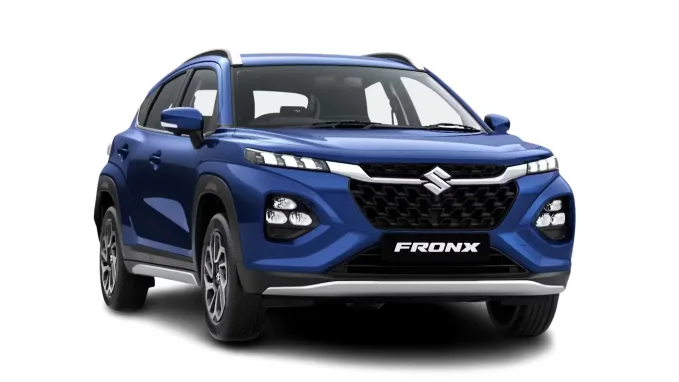
Engine Code & Setup | HEV Z12E 1.2L 3-Cylinder Petrol (Generator Mode Only) |
|---|---|
Electric Traction Motor | Front-Axle Electric Drive Motor (80 hp / 170 Nm Constant) |
Operational Mode | Pure Series Hybrid (Engine does NOT mechanically drive wheels) |
Combined System Output | 80 hp (Electric Drive Output) |
Battery Tech | 0.9 kWh Compact Lithium-Ion Battery Module |
Efficiency & Range | Claimed Fuel Efficiency: 32.0 km/l | Driving Range: ~1,180 km |
Detailed Mechanical Architecture & Battery Engineering
Maruti Suzuki and Toyota are developing an indigenously manufactured, low-cost series hybrid system (code-named HEV Z12E) engineered specifically for sub-4-metre compact crossovers. Unlike complex series-parallel systems (such as Toyota's e-CVT), this setup operates strictly as a Series Hybrid:
The 1.2-litre 3-cylinder Z12E petrol engine has no mechanical connection to the drive wheels. Instead, it runs at its most efficient RPM to turn an onboard generator, supplying electrical energy to a 0.9 kWh battery pack and a front-mounted 80 hp electric drive motor. Because the electric motor directly drives the wheels at all times, the vehicle delivers linear, instant electric acceleration without gear shifts.
Feature Matrix & Cost Optimization
By engineering the generator, inverter, and electric motor locally in India, Maruti Suzuki and Toyota aim to keep the hybrid price premium below ₹1.5 lakh over standard petrol models.
The Fronx and Taisor Strong Hybrids will retain popular mid-spec and top-spec equipment, including a 9-inch SmartPlay Pro+ touchscreen, a pop-up Head-Up Display (HUD), a 360-degree camera, wireless Apple CarPlay/Android Auto, 6 standard airbags, and 16-inch alloy wheels.
What to Watch out for
This series hybrid layout democratizes strong-hybrid technology below the ₹12 lakh price barrier. Delivering a headline-grabbing 32.0 km/l fuel economy, it offers lower per-kilometer running costs than CNG, without compromising boot space or requiring frequent fill-ups at gas stations.
Trending Articles