
Volkswagen's Cheap New EVs Are a Hit in Europe. India Isn't on the Plan.
Volkswagen Group's affordable EV family - the ID.Polo, Skoda Epiq, Cupra Raval, and ID.Cross, has crossed 70,000 orders in Europe, but none of them are currently planned for India, where the group is building a separate, China-derived platform instead.


Category:
Tag:
- Volkswagen
- Skoda Epiq
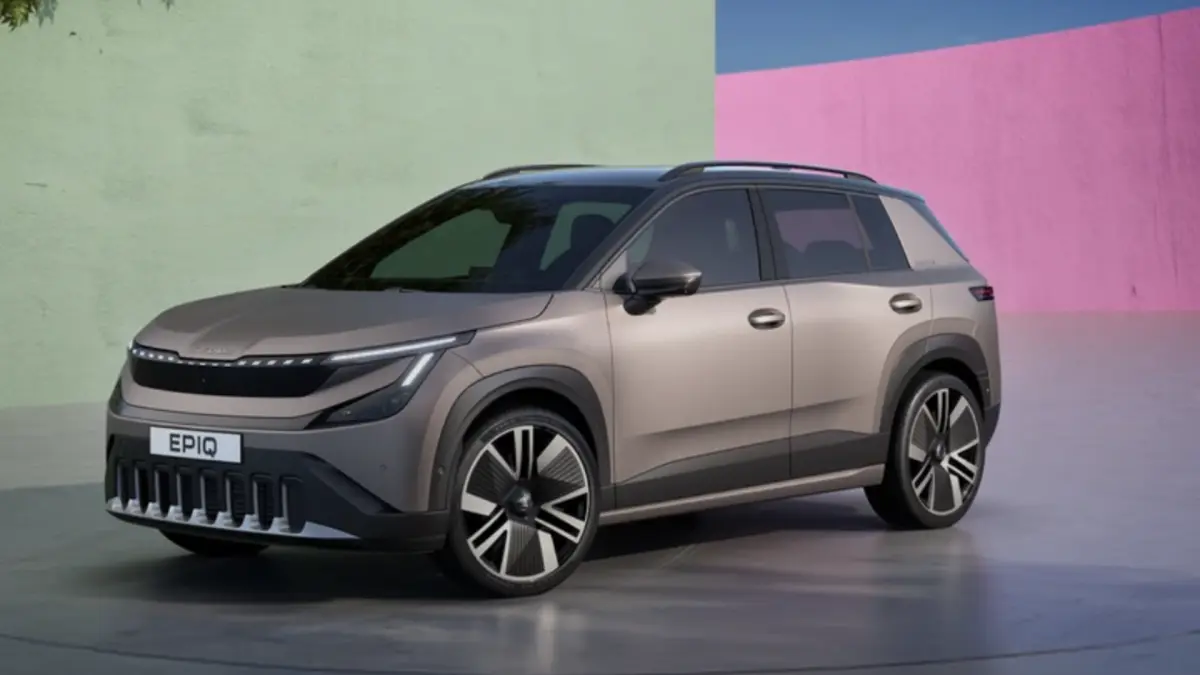
Volkswagen's bet on affordable electric cars is paying off - in Europe, at least. The company said this week that its new "Electric Urban Car Family" - the VW ID.Polo, Skoda Epiq and Cupra Raval, soon joined by the VW ID.Cross, has pulled in more than 70,000 orders. "Our order book also reflects a positive trend: more than 70,000 orders for our new Electric Urban Car Family," CEO Oliver Blume said, releasing the group's half-year results on July 24. Volkswagen has separately called the response "significantly exceeding expectations."
None of these four cars are currently planned for India, and there's no confirmed timeline for any of them to arrive here. The reason is worth understanding, because it isn't simply that Volkswagen forgot about the country.
All four cars share the same underlying platform, a stripped-down, front-wheel-drive version of Volkswagen's MEB electric architecture called MEB+. They're built at two factories in Spain - Martorell, near Barcelona, and Pamplona, and they're priced to compete directly with China's cheap EVs.
| Model | Body style | Starting price | Range (top battery) |
|---|---|---|---|
| VW ID.Polo | Hatchback | €24,995 | ~450 km |
| Cupra Raval | Sportier hatchback | ~€26,000 | ~322 km (real-world) |
| Skoda Epiq | Crossover | ~€25,000–26,000 | 430 km (Epiq 55, WLTP) |
| VW ID.Cross | Crossover SUV | €28,000 | ~420 km |
Under the skin, they're nearly identical. Entry versions get a 32 kWh battery using cheaper LFP cell chemistry, good for roughly 290 km of range. Step up to the optional 52 kWh pack and range climbs toward the figures above. Power outputs run from about 114 hp on the base cars to 222 hp on the quickest versions, and every one of them drives the front wheels only, a deliberate simplification that Volkswagen says saved the group roughly €600 million by sharing one platform across three brands instead of building three separate ones.
That shared-platform math is exactly what makes a sub-€25,000 Volkswagen possible in Europe. According to industry reporting on Volkswagen's India strategy, it's also the same math that ruled out bringing this platform to India at all.
Volkswagen had actually looked at localising a related platform, called MEB21G, for production in India, with talk of exporting more than half a million vehicles a year out of the group's Chakan plant. That plan didn't work out financially. Industry reports on Volkswagen's India strategy say the group concluded localising MEB21G simply wasn't financially viable here, and shelved it.
In its place, Skoda-Volkswagen India is now building something different: a new architecture called the India Main Platform, based not on Europe's MEB+ but on Volkswagen's China platform, adapted for Indian costs and Indian suppliers. Four electric SUVs are planned on it, a compact and a mid-size model each for Volkswagen and Skoda, but none of them exist yet. Skoda Auto India has said it's aiming for a local EV launch in 2027-28, once it has a local supplier base in place. Piyush Arora, the company's India CEO, has said electric vehicles should make up 17 to 20 percent of the group's India sales by 2030, with fully localised EVs for both brands arriving "before the end of this decade."
That puts India three or four years behind a Europe that already has 70,000 EV orders in a single quarter.
It isn't that Volkswagen is ignoring India. It's that the company looked at the exact playbook working so well in Europe - one platform, shared across brands, built at scale, priced under €25,000, and decided it doesn't translate here. What's coming instead is being built from a different starting point entirely, aimed at Indian price points rather than adapted from a European one. Whether that approach can match what Volkswagen just pulled off in Spain is a question nobody will be able to answer until the first India-built EV actually reaches a showroom, and on the current timeline, that's still years away.
There's a reason Volkswagen's India ambitions keep running into that kind of delay. Bloomberg reported on July 21 that Volkswagen is in advanced talks to sell a majority stake in Skoda Auto Volkswagen India to India's JSW Group, a deal that could close within weeks and would see Volkswagen hand over a share of control, and funding - to a local partner after two decades of struggling to build scale in India on its own; one report on the talks also notes Volkswagen has already cut its planned spending on the new India-specific EV platform to roughly $700 million, down from an earlier $1 billion commitment.
For context: the cheapest EVs on sale in India right now
| Model | Starting price (ex-showroom, official) | Body style |
|---|---|---|
| Tata Tiago EV | ₹6.99 lakh | Hatchback |
| MG Comet EV | ₹7.80 lakh | Micro city car |
| Tata Punch EV | ₹9.69 lakh | Compact SUV |
| Citroën ë-C3 | ₹11.61 lakh | Hatchback |
| Tata Tigor EV | ₹12.49 lakh | Sedan |
Even the ID.Polo's much-praised €24,995 starting price in Europe, roughly ₹27.4 lakh at the July 2026 exchange rate of about ₹109.8 to the euro, would land it at nearly four times what India's cheapest EV, the Tata Tiago EV, costs today. That gap says as much about why Volkswagen sees this platform as a poor fit for India as anything in its own strategy documents.
To comment and participate in discussion Click Here
Recent Articles

Trending Articles
Kerala Makes EVs More Affordable: Revised Road Tax Structure to Accelerate Adoption
India Car Sales by Fuel Type — March 2026: EV Share Hits New High, CNG Surges, Petrol Loses Ground
No Fire Safety Certificate Will Be Declined Over EV Chargers, Says Haryana Fire Department
Haryana Releases Draft Fire Safety Guidelines for EV Charging