
Buy an EV Before 30 September and Save Tax? Here Is What the Claim Really Means
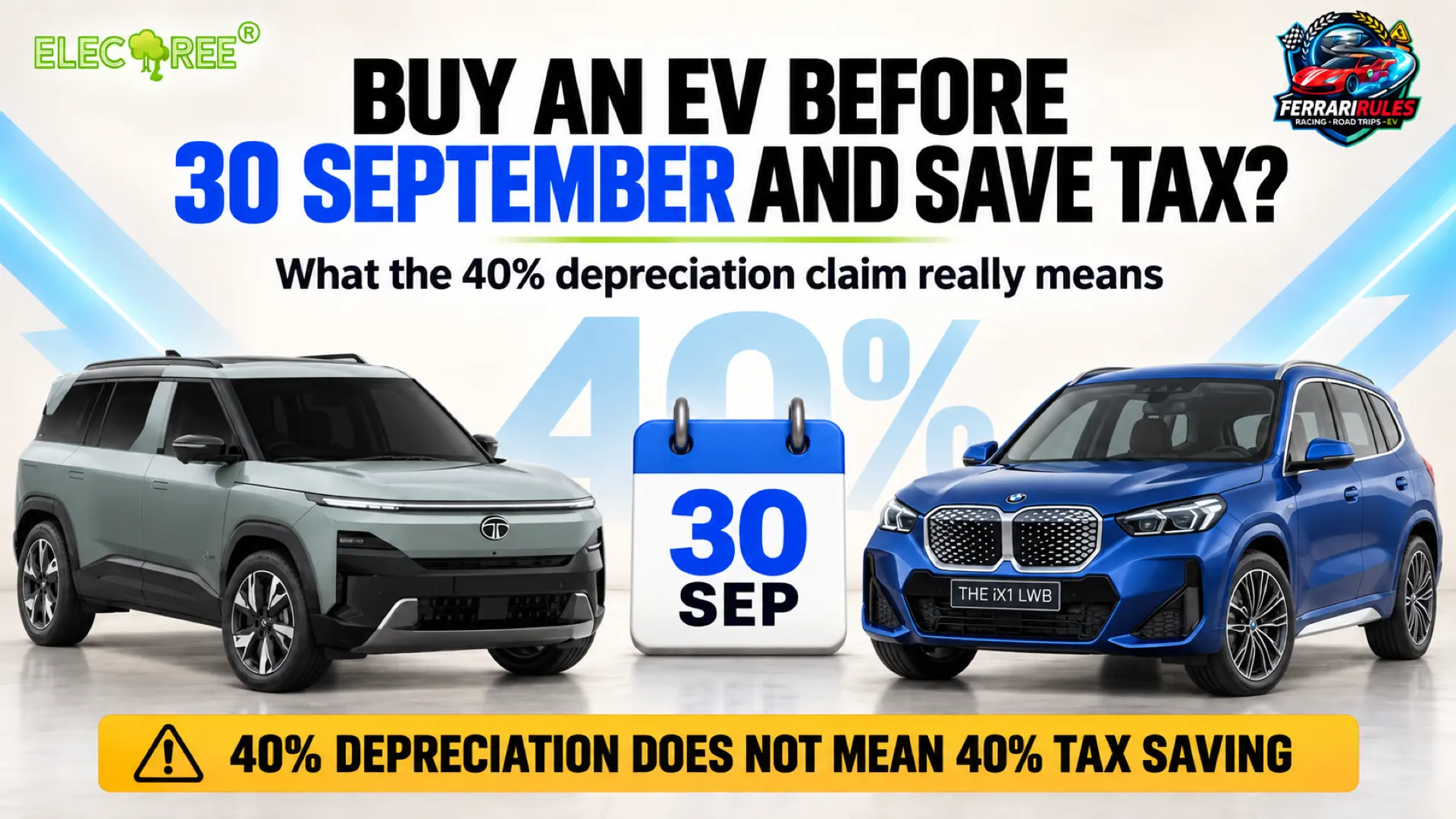
EV manufacturers are asking businesses to purchase electric vehicles before 30 September to claim 40% depreciation. Here is what the claim means, who can use it and how the potential tax benefit changes over five years.


Category:
Tag:
- EV taxation
- EV depreciation
- electric cars
You would have seen advertisements from multiple EV manufacturers asking businesses to buy an electric vehicle before 30 September and save a substantial amount in income tax.
The promise is usually built around one headline number: 40% depreciation.
The claim is based on an actual tax provision. Electrically operated vehicles, including battery-powered and fuel-cell vehicles, are eligible for depreciation at 40% on the written-down value when they are owned and used for business or professional purposes.
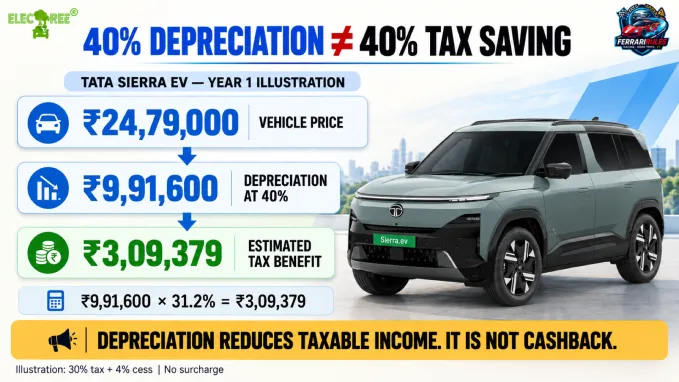
But 40% depreciation does not mean the government returns 40% of the EV's price. It is a deduction from taxable business income. The amount actually saved depends on the buyer's applicable tax rate.
Why manufacturers are highlighting 30 September?
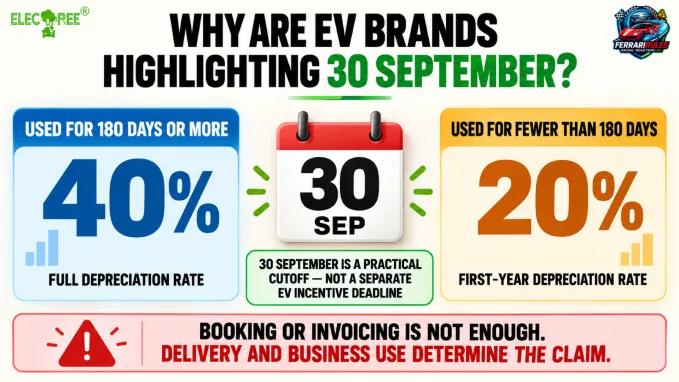
The date is connected to the 180-day rule.
When an eligible EV is put to use for at least 180 days during the financial year, the business can generally claim depreciation at the full 40% rate. When it is used for fewer than 180 days, the first-year claim is normally limited to half of that rate, or 20%.
Manufacturers use 30 September as a simple and conservative cutoff because an EV put to use by then will comfortably complete 180 days before the financial year ends on 31 March.
However, 30 September is not a special government deadline for an EV incentive. The rule is based on when the vehicle is put to use, not merely when it is booked or invoiced.
A business that pays for an EV before 30 September but receives and starts using it later may not qualify for the full first-year depreciation.
How much tax can a business actually save?
Consider two EVs at very different price points: the Tata Sierra EV Empowered A, with an ex-showroom price of ₹24.79 lakh, and the BMW iX1 eDrive20L, priced at ₹52.70 lakh ex-showroom.
If the vehicles are put to use for at least 180 days, the full 40% depreciation calculation would be:
| EV | Illustrative cost | Depreciation at 40% | Approximate tax saving at 30% plus 4% cess |
|---|---|---|---|
| Tata Sierra EV Empowered A | ₹24.79 lakh | ₹9.92 lakh | ₹3.09 lakh |
| BMW iX1 eDrive20L | ₹52.70 lakh | ₹21.08 lakh | ₹6.58 lakh |
The depreciation amount is deducted from taxable business income. It is not returned to the buyer as a refund.
If either vehicle is put to use for fewer than 180 days, the first-year claim would generally be limited to 20%:
| EV | Depreciation at 20% | Approximate tax saving at 30% plus 4% cess |
|---|---|---|
| Tata Sierra EV Empowered A | ₹4.96 lakh | ₹1.55 lakh |
| BMW iX1 eDrive20L | ₹10.54 lakh | ₹3.29 lakh |
These simplified illustrations use the stated ex-showroom prices as the assumed eligible cost and an effective tax rate of 31.2%, calculated as 30% tax plus 4% health and education cess on that tax. No surcharge has been included. The actual depreciable cost and tax saving will depend on the buyer's facts and applicable tax treatment.
What could the tax benefit look like over five years?
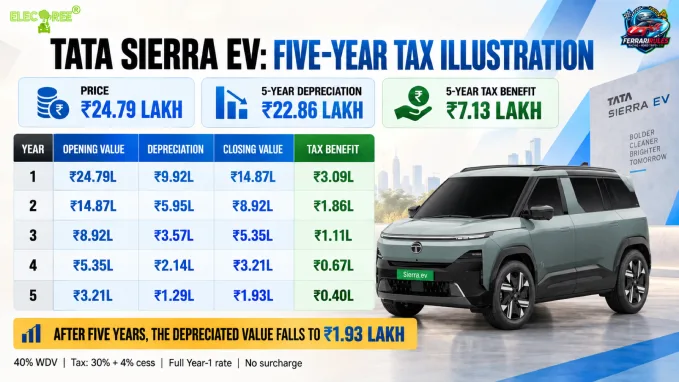
Tax depreciation is calculated on the vehicle's written-down value. This means the deduction and related tax benefit become smaller each year.
Tata Sierra EV Empowered A 75
BMW iX1 eDrive20L
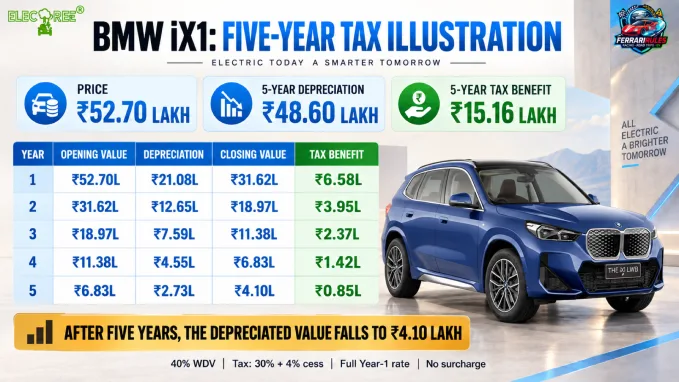
The illustration assumes that the vehicle qualifies for the full 40% rate in Year 1, continues to be used for business, remains in the relevant depreciation block and is not sold during the five-year period. It also assumes that the taxpayer has sufficient taxable income to use the deduction. Actual results can differ.
Who can claim the 40% depreciation?
The claim is meant for taxpayers using the EV for business or professional purposes. This can include:
· companies purchasing EVs for official use;
· partnership firms using EVs in their operations;
· proprietors using an EV for their business; and
· professionals who maintain accounts and use the vehicle for their work.
The purchase invoice, registration and accounting records should support the ownership of the vehicle. The business must also be able to show that the EV was genuinely used for its activities.
A salaried individual buying an EV purely for personal use cannot claim business depreciation.
Is buying the EV in a company name enough?
No. Buying and registering the EV in the company or business name is important evidence, but it does not complete the claim by itself.
The EV should be recorded as a business asset and used for business purposes. The taxpayer should be able to support the purchase cost, delivery date and date on which the vehicle was first used.
Where the EV is also used personally by an owner, director or employee, the business should maintain reasonable records and obtain tax advice on the personal-use element.
What records should the business keep?
A business planning to claim the depreciation should retain:
· the purchase invoice and payment records;
· registration and insurance documents;
· proof of delivery;
· the date the EV was put to use;
· the accounting entry recording it as a business asset; and
· basic records supporting business use.
These documents are particularly important when the EV is bought close to 30 September.
What the advertisements do not explain
The advertisements are correct that an eligible business EV can receive 40% tax depreciation. But three qualifications matter:
1. It is not a 40% cashback or refund. It reduces taxable income.
2. The EV must be owned and used for business or professional purposes. A personal EV does not qualify.
3. The vehicle must be put to use for at least 180 days for the full first-year rate. An invoice dated before 30 September is not sufficient if delivery or use starts later.
The conclusion
For a business already planning to buy an EV, completing the purchase and putting the vehicle to use before the end of September can produce a larger first-year depreciation claim.
A qualifying EV can receive 40% depreciation when it is used for at least 180 days. If it is used for fewer than 180 days, the first-year rate is generally 20%.
The benefit can be meaningful, but the decision should still be based on whether the business needs the vehicle. Buying an EV only to obtain a tax deduction means spending the full purchase price to save only a fraction of that amount in tax.
This article provides general information based on Indian tax provisions reviewed on 23 September 2026. The final treatment depends on the taxpayer's facts and applicable law. Businesses should consult a chartered accountant or tax professional before claiming depreciation.
To comment and participate in discussion Click Here
Recent Articles



Trending Articles
Kerala Makes EVs More Affordable: Revised Road Tax Structure to Accelerate Adoption

India Car Sales by Fuel Type — March 2026: EV Share Hits New High, CNG Surges, Petrol Loses Ground
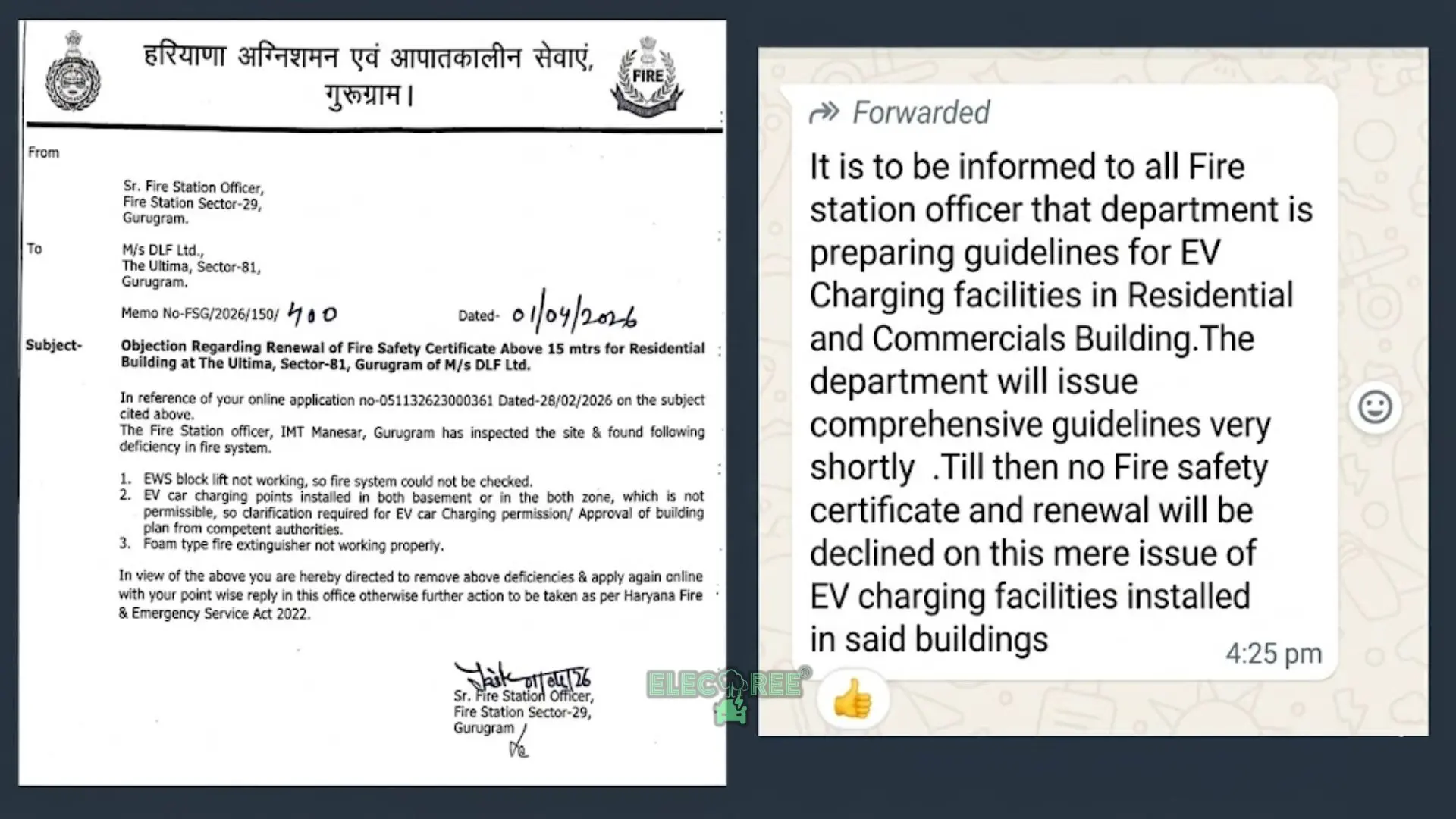
No Fire Safety Certificate Will Be Declined Over EV Chargers, Says Haryana Fire Department
Haryana Releases Draft Fire Safety Guidelines for EV Charging