Tata Keeps Hybrids in Reserve. Its EV Numbers Explain Why
Tata Motors is sticking with its EV-first strategy as strong sales and rising EV adoption give it little reason to prioritise hybrids for now.


Category:
Tag:
- Tata EV strategy
Tata Motors isn't ruling out hybrids. It just doesn't see a reason to make them a priority yet.
Speaking after Tata Motors Passenger Vehicles' Q1 FY27 results on August 13, Managing Director and CEO Shailesh Chandra said the company would continue to focus on electric vehicles while keeping hybrid technology ready if market conditions change. Autocar Professional reported the comments as part of Tata's continued EV-first strategy. The position itself isn't new, but the latest numbers give Tata a strong reason to stay on its current path.
The Numbers Make the Case
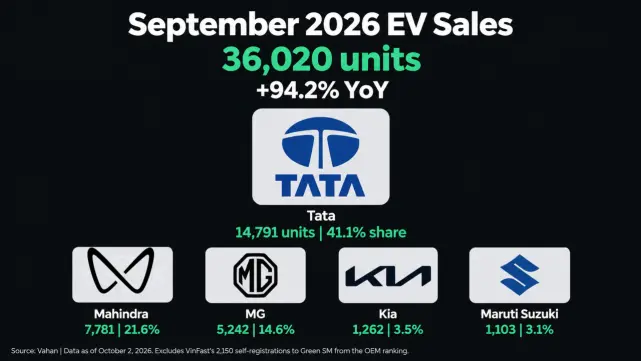
Tata recorded 34,467 EV sales in Q1 FY27, up 112% from 16,231 units in the same period last year. EVs accounted for around 19% of Tata's passenger-vehicle sales during the quarter. Retail registrations tell a similar story. Vahan data put Tata's EV registrations at 32,283 units in Q1 FY27, giving it around 39% of India's electric passenger-vehicle market during the quarter. These figures measure different stages of the sales process, so they shouldn't be treated as competing numbers. Together, however, they show how quickly Tata's EV business is expanding.
July added another milestone. Tata crossed 15,000 EV wholesales in a single month for the first time, recording 15,217 units. EVs accounted for around 24% of its passenger-vehicle sales that month.
Tata's Problem Is Starting to Look Different
A few years ago, the challenge for EV manufacturers was convincing customers to switch from petrol and diesel. Tata now has a different challenge: producing enough EVs as demand grows.
Chandra had already highlighted this in May, saying EV demand was running at around 2-2.5 times Tata's then production capacity. At the time, the company was producing roughly 9,000-10,000 EVs a month and was working towards increasing that figure. Chandra also linked part of the recent rise in EV demand to higher fuel prices following the West Asia conflict, saying Tata's EV bookings had increased around 2-2.5 times over the preceding two months.
That doesn't mean every EV Tata launches will automatically succeed. But it does mean the company is no longer trying to create demand for electric cars from scratch.
So Why Would Tata Need a Hybrid?
This is where Tata's thinking becomes interesting. Chandra has pointed to a widening gap between the two technologies. According to his assessment, hybrid penetration has remained around 1.5-2%, while EV penetration has moved beyond 8%. Tata expects EV penetration to reach around 10% of India's passenger-vehicle market by the end of FY27.
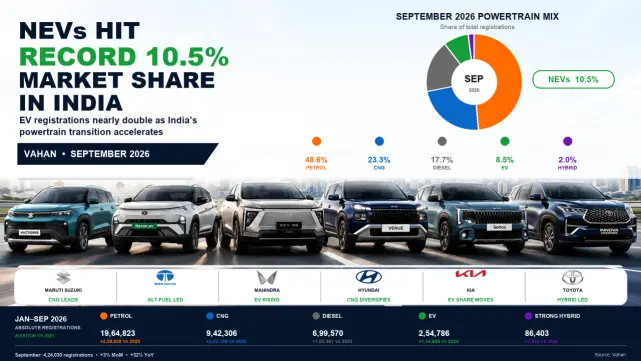
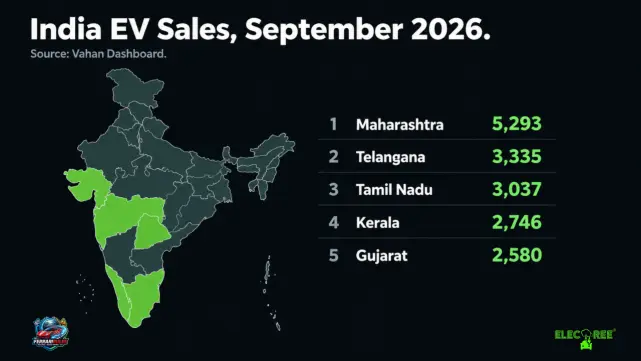
That fits into a wider change in India's powertrain mix. As ElecTree analysed in its recent “India's Powertrain Reset” story, EVs are gaining ground alongside hybrids and CNG rather than simply replacing petrol overnight.
For Tata, the calculation is fairly straightforward. Why divert significant engineering and investment resources towards another powertrain when the technology it has already committed to is growing much faster? That doesn't mean Tata thinks hybrids are a bad product. The company has said it has the technology and can deploy it if market conditions change. For now, hybrid technology is essentially an option Tata wants to keep available, rather than a direction it wants to pursue immediately.
There Is a Regulatory Angle Too
The hybrid debate isn't only about customer demand. India's Corporate Average Fuel Efficiency, or CAFE, regulations push manufacturers towards improving the overall efficiency of their fleets. Hybrids can help manufacturers achieve that while retaining an internal-combustion engine.
Tata's argument is that EVs provide a more direct route towards improving fleet efficiency and reducing emissions. That gives the company another reason to continue prioritising EVs rather than introducing hybrids simply because other manufacturers are doing so.
Tata's Lead Won't Protect It Forever
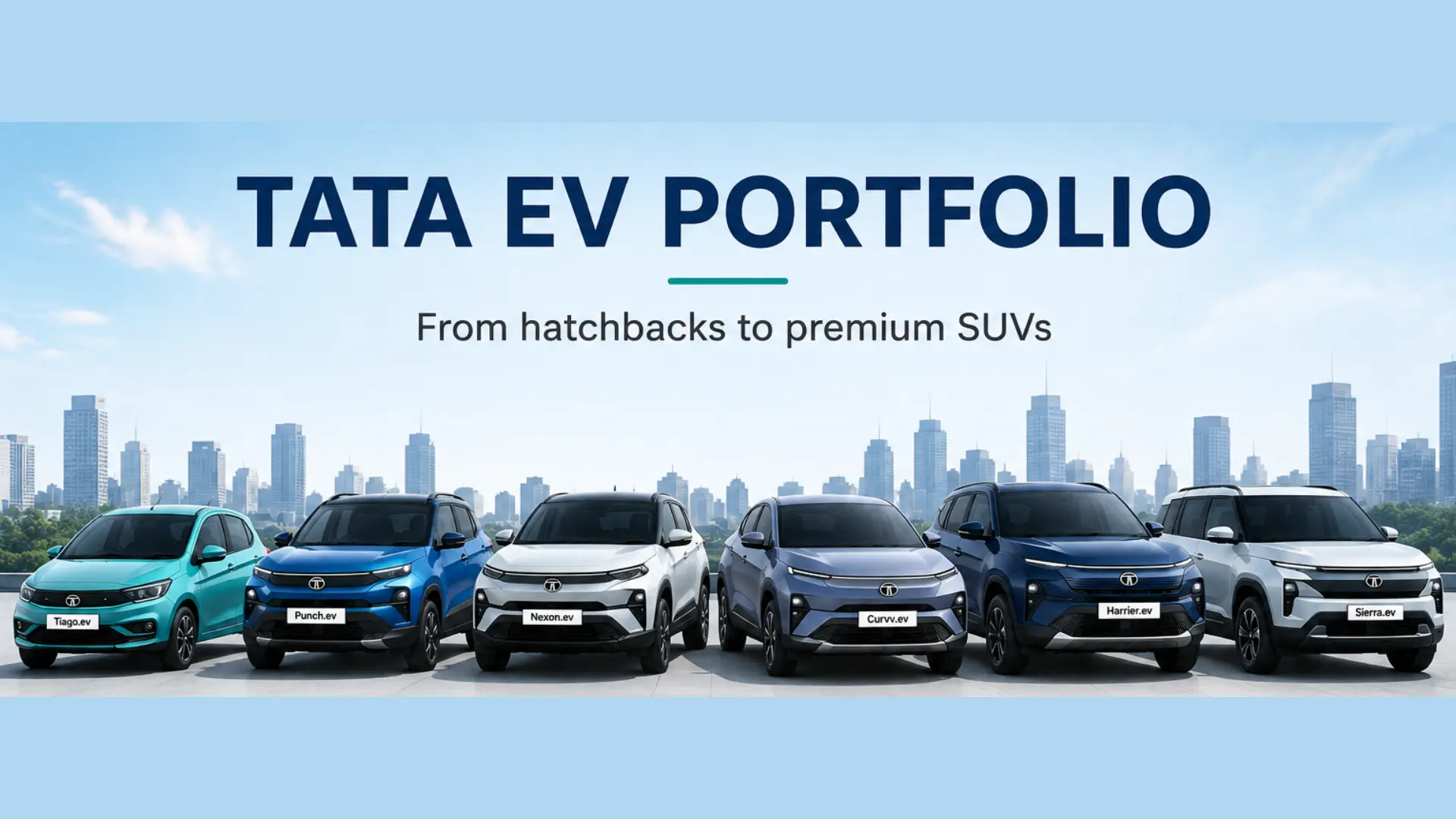
Tata's early EV investment has given it one major advantage: breadth. Its current EV portfolio includes the Tiago EV, Punch EV, Nexon EV, Curvv EV, Harrier EV and Sierra EV, allowing it to target several price points and SUV segments.
But competitors are catching up. Mahindra has built strong momentum with its newer electric SUVs, Hyundai is preparing more mass-market EVs, and MG is expanding its electric range with the new ADAPT platform. Tata has indicated that it is targeting around 40% EV market share in FY27. That is ambitious, especially as competitors continue expanding their portfolios.
The Bet Still Has to Be Earned
For now, Tata's decision to keep hybrids in reserve looks less like a rejection of the technology and more like a calculated choice. Its EV volumes are growing, its portfolio is expanding and demand remains strong. Under those circumstances, there is little reason for Tata to split its focus.
But its lead isn't permanent. As competition increases, Tata will have to keep improving pricing, range, charging, technology and ownership experience.
Tata isn't keeping hybrids out because it doesn't believe in them. It's keeping them in reserve because, right now, its own EV numbers are giving it very little reason to change course.
To comment and participate in discussion Click Here
Trending Articles