
MG Releases Official Statement on Windsor's Ludhiana Incident
MG Motor's official statement outlines the reasons why the Windsor rolled away without the driver.


Category:
Tag:
- MG Windsor
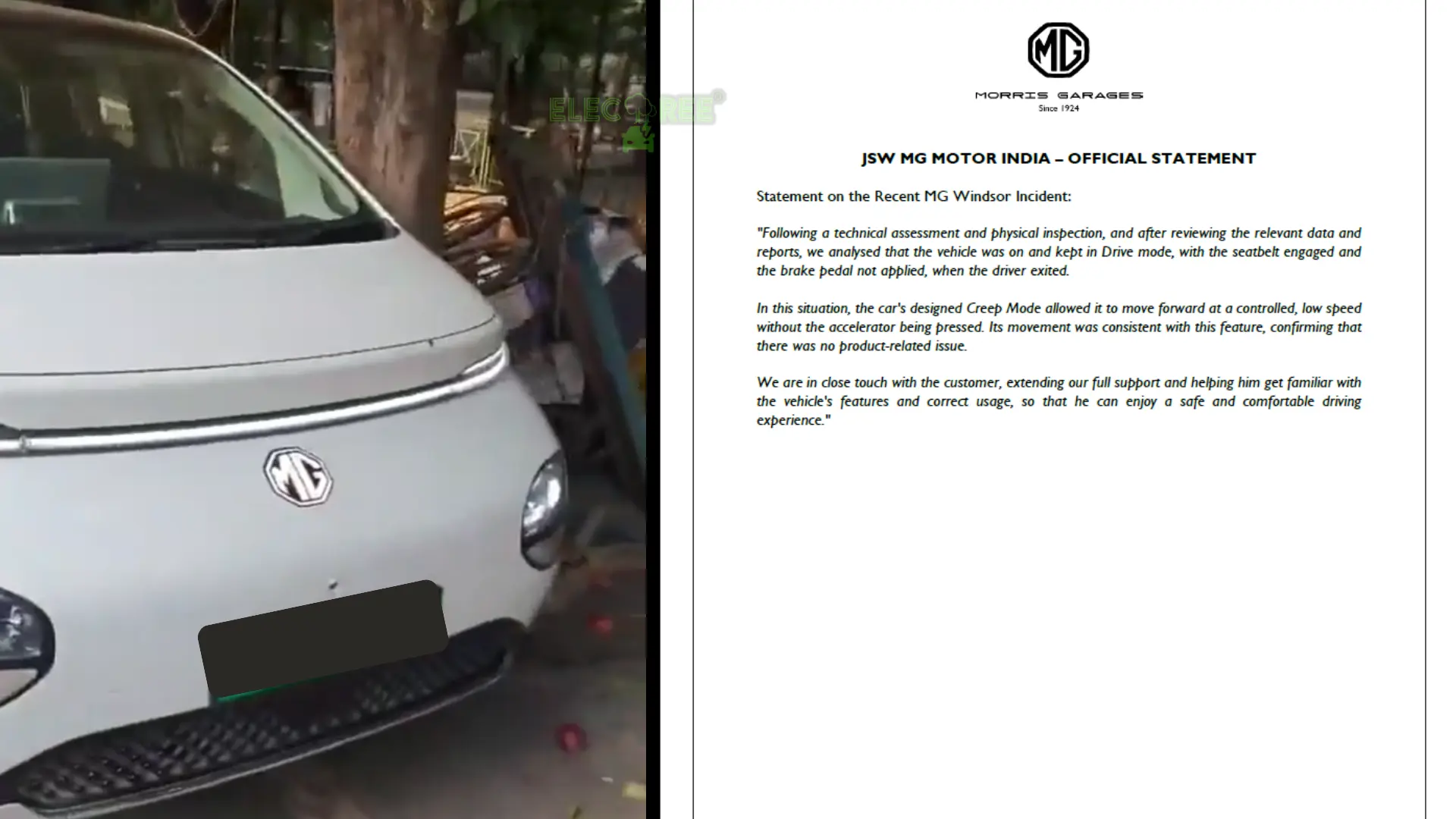
JSW MG Motor India has released an official statement on the Windsor incident in Ludhiana that ElecTree first reported on September 16, where a Windsor rolled forward on its own after being parked, eventually crashing into a roadside fruit cart and a tree.
MG's Statement
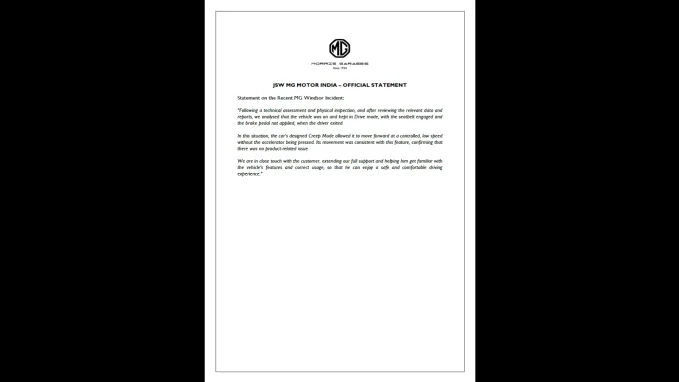
MG said the vehicle was on and in Drive mode, with the seatbelt engaged and the brake pedal not applied, when the driver exited the car. It said this triggered the vehicle's Creep Mode, which "allowed it to move forward at a controlled, low speed without the accelerator being pressed." The company added that the movement was "consistent with this feature, confirming that there was no product-related issue." It also said it is in close touch with the owner and is helping him "get familiar with the vehicle's features and correct usage."
This matches what ElecTree reported at the time. The car was in drive mode, the seatbelt was buckled, and the driver had stepped out, exactly the sequence our original coverage laid out. The key fob remaining in proximity to the car kept it recognized as ready to drive. Had the key gone out of range, the vehicle's immobilizer would have engaged and stopped it, which is also why the car kept creeping forward for as long as the owner ran alongside it, keeping the key within range the entire time.
What Should Change
MG's statement treats the Creep Mode behavior as working as designed, not a flaw. But the same sequence can be prevented from repeating with a straightforward software change: whenever a door is opened while the car is stationary, the vehicle should shift into park automatically, and only a manual, deliberate action should put it back in drive mode, rather than the last active mode resuming on its own. This is a software-level fix MG, and every other OEM building keyless, start-stop-button-free EVs, could roll out through an update.
The rest of our original recommendations still stand:
- OEMs should add a weight sensor on the driver's seat, with a minimum threshold of around 50 kg, required before the car can be put into drive mode.
- A physical start-stop button should be mandated across all EVs rather than left optional.
- If anyone finds themselves facing a similar rollaway, the safer move is to step away first, so the key goes out of proximity and the car stops, rather than approaching or running alongside it.
In public interest, it's also worth repeating why this happens in the first place. Buckling the seatbelt behind your back, or leaving it clipped in with no one seated, just to silence the reminder chime, is a common habit that directly feeds a car false information about a driver being present. Seatbelts should only be buckled while properly seated.
To comment and participate in discussion Click Here
Recent Articles

Trending Articles
Kerala Makes EVs More Affordable: Revised Road Tax Structure to Accelerate Adoption
India Car Sales by Fuel Type — March 2026: EV Share Hits New High, CNG Surges, Petrol Loses Ground
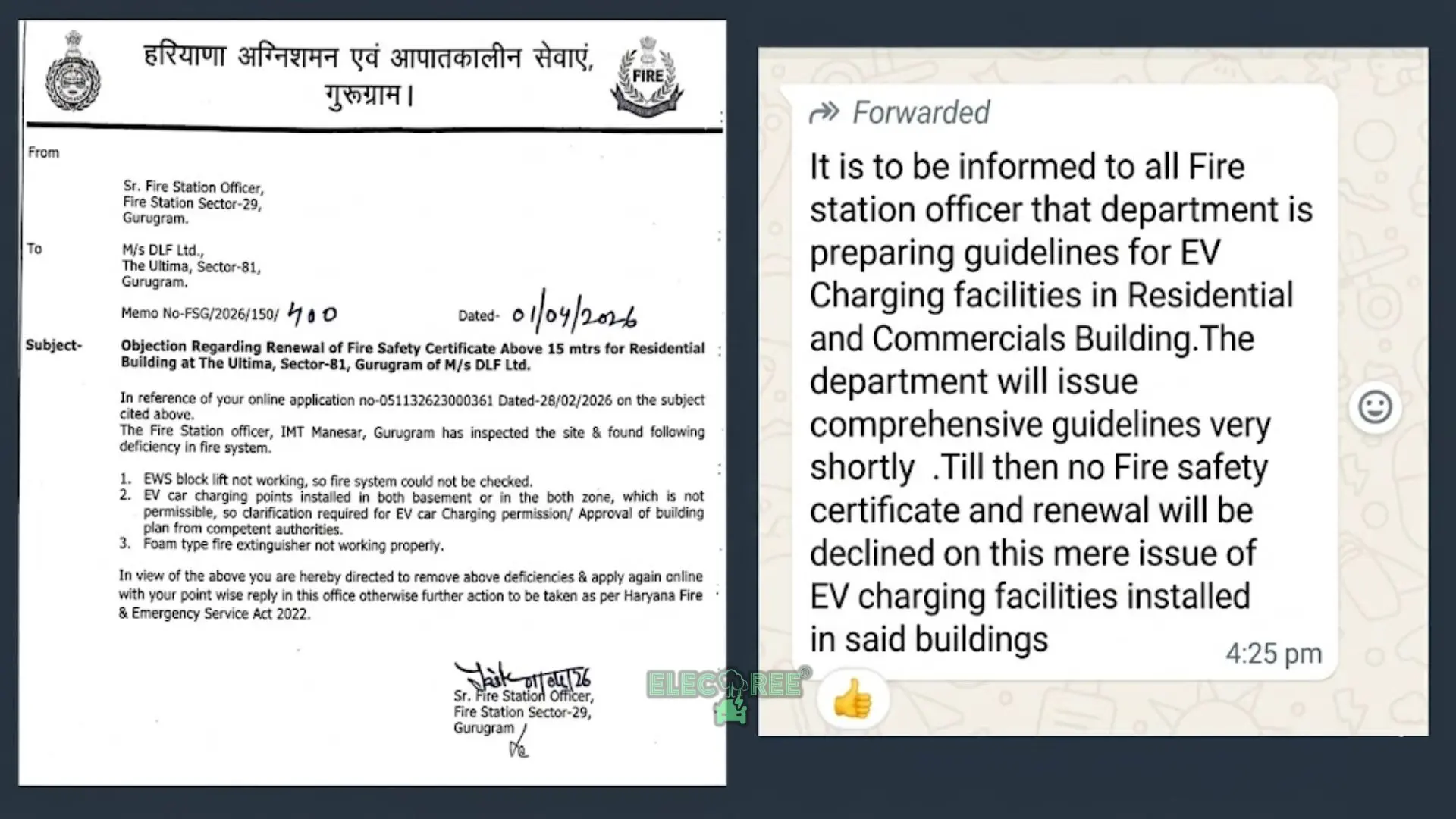
No Fire Safety Certificate Will Be Declined Over EV Chargers, Says Haryana Fire Department
Haryana Releases Draft Fire Safety Guidelines for EV Charging