India’s Next EV Phase Needs Clear Targets, Charging Rights and Electric Trucks: Amit Bhatt
India's EV transition needs clearer national targets, stronger policy signals and easier access to charging, says Amit Bhatt of ICCT. He also sees electric trucks emerging as the next major phase of road transport electrification.


Category:
Tag:
- Amit Bhatt
- ICCT
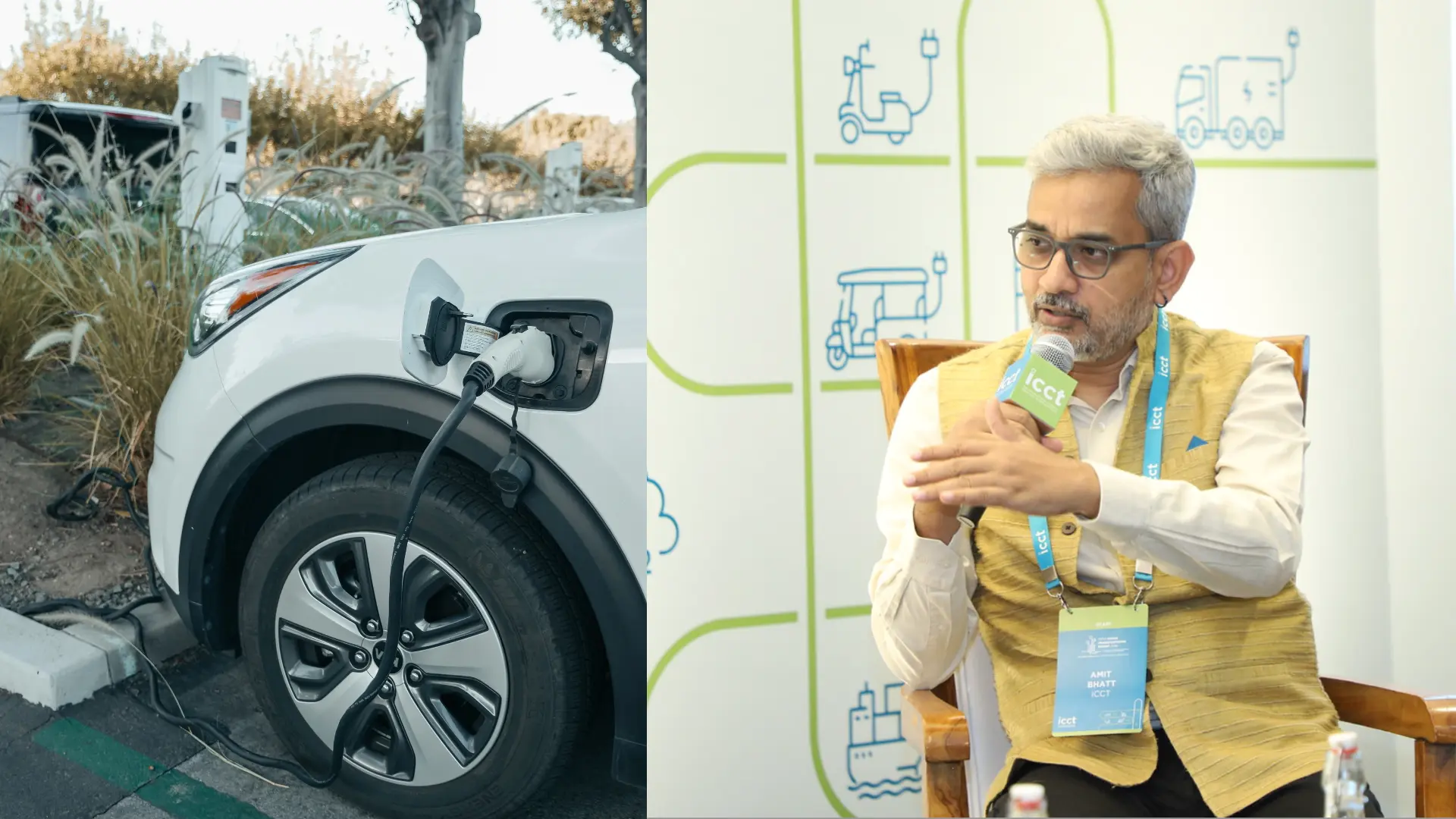
India’s EV transition needs to move beyond incentives, with clearer electrification targets, stronger policy signals and easier access to charging, according to Amit Bhatt, Managing Director, India, at the International Council on Clean Transportation (ICCT). He also sees electric trucks emerging as the next major phase of the country’s electrification journey.
Speaking to ElecTree at the ICCT India Clean Transportation Summit in New Delhi, Bhatt said investment in electric mobility depends on policy clarity. With automakers now offering a wider range of EVs and technology improving, he believes the next step is to establish a clearer direction for electrification.
“We should have some official target” for electrification, he said, suggesting that the country needs clarity on whether its ambition is 30%, 35% or 40%. That target, he added, should be accompanied by a timeline for phasing out older technologies.
According to him, clearer targets and regulations can give manufacturers greater confidence to invest. Regulations such as stricter fuel-efficiency requirements or restrictions on the registration of certain ICE vehicles can help create market scale. Greater scale, in turn, can increase competition and put downward pressure on prices.
Delhi’s EV Policy Offers a Different Approach
Bhatt sees Delhi's EV policy as an example of how governments can go beyond financial incentives.
Most EV policies, he said, have focused on incentives and allowed consumers to decide whether to make the switch. While that approach can help start adoption, he argued that governments cannot indefinitely provide financial support for every vehicle that needs to electrify.
Delhi's decision to restrict the registration of certain ICE vehicles provides a non-financial policy mechanism to push the transition. He considers that an important part of the policy approach.
However, he believes Delhi could eventually extend this thinking to more vehicle categories. Cars currently do not have a similar phase-out pathway, while medium and heavy goods vehicles also need a clearer transition roadmap.
He stressed that this does not mean an immediate phase-out. Instead, a defined timeline over the next few years could give manufacturers and consumers time to prepare.
India Needs a National Electrification Policy
The discussion also points to a larger gap in India's EV policy landscape: the absence of a common national electrification target.
States have developed their own EV and clean transportation policies, but Bhatt believes India now needs a national framework that establishes the overall direction.
States could continue to introduce stronger measures on top of a national policy, he said, but a common national target would provide greater certainty for the industry.
For manufacturers making long-term investments in electric vehicles, components and infrastructure, that consistency could be particularly important.
Electric Trucks Could Be the Next Big Shift
While two-wheelers and three-wheelers have already reached significant levels of electrification, Bhatt believes the next major opportunity lies in trucks.
“Trucks is my personal area of interest,” he said, pointing to the segment's high energy consumption and emissions.
The technology for electric trucks has also progressed, he noted. According to him, electric trucks are now beginning to compete with ICE vehicles, while developments in China show how quickly the segment can change once the technology and economics come together.
He expects the electric truck conversation in India to develop over the coming years, making heavy commercial vehicles an increasingly important part of the country's EV transition.
Right to Charge Could Help Unlock EV Demand
For passenger vehicles, however, one of the biggest barriers may be much more basic: having somewhere to charge at home.
Bhatt, who is himself an EV user in Gurgaon, said he has struggled to secure convenient home charging despite having considerable knowledge of the subject.
His solution is a “right to charge”, giving EV owners the ability to charge their vehicles where they park, subject to the required safety and electrical provisions.
He believes such a policy could significantly accelerate EV adoption, particularly among car buyers. If an EV can be charged overnight at home, owners are less dependent on public charging for their everyday journeys.
That could also reduce one of the practical concerns surrounding EV ownership. Most users are unlikely to want to regularly spend 30 to 45 minutes at a public charger simply to keep their vehicle ready for daily use.
The Next Challenge Is Building the Ecosystem
The interview highlights a shift in India's EV conversation. The industry now has more products, improving technology and growing consumer interest. The challenge is creating the policy and infrastructure conditions needed for that momentum to translate into scale.
For Bhatt, three areas stand out: clear electrification targets, easier access to charging and a stronger push towards electric trucks.
The message is straightforward. Incentives can help start an EV transition, but long-term adoption will depend on whether India can provide enough policy certainty for industry and enough practical convenience for consumers.
As India's EV market moves into its next phase, the question is no longer just how quickly electric vehicles can sell. It is whether the country can build the framework that allows electrification to expand across two-wheelers, cars, buses and eventually the heavy trucks that consume some of the most energy on India's roads.
Trending Articles