
India's EV Charger Count Hits 52,718 - The Number That Deserves a Follow-Up Question
India's public EV charging network has reportedly hit 52,718 stations, but the number sits oddly against March's official count of 27,737, and a same-day reply shows the country's battery-cell manufacturing incentives remain entirely unclaimed.


Category:
Tag:
- EV Infrastructure
India now has 52,718 public EV charging stations, including 16,561 fast chargers for cars, Minister of State for Heavy Industries Bhupathiraju Srinivasa Varma told the Lok Sabha this week, not on the floor, but buried in a written reply to an unstarred question, the routine channel through which most of India's infrastructure data enters the public record unnoticed. The number is real and it's large. It's also hard to square with what Parliament was told just months ago: as of March, government data cited across industry trackers put the installed base at 27,737 stations, with only 22,753 operational, and that figure was drawn specifically from Oil Marketing Companies' charging points, a narrower slice than "all public charging stations." Whether the total reflects genuine growth, a wider counting base, or both, the reply doesn't say. That's the gap worth chasing, not the headline figure.
Where the money goes, and who it skips
The funding trail is clearer than the count. The Ministry has allocated Rs 912.50 crore under the now-closed FAME-II scheme and Rs 2,000 crore under PM E-DRIVE for public charging stations in cities and along highways. FAME-II — April 2019 to March 2024, Rs 11,500 crore outlay, is credited with supporting about 16.72 lakh EVs and 5,197 electric buses deployed as of June 30, 2026. Its successor, PM E-DRIVE, notified September 29, 2024 with a Rs 10,900 crore outlay, targets roughly 28.30 lakh vehicles: two-wheelers, three-wheelers, trucks, buses, ambulances.
Private cars aren't on that list. Asked point-blank why, the government's answer was that cars sit instead under the Production Linked Incentive (PLI) Scheme for Auto and Auto Components, which offers manufacturers 13-18 percent incentives on incremental EV sales. Commercial and mass-mobility fleets get direct, purchase-linked subsidy; private car buyers get an indirect, manufacturer-side incentive that may or may not reach the showroom price. Anyone shopping for an EV should know that distinction going in.
The story hiding in plain sight
The same day (July 21, 2026), a separate reply to the Lok Sabha revealed that no firm has claimed a single incentive under the Advanced Chemistry Cell (ACC) battery PLI scheme, despite Rs 5,180 crore already invested and 1,277 jobs created. Of the 40 GWh of capacity awarded across four firms, only Ola Cell Technologies had commissioned any, just 1 GWh, as of February 2026; the government's own explanation is that the rest simply hasn't been built yet. Set beside the charging-station count, it's a sharper picture of where India's EV transition actually stands: the visible, photogenic half, plugs and pumps, is scaling fast, while the capital-intensive half underneath it, domestic battery-cell manufacturing, is years behind.
The ratio that still doesn't work
Even taking 52,718 at face value, coverage remains thin. India has roughly 6.5 million EVs on the road; earlier this year that put the country at about one public charger per 235 vehicles, against an IEA global benchmark of one per 6 to 20. Independent trackers have also flagged that close to 18 percent of installed chargers are non-functional at any given time, a gap a Parliament reply measuring "installed," not "working," is never going to surface.
What's actually moving the needle
The real driver isn't a subsidy line item. It's the Ministry of Power's 2024 charging-infrastructure guidelines and the continued classification of charging-station setup as an unlicensed activity, letting private operators, from fuel retailers to mall developers, enter the market without discom or state utility sign-off. That single regulatory choice is doing more to push the station count up than any scheme in this reply, whatever the true number turns out to be.
Trending Articles


Recent Articles

India Clears ₹1.86 Lakh Crore Green Energy Corridor Plan With ₹50,000 Crore for Battery Storage
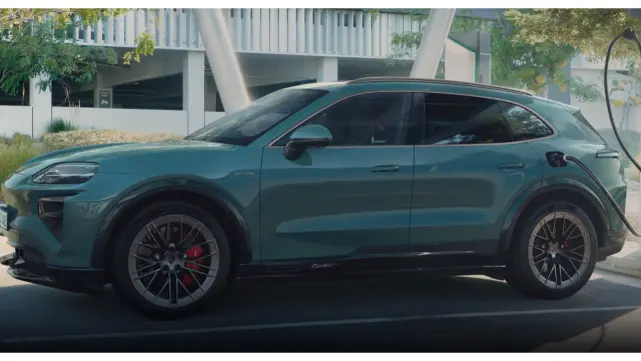
Porsche Cayenne Electric Launched in India at ₹1.77 Crore: 642 Km Range, 400 kW Charging and More
Government's CAFE III Norms Give EVs a 3x Credit, PHEVs 2.5x
Creta Electric Owners Approach Hyundai - File Petition for Lifetime Battery Warranty