DISCOM Issues Notice to Gurugram RWA for Overcharging EV Users
DHBVN has directed The Grand Arch RWA and Tata Power to stop charging EV users ₹18/unit plus GST for power billed to the society at ₹7/unit, a markup of over ₹11.


Category:
Tag:
- Gurugram EV Charging
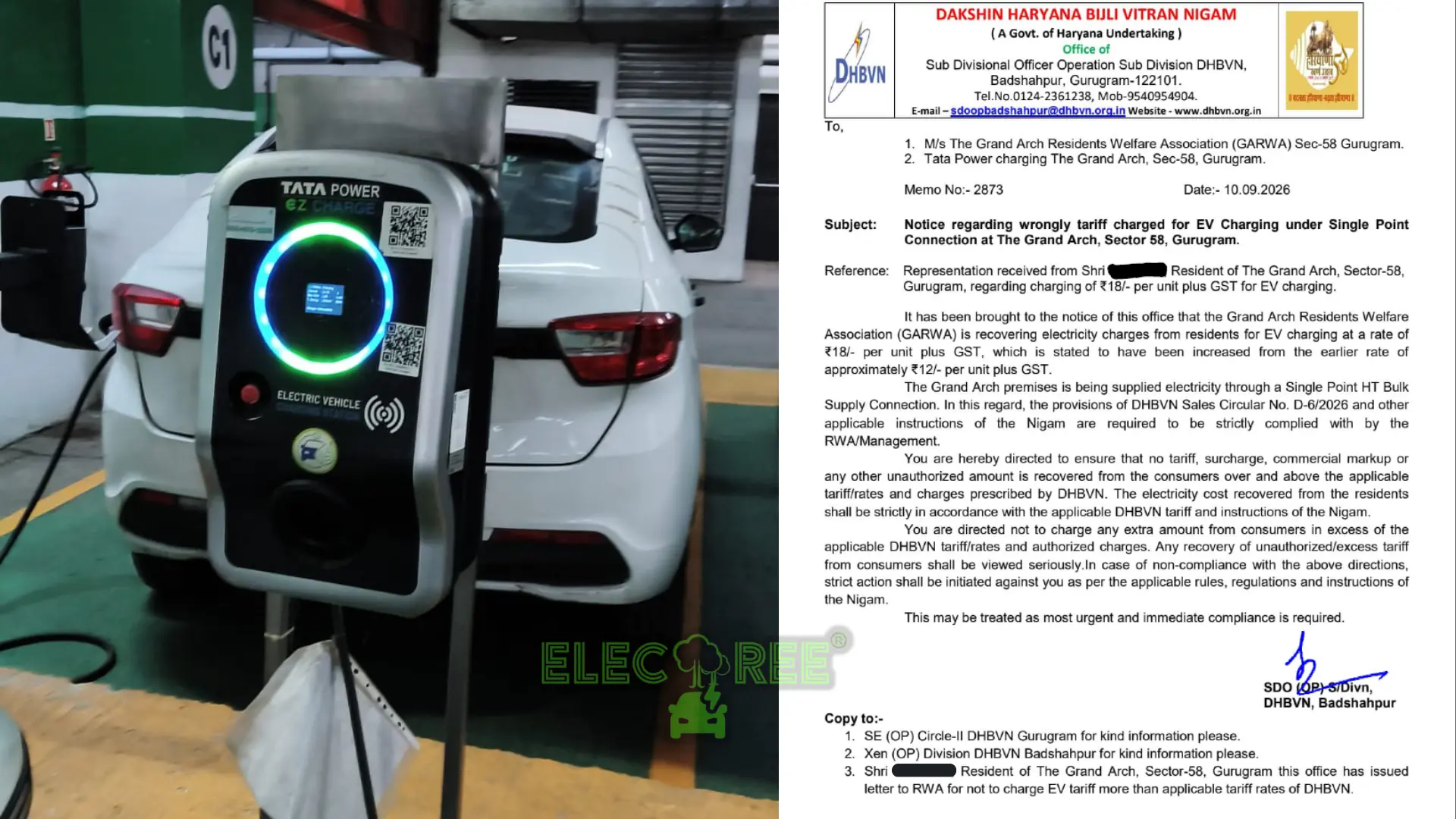
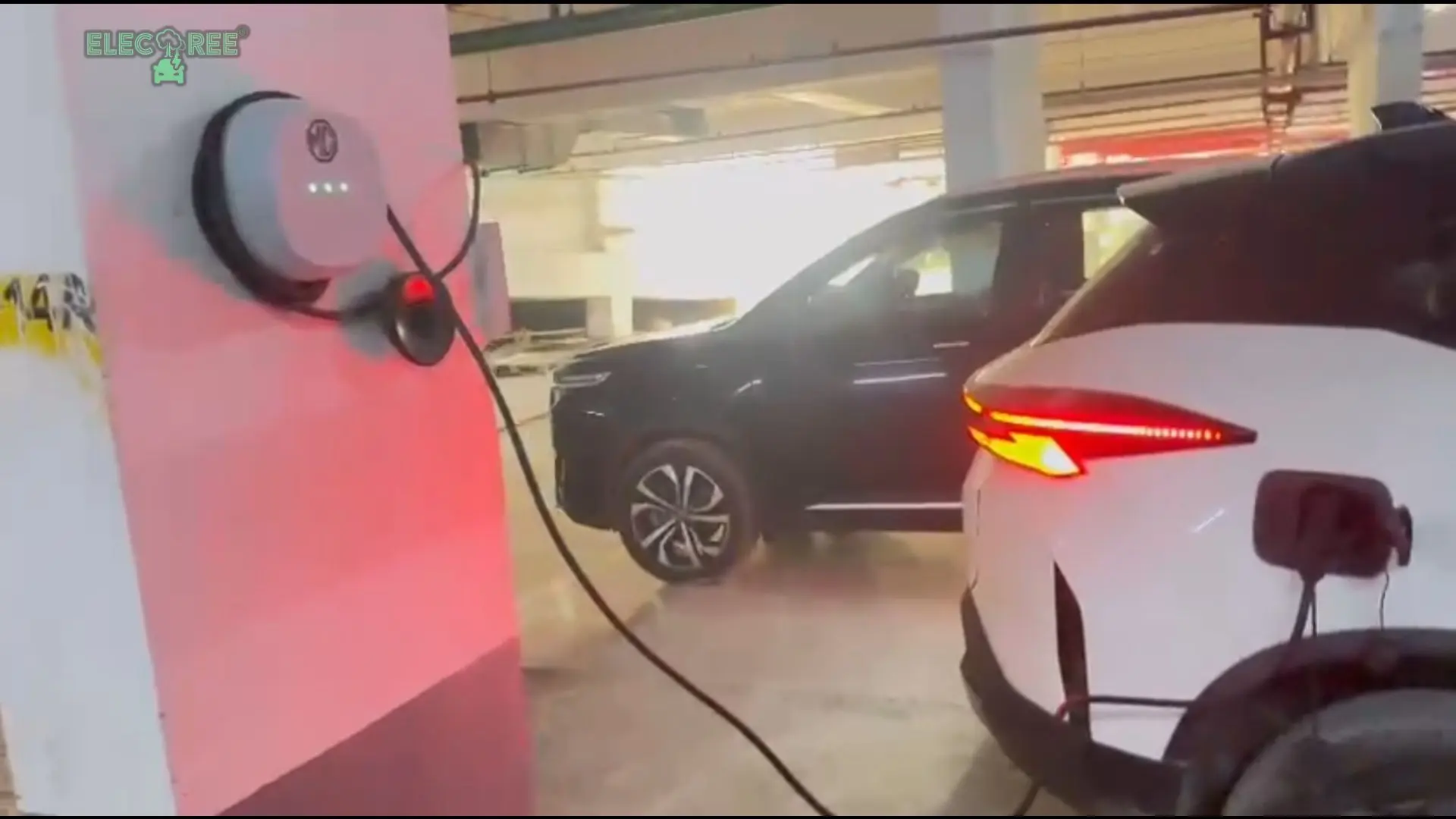
Dakshin Haryana Bijli Vitran Nigam (DHBVN) has issued a notice to The Grand Arch Residents Welfare Association (GARWA) and Tata Power, the CPO running the society's EV chargers, directing them to stop recovering electricity costs from residents above DHBVN's sanctioned tariff. The notice, dated September 10, 2026, was triggered by a resident complaint and covers EV charging at The Grand Arch, Sector 58, Gurugram, which draws power through a Single Point HT Bulk Supply Connection. The notice was shared to ElecTree by an anonymous source.
The DHBVN Notice

DHBVN's notice states that GARWA has been recovering electricity charges from residents for EV charging at ₹18 per unit plus GST, up from roughly ₹12 per unit plus GST earlier. Because Grand Arch is billed by DHBVN in bulk through a Single Point HT Bulk Supply Connection, the Nigam's Sales Circular No. D-6/2026 requires that cost to be passed through to residents at the same rate, without any tariff, surcharge, or commercial markup added on top. The notice directs GARWA and Tata Power to ensure no unauthorized amount is recovered from residents beyond DHBVN's applicable rates, calls for immediate compliance, and warns that non-compliance will invite strict action.
The sanctioned DHBVN tariff for group housing societies in Gurugram is ₹7 per unit. This implies a markup of ₹11 per unit plus GST on top of DHBVN's own rate is being charged from the residents, more than double what the society is billed.
The Rate Hasn't Changed

The Grand Arch has 5 AC Type-2 chargers of 7.4 kW as per Tata Power's EZ Charge app listing. At the time of publishing, i.e. September 19, 2026 the app still mentions the charging fare as ₹18 per unit + GST. The rate has not been revised since the notice was issued.
Why This Matters
The DHBVN directive raises an important concern of resident associations profiteering from its residents who charge their EVs. Distribution of electricity is restricted to distribution companies or DISCOMS. Selling it for profit is not allowed. The charging point operators (CPOs) charge the users for the facility and service provided to the users of their equipment. But incase of the residential societies, if they own the chargers it means it belongs to all residents as they have contributed for the upfront cost and the future maintenance.
It therefore becomes imperative for residents of other residential societies of not only Gurugram but across India, who have community chargers installed in their building premises and being charged above their electricity fare, to check with their respective DISCOM if the extra fare is just or not.
This also lands on top of an existing mandate. Haryana's town and country planning department has already made EV charging infrastructure mandatory in new and renovated residential construction, a rule ElecTree covered when it was introduced. This notice adds the other half of that picture: societies required to install EV chargers cannot treat the electricity sold through them as a profit center when it's billed to them on a single-point bulk connection.
Disclaimer: The source of the image is known to ElecTree but wishes to remain anonymous.
To comment and participate in discussion Click Here
Recent Articles

Trending Articles
Kerala Makes EVs More Affordable: Revised Road Tax Structure to Accelerate Adoption
India Car Sales by Fuel Type — March 2026: EV Share Hits New High, CNG Surges, Petrol Loses Ground
No Fire Safety Certificate Will Be Declined Over EV Chargers, Says Haryana Fire Department
Haryana Releases Draft Fire Safety Guidelines for EV Charging