
Porsche Cayenne Electric Launched in India at ₹1.77 Crore: 642 Km Range, 400 kW Charging and More
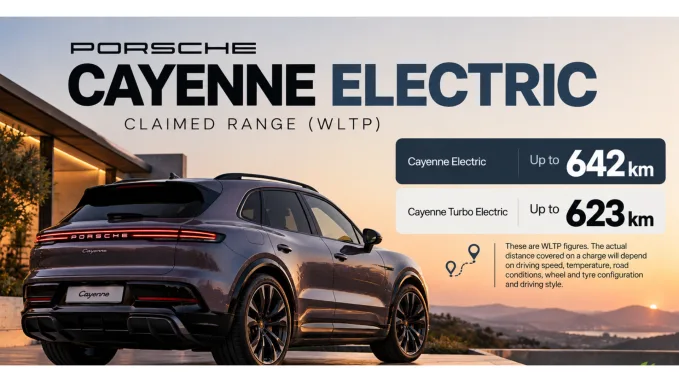
Porsche has launched the all-electric Cayenne in India at ₹1.77 crore, alongside the 1,156 PS Cayenne Turbo Electric at ₹2.27 crore. Both use a 113 kWh battery and 800-volt architecture, with up to 642 km of claimed WLTP range and DC charging capability of up to 390 kW, rising to 400 kW under specific conditions.


Category:
Tag:
- Porsche Cayenne Electric
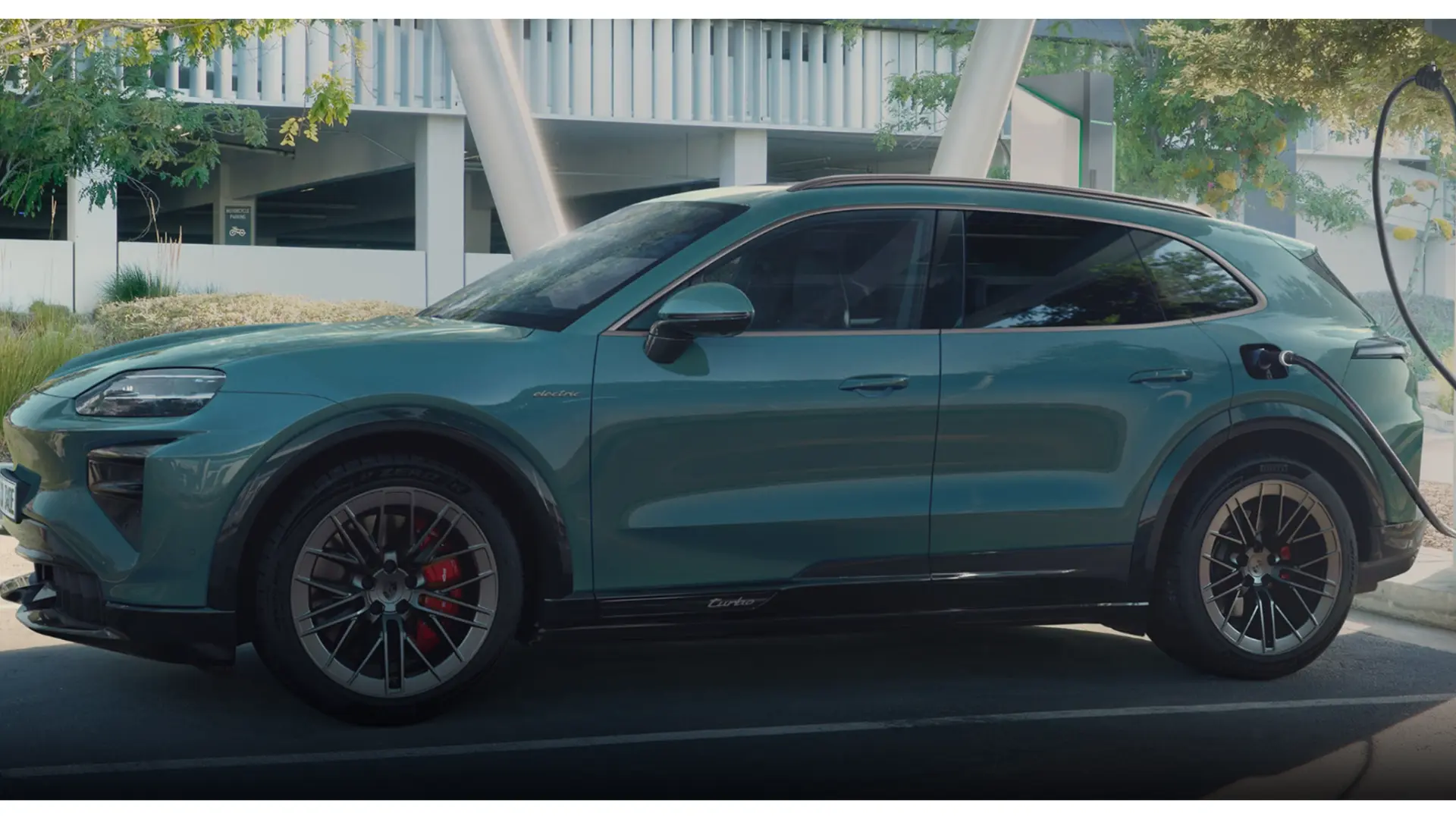
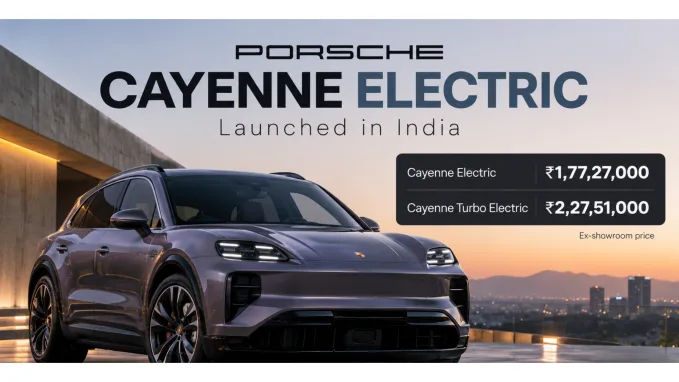
Porsche has brought the Cayenne into the electric era in India, launching the all-electric SUV in two variants. The Cayenne Electric is priced at ₹1,77,27,000, while the more powerful Cayenne Turbo Electric costs ₹2,27,51,000, with both prices ex-showroom and before optional equipment.
Customer deliveries begin from September 30. The India launch adds the electric Cayenne to Porsche's existing lineup of combustion-engine and hybrid Cayenne models, rather than replacing them. Porsche has said it will continue developing combustion and hybrid versions of the Cayenne alongside the fully electric model into the next decade.
What makes the Cayenne Electric notable is not just its performance figures. Porsche has developed it around a large 113 kWh battery, an 800-volt electrical system, high-speed charging and a chassis designed to retain the everyday usability expected from a large luxury SUV.
Porsche Cayenne Electric Price in India
The standard Cayenne Electric produces up to 442 PS and 835 Nm with Launch Control, allowing it to accelerate from 0-100 km/h in 4.8 seconds. Its top speed is electronically limited to 230 km/h.
The Cayenne Turbo Electric takes the performance brief much further. Porsche quotes up to 1,156 PS and 1,500 Nm with Launch Control, enabling a 0-100 km/h time of 2.5 seconds and a top speed of 260 km/h. Porsche describes the Turbo Electric as its most powerful production model to date.
113 kWh Battery and Up to 642 Km Range
Both Cayenne Electric variants use a newly developed 113 kWh high-voltage battery. The battery uses double-sided liquid cooling, while the SUV's 800-volt architecture is designed to support high charging speeds and thermal management during demanding driving and charging conditions.
The battery itself is divided into six modules containing 192 cells, with liquid cooling on both sides. Porsche has also developed predictive thermal management to help optimise charging and energy use.
390 kW Charging, Up to 400 kW Under Specific Conditions
The charging system is one of the Cayenne Electric's major technical highlights.
Porsche says the SUV can accept up to 390 kW of DC charging power under optimal conditions, while charging power can reach 400 kW under specific conditions. The latter figure requires a very high-powered charging station and a particular combination of battery temperature and state of charge.
Under Porsche's specified optimal conditions, the battery can be charged from 10% to 80% in less than 16 minutes. The company says a 10-minute DC charging session can add energy equivalent to up to 325 km of WLTP range in the Cayenne Electric.
There is an important distinction here for Indian buyers: 400 kW is not the charging speed a Cayenne owner will automatically receive at every DC fast charger. It represents the vehicle's capability under specific charging conditions. The actual charging rate will depend on the charger, battery temperature, state of charge and other operating conditions.
The Cayenne also supports 400-volt charging infrastructure through a system Porsche calls bank charging, allowing the battery to be configured internally to make better use of conventional high-power charging systems.
Wireless Charging Comes to the Cayenne
Porsche is also offering an optional Wireless Charging system for the Cayenne Electric.
The inductive system can charge the vehicle at up to 11 kW. Instead of connecting a conventional charging cable, the vehicle is positioned over a charging plate installed on the floor, after which charging begins automatically.
For a luxury SUV that is likely to spend considerable time parked at a private residence or designated parking space, the technology is aimed more at charging convenience than outright charging speed.
Designed as a Cayenne, Not Just a Performance EV
Porsche's challenge with the electric Cayenne was not simply to make a faster SUV. The company has retained the model's emphasis on comfort, practicality and everyday usability.
The Cayenne Electric measures 4,985 mm in length, 1,980 mm in width and 1,674 mm in height, with a 3,023 mm wheelbase.
The rear luggage compartment offers up to 781 litres of space, increasing to 1,588 litres when the rear seats are folded. There is also a 90-litre front luggage compartment.
Adaptive air suspension with Porsche Active Suspension Management is standard. Rear-axle steering is available as an option, with a steering angle of up to five degrees intended to improve manoeuvrability while also supporting high-speed stability.
Both variants use dual electric motors and all-wheel drive, with Porsche Traction Management managing torque distribution between the axles.
A Digital Cabin With a Familiar Porsche Layout
The electric Cayenne gets a digital-focused cabin while retaining Porsche's driver-oriented approach.
The standard equipment includes a 14.25-inch curved OLED instrument cluster and a central OLED infotainment display. A 14.9-inch passenger display is available as an option, while an augmented-reality head-up display is also offered.
Depending on configuration, the SUV can be equipped with features such as four-zone climate control, electrically adjustable front seats, a panoramic roof and premium audio systems.
As with other Porsche models, the final specification and price can increase substantially depending on the options selected.
The Cayenne Will Keep Multiple Powertrains
The India launch is significant because Porsche is not treating electrification as a complete replacement for the Cayenne's existing powertrains.
The company has said that combustion-engine and hybrid versions will continue alongside the electric Cayenne into the next decade. Porsche's global strategy is therefore based on offering customers different powertrain options within the same model family rather than moving the Cayenne immediately to an all-electric lineup.
That makes the Cayenne Electric less about replacing the existing SUV and more about expanding what the Cayenne nameplate can offer.
What the Cayenne Electric Means for India's Luxury EV Market
At ₹1.77 crore before optional equipment, the Cayenne Electric is positioned firmly in India's ultra-luxury EV segment. But its significance lies less in its price and more in the technology Porsche is bringing with it.
The combination of a 113 kWh battery, up to 642 km of claimed WLTP range, 800-volt architecture and charging capability of up to 390 kW normally and 400 kW under specific conditions puts the Cayenne among the technically advanced electric SUVs entering the Indian market.
The more interesting question, however, is how much of this capability can be used regularly in India.
The Cayenne can accept charging power far beyond what most everyday charging situations require. Its maximum charging figures also depend on infrastructure and battery conditions. For Indian customers, therefore, the ownership experience will depend not only on the vehicle's battery and powertrain but also on access to appropriately rated charging infrastructure.
That distinction is important as India's premium EV market expands. As vehicles arrive with increasingly capable charging systems, the gap between what an EV can technically accept and what the available charging network can consistently deliver becomes more relevant.
The Cayenne Electric consequently represents two developments at once: Porsche's move towards electrification in one of its most important SUV nameplates, and a test of how India's premium EV ecosystem can support increasingly sophisticated electric vehicles.
For buyers who prioritise outright performance, the Cayenne Turbo Electric pushes the numbers even further, with up to 1,156 PS and a claimed 0-100 km/h time of 2.5 seconds. For those looking beyond performance, the standard Cayenne Electric combines the same 113 kWh battery architecture with a claimed range of up to 642 km and a more conventional performance profile.
With both versions now available in India, Porsche has effectively added an electric branch to the Cayenne family without closing the door on petrol and hybrid powertrains.
To comment and participate in discussion Click Here
Trending Articles



Recent Articles

India Clears ₹1.86 Lakh Crore Green Energy Corridor Plan With ₹50,000 Crore for Battery Storage
Government's CAFE III Norms Give EVs a 3x Credit, PHEVs 2.5x

Creta Electric Owners Approach Hyundai - File Petition for Lifetime Battery Warranty
PM E-DRIVE Funds New EV Crash-Test Facility at Chennai's GARC