
Hyundai Is Changing the Creta Electric Ownership Equation. Can It Catch Tata and Mahindra?
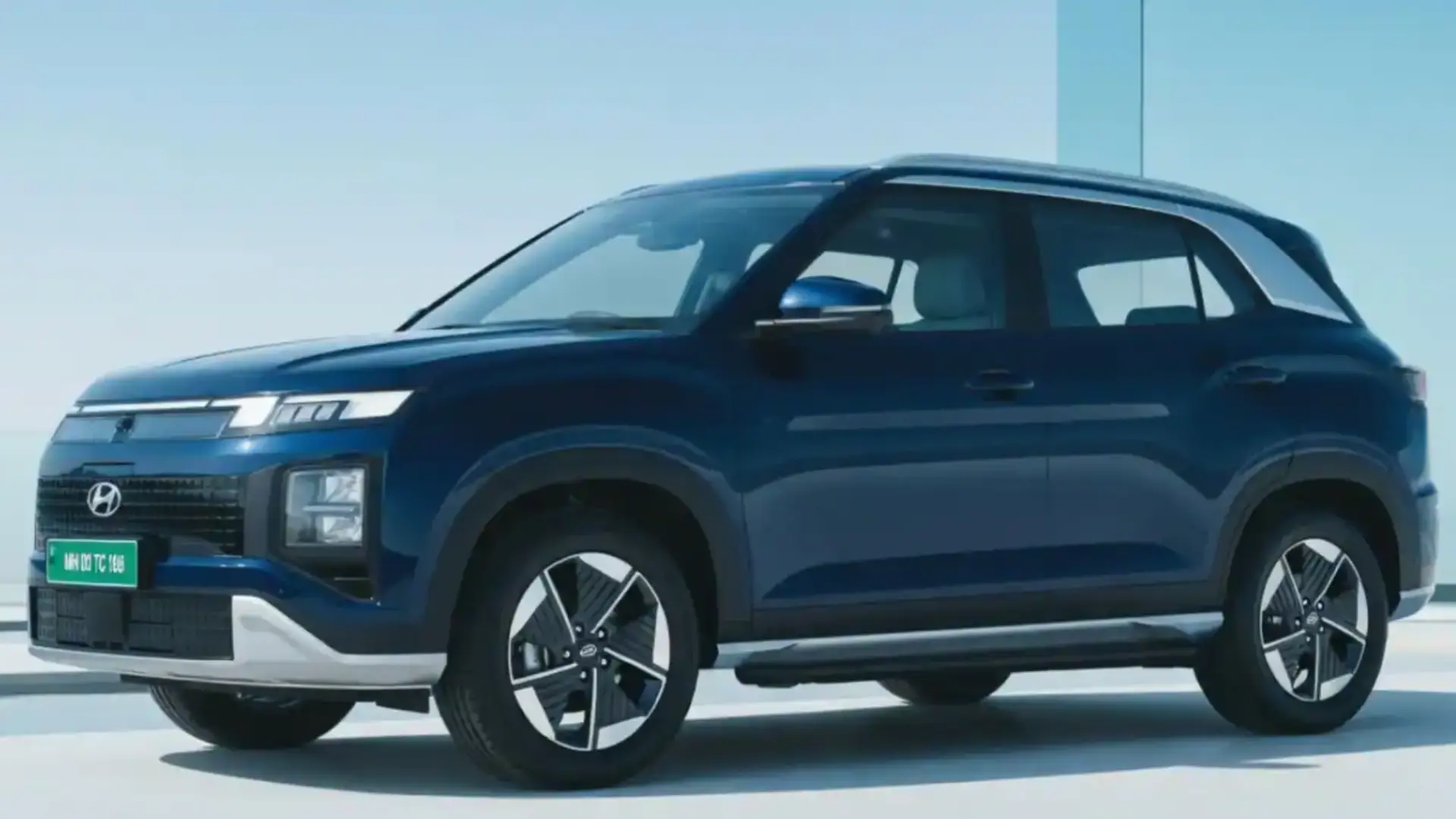
Hyundai is trying to strengthen its position in India's EV market by making the Creta Electric more accessible and reducing ownership concerns. With BaaS, assured buyback, expanded charging access and more EVs planned, can Hyundai catch Tata and Mahindra?


Category:
Tag:
- Hyundai Electric
The Creta Electric sold 7,114 new units in 2025. In the first six months of 2026, it has managed 2,638.
Those numbers provide an important backdrop to Hyundai's latest moves, which go beyond the car itself and target the cost and concerns around EV ownership. It is changing how customers pay for the battery, addressing resale concerns and expanding charging access, while also preparing more EVs for India.
The bigger question is whether all of this can help Hyundai close the gap with Tata and Mahindra.
The Sales Numbers Tell the Story
The Creta Electric launched in January 2025 as Hyundai's main entry into India's mainstream electric-SUV market.
Its new-vehicle retail numbers currently stand at:
| Period | New Creta Electric retail sales |
|---|---|
| 2025 | 7,114 |
| H1 2026 | 2,638 |
Source: Vahan retail registration data; new vehicles only, excluding resales.
These periods are not directly comparable because 2025 covers a full year while H1 2026 covers six months. So the numbers should not be presented as a year-on-year decline. But they do show that the Creta Electric has not yet become a high-volume EV for Hyundai.
That matters because Hyundai currently sells two EVs in India, the Creta Electric and Ioniq 5. The Creta Electric starts at ₹18.02 lakh, while the Ioniq 5 starts at ₹55.70 lakh, leaving Hyundai with a relatively narrow presence across the passenger-EV market.
Tata, meanwhile, has built a much broader EV portfolio, while Mahindra has quickly established itself in electric SUVs. Hyundai needs more than a good EV. It needs more reasons for people to buy one.
Hyundai Is Trying to Make the Creta Electric Easier to Buy
In July, Hyundai introduced Battery-as-a-Service (BaaS) for the Creta Electric.
The BaaS version starts at ₹10.99 lakh ex-showroom, but that is not the complete battery-inclusive purchase price. Customers pay separately for battery usage, with the battery EMI starting at ₹3.90 per kilometre. The idea is straightforward: separate the battery cost from the vehicle purchase so the initial price becomes more accessible. The Creta Electric continues to be offered with 42 kWh and 51.4 kWh battery packs, with certified ranges of 420 km and 510 km, respectively. Hyundai says DC fast charging can take the battery from 10% to 80% in about 39 minutes.
Related: Hyundai Creta Electric Gets Battery-as-a-Service Option, Entry Price Drops to ₹10.99 Lakh
For Hyundai, this is an important experiment. If upfront price is one reason customers hesitate to buy an EV, BaaS directly attacks that barrier.
Now Hyundai Is Tackling Resale Anxiety
The next question for an EV buyer is often: what will my car be worth when I want to sell it?
In August, Hyundai introduced an Assured Buyback Programme for the Creta Electric, offering 60% assured buyback value after three years or up to 45,000 km, subject to the programme's terms. That gives buyers greater certainty about the vehicle's future value.
Put simply:
BaaS → lower upfront cost
Buyback → greater resale-value certainty
Together, the two programmes show Hyundai trying to change the economics of EV ownership, rather than simply adding another feature to the car.
Related: Hyundai Creta Electric 12,000 km Ownership Experience
Charging Is Part of the Same Strategy
Hyundai is also expanding the infrastructure around its EVs. The company says the myHyundai app provides access to more than 30,000 charging points through partnerships with multiple charge-point operators. Separately, Hyundai has 183 of its own DC fast-charging stations across 105 cities and plans to expand that network to 600 stations by 2030. Its proprietary chargers range from 60 kW to 240 kW, and Hyundai says its own charging stations are open to EVs from other brands as well.
So Hyundai is attacking EV ownership from several sides: price, resale value and charging access. But there is still one thing these initiatives cannot solve on their own: product choice.
Hyundai's EV Expansion Is the Missing Piece
Hyundai has already committed to a much larger India product roadmap.
The company has announced plans for 26 product launches by FY2030, including India's first locally designed, engineered and manufactured dedicated electric SUV by 2027. Hyundai has also committed ₹45,000 crore of investment through FY2030 for its broader India growth plans.
The ₹45,000 crore figure covers Hyundai's wider India strategy, rather than EVs alone. This is where Hyundai's upcoming electric SUV becomes important.
Related: Hyundai Confirms New Electric SUV for India, Launching This Year
The new products will determine whether Hyundai can turn its existing EV presence into meaningful market share.
What About the Creta Electric Facelift?
There have been reports of a future Creta Electric update, but Hyundai has not officially announced the specifications or launch details of a facelift. So rather than treating a reported facelift as confirmed news, the more useful question is what Hyundai could improve when it eventually updates the car.
The current sales data gives Hyundai plenty to learn from. A future update would need to address the fundamentals that matter most to mainstream EV buyers: price, range, technology and ownership cost. And by the time any major update arrives, the competition will be tougher than when the Creta Electric launched in 2025.
Tata and Mahindra Aren't Waiting
This is where Hyundai's challenge gets harder. Tata has built one of India's broadest electric-car portfolios, covering multiple price points and body styles. Mahindra has taken a different approach, concentrating on electric SUVs and building a strong identity around its BE and XEV models. Hyundai's current position is different.
| Hyundai | Tata | Mahindra | |
|---|---|---|---|
| EV approach | Limited lineup, now expanding | Broad portfolio | Premium SUV-focused |
| Key EVs | Creta Electric, Ioniq 5 | Tiago EV, Punch EV, Nexon EV, Curvv EV, Harrier EV, Sierra EV | BE 6, XEV 9e, XEV 9S |
| Main advantage | Brand + dealer/service network | Model breadth + established EV presence | Strong electric-SUV positioning |
Hyundai's biggest advantage may therefore not be the number of EVs it sells today. It is the ecosystem it can build around them.
Can Hyundai Turn the Creta Electric Around?
The interesting part of Hyundai's recent strategy is that the company is no longer treating EV adoption as just a product problem. It is trying to address the entire ownership journey:
₹10.99 lakh BaaS entry price → lower upfront barrier
60% assured buyback → greater resale confidence
30,000+ charging points → wider charging access
183 proprietary DC stations → growing fast-charging network
26-product roadmap → much broader future portfolio
The sales numbers show why all of this matters.
The Creta Electric recorded 7,114 new retail sales in 2025 and 2,638 in H1 2026. Those figures don't tell us that the car is failing. But they do show that it has not yet achieved the scale Hyundai needs to challenge Tata and Mahindra head-on. The next challenge is therefore bigger than making the Creta Electric better.
Hyundai is clearly trying to make the Creta Electric easier to buy and own. Whether that translates into significantly higher retail volumes is the part the market still has to answer. And the real test will be whether its next wave of electric products can turn all these ownership initiatives into something that matters most in the end: more electric cars on Indian roads.
Trending Articles


Recent Articles

India Clears ₹1.86 Lakh Crore Green Energy Corridor Plan With ₹50,000 Crore for Battery Storage
Porsche Cayenne Electric Launched in India at ₹1.77 Crore: 642 Km Range, 400 kW Charging and More
Government's CAFE III Norms Give EVs a 3x Credit, PHEVs 2.5x
Creta Electric Owners Approach Hyundai - File Petition for Lifetime Battery Warranty