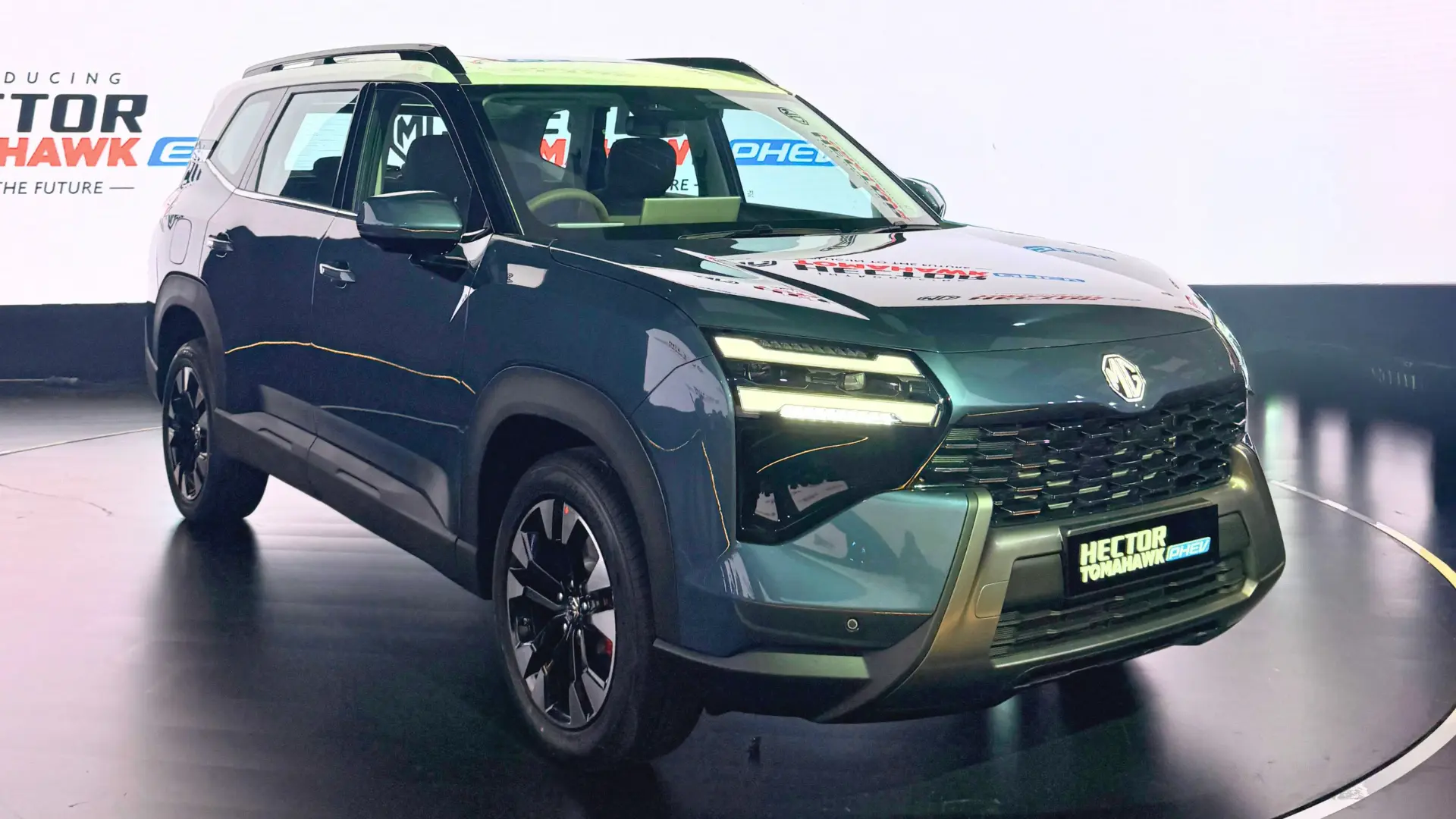
How MG Hector Tomahawk PHEV Servicing Works: 7,500 km vs 15,000 km
MG's service schedule for the Hector Tomahawk PHEV is due at 15,000 km total, 7,500 km on the engine or 1 year, whichever comes first. We explain what this means for city, highway and no-home-charging drivers, and how it relates to MG's claimed 1,100 km range.


Category:
Tag:
- MG Tomahawk PHEV
When a new car is purchased, it needs to be serviced at specific intervals. Generally, service schedules are based on the distance travelled or on specific time intervals, such as 6 months or 1 year. But with plug-in hybrids it is different and may be confusing to some.
The MG Hector Tomahawk PHEV has a petrol engine and a battery with an electric motor, so its service schedule covers both. MG's schedule for the car runs on three counters, and whichever is reached first decides when the car is due. This article explains how that works, what it means for different kinds of drivers, and how it relates to MG's claimed range of 1,100 km.
Everything here is based on MG's published service schedule and warranty booklet for the Tomahawk PHEV and the specifications provided on Tomahawk PHEV’s official brochure.
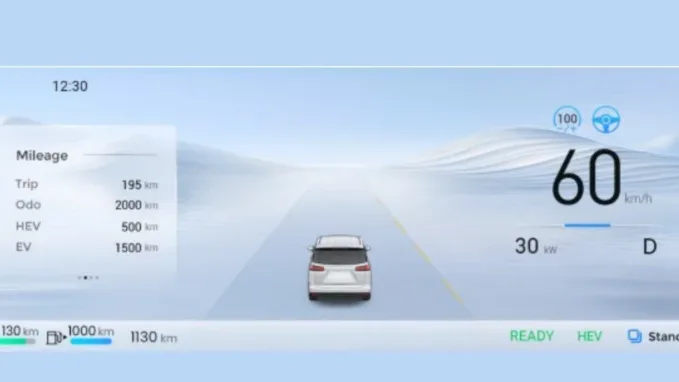
The HEV mileage refers to the kilometres run by the car using the engine. It can be either on the series, parallel or the direct mode of the hybrid technology.
The Service Rule
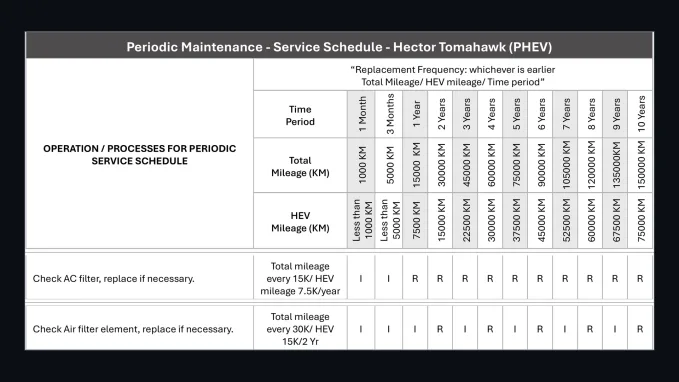
MG's schedule lists total mileage, HEV mileage and time, and says the replacement frequency is whichever is earlier. After the first service, the Tomahawk PHEV is due every 15,000 km of total driving, every 7,500 km of HEV driving or every year, whichever comes first.
The HEV figure is half the total figure. So if more than half of your km are on the engine, you reach 7,500 km of HEV driving first. If half or less are on the engine, you reach 15,000 km of total driving first. Electric km count towards the total, so they bring the 15,000 km mark closer.
Take a driver who covers 15,000 km a year. If 6,000 km are on the engine, the 15,000 km total comes first. If 9,000 km are on the engine, the 7,500 km HEV mark comes first and the car will need to visit the service center sooner.
What Gets Serviced
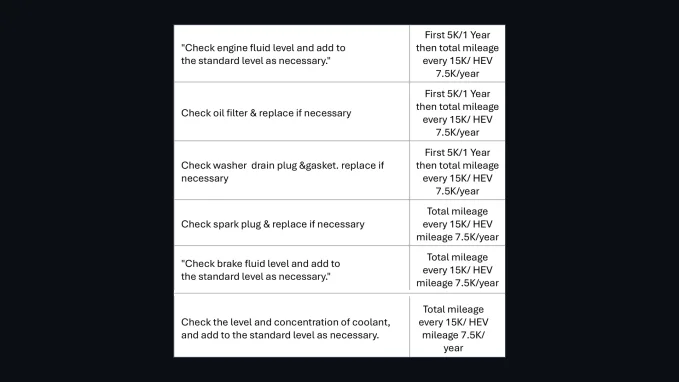
Engine oil, oil filter and the washer drain plug gasket are first due at 5,000 km or one year. After that, they follow the same rule as above: every 15,000 km total, 7,500 km HEV or one year. Spark plugs, brake fluid and coolant follow that rule too. The air filter is due every 30,000 km total, 15,000 km HEV or two years.
On the electric side, MG's schedule lists inspections at every service. These include the balance of the high-voltage battery pack, the high-voltage harness and connectors, the drive motor mounting and the software versions. The reducer oil, which is the oil in the motor's gearbox, is due every 60,000 km total, 30,000 km HEV or four years.
This means the engine items are on the schedule whether or not the engine did much of the driving, and the electric items are checked even if the car ran mostly on petrol. So the customer needs to pay for service of two powertrains, even if they mostly use only one.
MG's 1,100 km Range and Service
MG claims a combined range of 1,100+ km, of which 115+ km is electric. The car has a 52 litre fuel tank. That leaves about 985 km from the tank, or about 18.9 kmpl. It also means the claimed range assumes about 90% of the km are on the engine (985 of 1,100 km).
At that split, the 7,500 km HEV mark sets the service schedule. A driver using the full 985 km from a tank would reach it in about 7.6 tanks.
To stay within half on the engine, each tank has to be matched with electric driving. At the claimed 115 km electric range, one full charge plus 115 km on the engine adds up to 230 km, and uses about 6 litres of the 52 litre tank. To use all 985 km of the tank at a 50:50 split, you would need about 985 km on electric too, which is about 8.6 full charges. If the real-world electric range is lower than claimed, it takes more charges.
In short, the 1,100 km range and the 15,000 km service interval cannot both be had on the same trip.
How It Works for Different Drivers
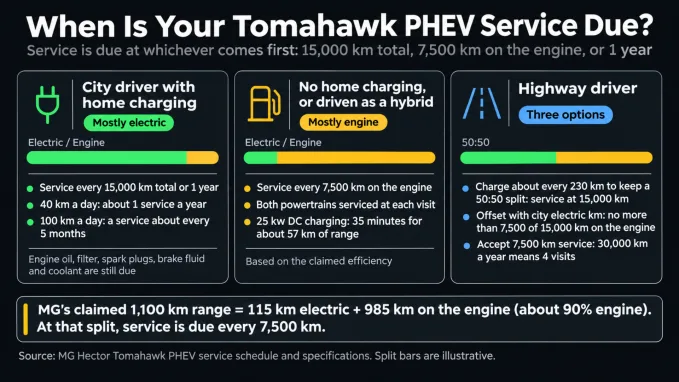
City driver with home charging
Most of the driving is on electric, and the engine rarely runs. Service is set by the 15,000 km total or the one-year mark. A driver covering 40 km a day, about 14,600 km a year, is due about once a year. One covering 100 km a day, within the claimed electric range, reaches 15,000 km in about five months.
In both cases, the engine oil, oil filter, spark plugs, brake fluid and coolant are still due on schedule, even if the engine ran very little.
A buyer in this position could also look at the Tomahawk EV. It has a 69.2 kWh battery and a claimed range of 517 km, and it has no engine to service. It costs ₹20.24 lakh to ₹24.24 lakh (ex-showroom), and the PHEV starts at ₹25.69 lakh (ex-showroom).
City driver without home charging, or one who treats it as a hybrid
Without regular charging, most of the driving is on the engine, so the 7,500 km HEV mark sets the service schedule. Both powertrains are serviced at each visit.
Public charging does not change much here. The car takes a 25 kW DC charger, which charges from 30% to 80% in 35 minutes. That adds about 10.25 kWh of the 20.5 kWh battery, or roughly 57 km of electric range at the claimed efficiency.
Highway driver
A driver covering long distances has three options.
The first is to charge often enough to keep the engine at half the km. At the claimed range, that means charging after about every 230 km. If the real-world electric range is lower, it means charging more often, and each 25 kW DC stop takes about 35 minutes for roughly 57 km.
The second is to offset highway km with electric km in the city. To be serviced at 15,000 km, no more than 7,500 of those km can be on the engine.
The third is to accept service every 7,500 km. A driver covering 30,000 km a year, mostly on the highway, would need four visits a year, each covering both powertrains.
Warranty
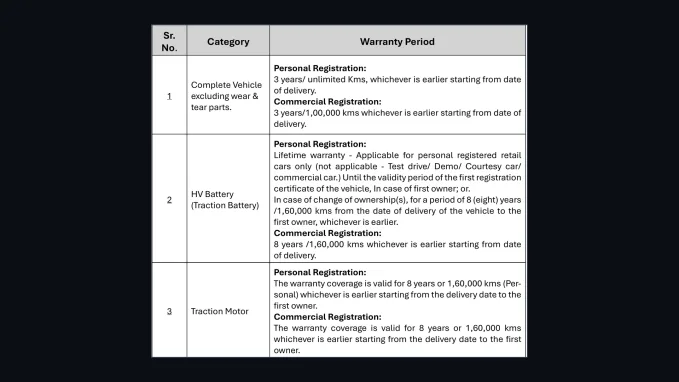
For personal registrations, the complete vehicle, excluding wear and tear parts, has a warranty of 3 years with unlimited km. The high-voltage battery has a lifetime warranty for the first owner, up to the validity of the first registration certificate. For later owners, it is 8 years or 1.6 lakh km from the first owner's delivery, whichever is earlier. The traction motor is covered for 8 years or 1.6 lakh km. The 12V battery is covered for 1 year, and roadside assistance for 3 years.
MG's warranty terms exclude damage from poor maintenance, in particular if the maintenance frequency in the owner's manual has not been followed. So it matters to know which counter will come first for your driving.
ElecTree's Take
A plug-in hybrid asks its owner to track something a petrol car or an EV does not: how much of the driving is electric and how much is on the engine. Keep the engine to half the km, and service comes every 15,000 km. Go beyond that, and it comes every 7,500 km, with both powertrains serviced.
A city driver with home charging can run mostly on electric, but the engine items are still due on schedule. The Tomahawk EV does the same job with one powertrain to service. Without home charging, the car runs mostly on the engine and needs service every 7,500 km. The full 1,100 km claimed range also comes only with that engine-heavy split.
Buyers should consider how they drive and where they charge before choosing the PHEV.
Trending Articles

Electric Scooter Battery Warranties Compared: What Do Ather, TVS, Bajaj and VIDA Actually Cover?

Ather Konarc Registrations More Than Double in October as Rizta Slips

Top Electric Two-Wheeler Models in October 2026: Chetak Leads, VIDA VX2 Gains Ground

Top 10 Best Selling EVs in India: September 2026
Recent Articles