
2021 Ather 450X Long Term Ownership Review - 5 Years and 35,000 Km Later
What does long-term electric scooter ownership actually look like after nearly half a decade on Indian roads? Through an in-depth conversation with an early adopter who has pushed a 2021 Ather 450X through nearly 35,000 km of daily commuting, this piece explores the nuances of battery health, subsidy paperwork, OTA software evolution, and the sharp contrasts in customer service experiences.


Category:
Tag:
- Ather
- Ather 450X
- Ownership Review
Mr. Desai, a member of the Electree EV community, has covered 35,000 km in his 2021 Ather 450X since taking delivery, exclusively sharing his half-decade-long ownership experience with Electree EV detailing real-world range, battery health degradation, component wear, and the evolution of everyday electric scooter maintenance in urban India.
When early adopters took a gamble on India’s fledgling electric two-wheeler market back in 2021, options were scarce and skepticism was high. For Mr. Desai, picking up an Ather 450X meant leaping into uncharted territory, but he had made up his mind and convinced the people around him to approve of the purchase too. Now, five years later, tracking these insights through Electree EV provides a lens into how a first-generation Indian EV ages under real-world driving conditions, battery cycles, and municipal wear-and-tear.
Early EV Adoption
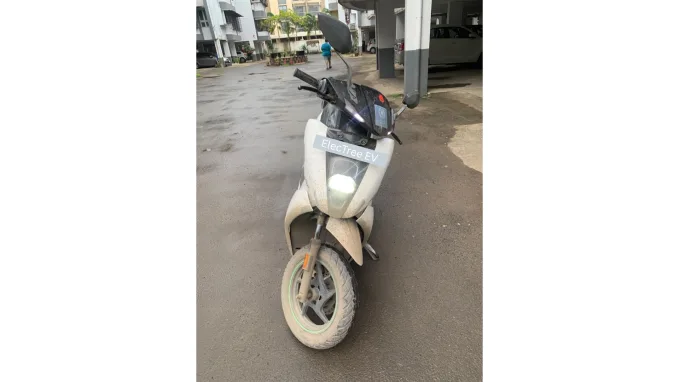
When speaking with Mr. Desai who has been running his scooter since those initial days in Ahmedabad, it became immediately clear just how much the EV landscape has shifted. Stepping back into the mindset of 2021, purchasing an unproven electric performance scooter meant taking a massive leap of faith into an uncharted category where traditional dealership support networks were still being figured out on the fly. Walking away from the extended conversation, it was clear that this machine has lived through the absolute trenches of early-stage electrification, with its odometer now sitting just shy of 35,000 km after nearly five years of continuous daily use. It represents the well-engineered survivors from an era when early adopters served as de facto beta testers for the entire domestic EV industry, absorbing teething issues and proving out foundational reliability parameters for everyone who came after them.
Early Subsidies
Discussing the financial hurdles and bureaucratic obstacles of 2021, Mr. Desai walked us through what it actually took to get an early EV legally registered and subsidized on the road back then. Navigating the process in Gujarat involved combining central scheme benefits with a state EV subsidy amounting to INR 20,000. From what he shared, completing the necessary state portal documentation and handling the showroom photo verification was simply part of the standard procedure, and the incentives paid off for him personally by offsetting the much higher purchase cost over ICE scooters at that time by a little bit without major complications.
Real-World Range and Charging Routine
- Exclusively Home Charged: He pointed out that he barely uses public infrastructure, choosing instead to handle all his routine energy needs by plugging the scooter in overnight right at home using a standard domestic socket.
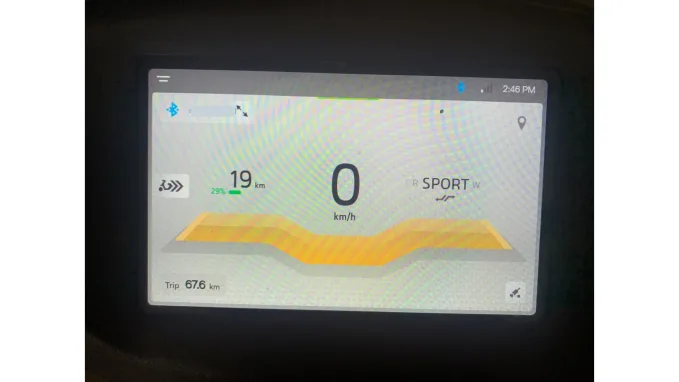
- Aggressive Commuting Performance: Driven almost exclusively in high-performance Sports mode with a heavy throttle hand, the scooter easily and reliably outputs about 50 to 55 km of real-world range per charge on his daily urban routes.
- Extended Highway Limits: When pushed to its absolute threshold on longer runs to out-of-town service facilities, he noted it can still stretch well past 95 km on a single charge in Sports mode without leaving him stranded.
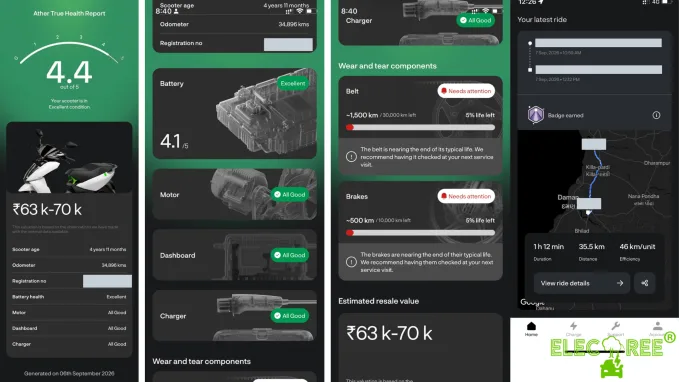
- Degradation Reality: Based on his long-term usage, the battery degradation over five years has stayed remarkably well-managed for an early-generation lithium-ion pack, proving the durability of early cells.
Software Evolution and Over-the-Air Updates
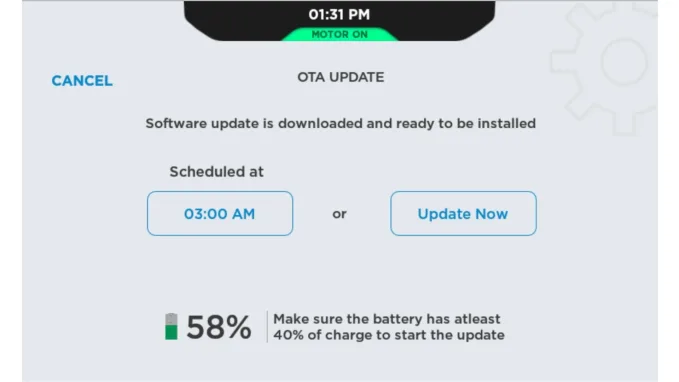
Mr. Desai continually praised the software lifecycle and the tangible impact of continuous updates over the years. Continuous over-the-air (OTA) updates fundamentally reshaped his day-to-day ownership experience, introducing crucial features like optimized charging behaviors, smart cut-offs, and various system performance refinements long after he had driven the scooter off the showroom floor. Rather than feeling like an aging piece of hardware destined for obsolescence, the scooter continually gained new capabilities and interface optimizations. Additional navigation updates and granular trip metric tracking kept the digital console feeling remarkably fresh, proving that a well-architected software-defined vehicle platform can successfully combat technological stagnation over a half-decade ownership window. He noted how this felt leaps and bounds above his previous ICE scooter experience.
Service Experiences: Goodwill and Peer Contrasts
One of the most striking takeaways from our conversation was the stark duality of his service center experience compared to others in the region. While dealing with routine and unscheduled maintenance, he walked away with zero personal issues and an overwhelmingly positive outlook because of personal goodwill gestures, proactive relationship-building with technicians, and quick interventions from the local support team, who swiftly resolved minor hiccups under warranty for absolutely free including the labor charges. However, he noted that his peers in the local EV community did not always fare so well, creating a noticeable contrast. Riders dealing with identical out-of-warranty or physical damage claims such as belt drive related issues frequently hit rigid brick walls. While his personal rapport secured him quick resolutions and supportive service exceptions, his peers often faced severe bottlenecks and weeks of downtime when replacement parts ran out of stock upstream.
Another interesting thing to note is that the owner claimed that some of his peers could not get replacement parts and the reasoning given to them by the service center was that Ather had either updated the designs in the new gen or stopped manufacturing some of the old gen parts altogether.
Mechanical Durability and Wear-and-Tear Realities
Delving deeper into the physical mechanics of a high-mileage scooter pushed to 35,000 km, we discussed how the chassis, suspension geometry, and primary moving parts held up against daily abuse. He noted that while the core structural frame and BLDC hub-adjacent motor assembly remained rock-solid without a single major mechanical failure, consumable items naturally demanded regular attention. Routine wear items like brake pads, tires, etc. required periodic replacement to keep the ride tight and predictable but most of these too were covered for absolutely free under warranty. Handling rough urban potholes demanded constant vigilance and periodic upkeep, yet the overall mechanical integrity of the chassis completely defied initial skepticism surrounding early-batch startup electric two-wheelers.
Smartphone App Connectivity and Digital Ecosystem
When we reviewed the accompanying mobile application, he shared his perspective on how digital connectivity integrates into daily use. He noted that the smartphone app provides useful telemetry, charging status updates, and ride statistics, making it easy to monitor battery health and trip logs remotely. The fact that the wear an tear, status and replacement recommendations can all be managed from the same app was extremely useful and provided peace of mind.
Perspectives on Public Charging and Network Shifts
Discussing the wider public charging network, he emphasized that he never actually used public fast chargers since his reliable home charging setup effortlessly handled everything he needed. Our discussion touched on how Ather strategically shifted its public charging grid from the initial complimentary model over to commercial paid structures, though it remained largely a background detail to his routine rather than an active component of his daily riding habits. He observed the rollout of fast-charging pillars across the city primarily as an observer, noting that while the expanding grid provides great peace of mind for heavy-footed commuters or delivery fleets, a predictable overnight home plug remains the ultimate path of least resistance for standard urban dwellers.
Rider Ergonomics and Daily Practicality
Talking about the day-to-day livability and ergonomic comfort of the scooter's physical design, for a daily commuter clocking heavy kilometers through congested traffic, seat comfort, floorboard space, and under-seat storage play a massive, unglamorous role in long-term ownership satisfaction. He pointed out that the overall packaging layout, low center of gravity, and sharp agility through dense urban traffic made it an exceptionally practical machine. The balance between sporty dynamics and utility ensured that minor comfort compromises were easily overshadowed by its sheer urban maneuverability.
Favorite Features and Desired Improvements
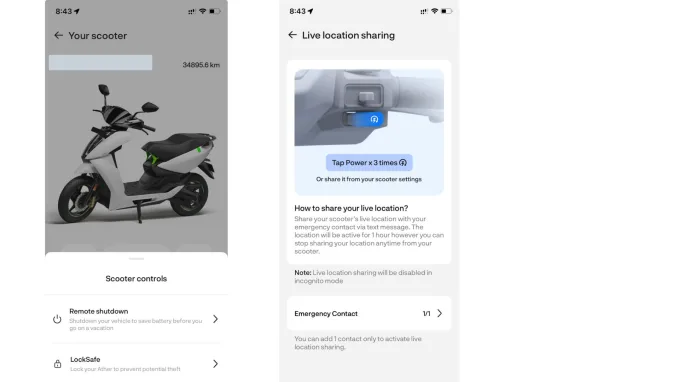
Diving into the aspects of the scooter he enjoys the most, he highlighted the instant torque delivery, sharp handling dynamics, and the sheer fun factor of riding in Sports mode through city traffic. He also mentioned that the cut-off feature was incredibly useful so as to preserve the battery life. He was also excited to mention about the Remote-lock feature that was introduced as an OTA update, which lets users lock their scooter and cut off power in the case of a robbery. Another feature mentioned was the live location sharing and emergency services auto-contact when the system detected a crash.
When asked about what features he wished were different or improved though, he thought for a while but could now come up with anything, mentioning that he was happy with pretty much all the scooter had to offer.
Outlook on the Next EV Upgrade
When I asked him about where he goes from here, the conversation naturally shifted toward his future plans for his next EV purchase. Having lived with an early-generation performance scooter for nearly half a decade, he remains completely sold on the electric lifestyle and refuses to look back at internal combustion engines. He also maintained that his next upgrade will be prioritizing the new Ather products, mainly the Konark as he's found his experience with Ather to be much better than what he could have hoped for. He also mentioned that while the 450 Apex is very attractive too, it is rather pricey and he would want to test out other models. He mentioned that he would not be against testing out other brands and models as well, such as the Hero Vida since Ather offers cheaper charging with it.
The Long-Term Ownership Verdict
Piecing together our entire conversation, Mr. Desai's 35,000 km journey proves that early-adopter bets can genuinely pay off for riders who stay proactive, engaged, and when the product is well engineered rather than being a cheap parts bin. Yet, as the domestic EV parc scales up rapidly toward mass adoption, our discussion underscored a vital industry truth: manufacturers need to standardize customer care and parts availability so that a smooth, stress-free ownership experience isn't just dependent on individual goodwill, personal rapport, or sheer luck. The owner of this 450X though, is extremely happy with his purchase and experience, and would consider himself as somewhat of an Ather loyalist.
Recent Articles
Trending Articles
Kerala Makes EVs More Affordable: Revised Road Tax Structure to Accelerate Adoption
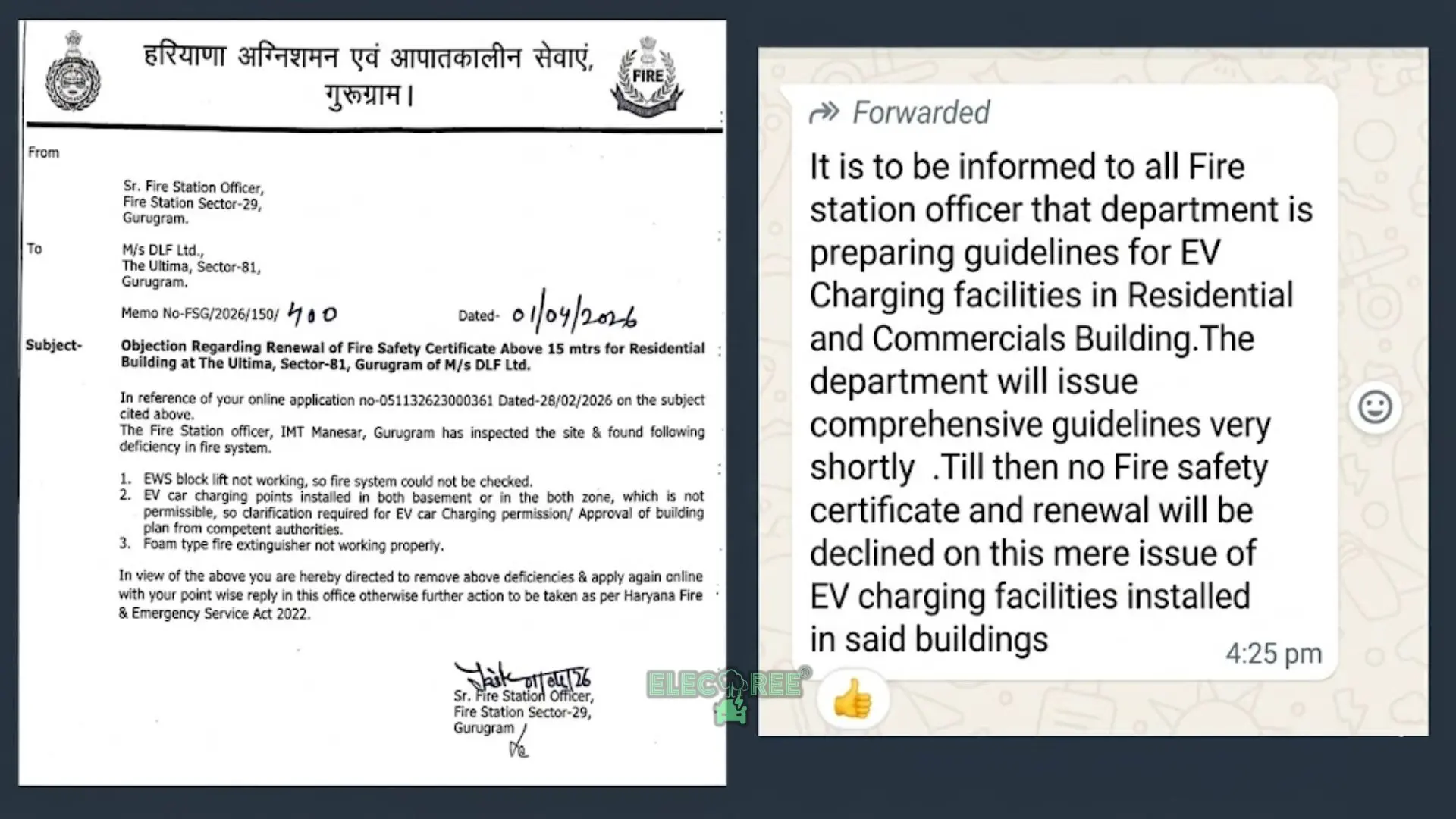
No Fire Safety Certificate Will Be Declined Over EV Chargers, Says Haryana Fire Department
India Car Sales by Fuel Type — March 2026: EV Share Hits New High, CNG Surges, Petrol Loses Ground
Haryana Releases Draft Fire Safety Guidelines for EV Charging