
VIDA VX2 Battery Plan vs Buying Outright: How to Compare the Real Cost
The monthly kilometre minimum can change how a VIDA VX2 battery plan works for your commute. Here’s how to compare both quotes before you buy.


Category:
Tag:
- VIDA VX2
- battery financing
- Battery-as-a-Service
- electric scooter costs
- battery warranty
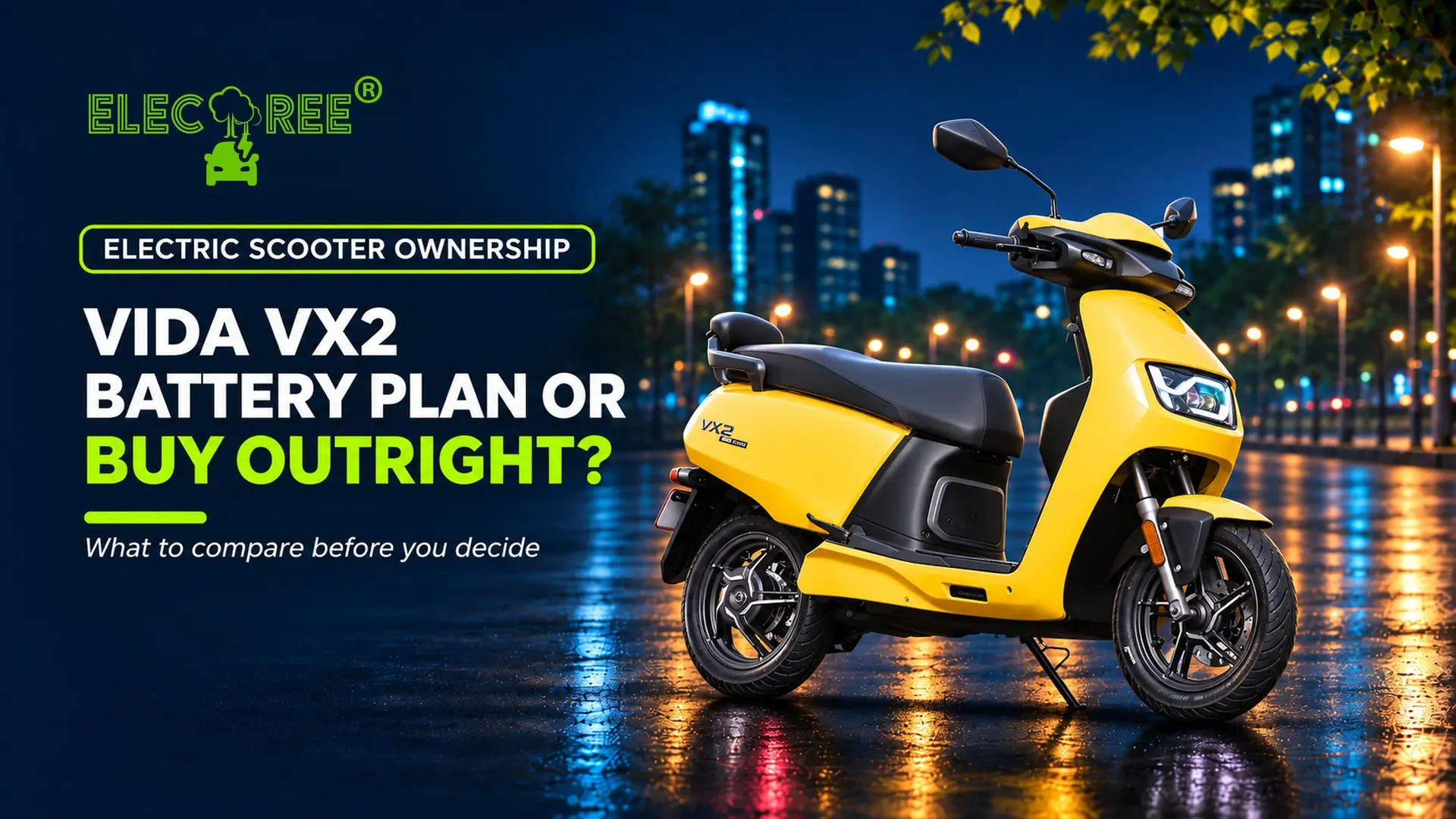
A lower upfront quote for a VIDA VX2 can look like an easy win when you are comparing scooters at a showroom. The decision gets more complicated once you look at how the battery is paid for. Under VIDA’s Battery-as-a-Service programme, the chassis and battery payments are separated, and the battery finance can carry a monthly kilometre minimum and an excess-use rate.
VIDA says the buyer owns the scooter and battery from purchase, with the vehicle pledged to the lender while the loans are outstanding. For a buyer comparing it with a full-price purchase, the useful question is how much cash goes out over the same period at the mileage they actually ride.
| Monthly distance | Against a hypothetical 600 km minimum | Illustrative extra distance billed |
|---|---|---|
| 300 km | Below the minimum | 0 km. Base payment still applies. |
| 600 km | At the minimum | 0 km |
| 1,000 km | Above the minimum | 400 km at the lender’s excess rate |
The 600 km threshold is an example. Lender terms determine the actual minimum, fees and overage.
The three examples use a hypothetical 600 km monthly minimum. They show how the threshold would work if it appeared on a lender’s quote. Actual thresholds, charges and tenures depend on the offer.
What 300, 600 and 1,000 km a month would change
At 300 km a month, a rider on that example plan would still have a base payment built around the minimum. That fixed obligation matters if the scooter is mostly for errands, if another vehicle handles the commute or if travel drops sharply for part of the year. Ask how unused kilometres are handled and whether the chosen plan can be changed.
At 600 km, the rider would be exactly at the example threshold. Compare the full battery payments and any fees with the amount required to buy that same variant outright. A lower upfront amount may help the household budget even when the total rupee cost is higher.
At 1,000 km, the first full month in the example would be 400 km over the threshold. If the lender quotes an excess rate of R rupees per kilometre, that means 400 × R in extra charges for that month under the example assumptions. VIDA’s FAQ also says the battery payment obligation can conclude when the total contracted kilometres are exhausted or the tenure ends, whichever comes first. Ask how the monthly overages interact with that limit before projecting several years of bills.
Compare two quotes for the same scooter
Ask for a full cash on-road price and a written BaaS quote from the same city, for the exact same battery variant. On the plan side, add the chassis payment, total battery payments, fees, any paid warranty required by the financier and estimated excess charges. If you also finance the chassis, use its total repayments rather than its sticker price. Include the same insurance, statutory charges and incentive assumptions on both sides.
VIDA’s FAQ says a paid extended battery warranty is required for enrolment for purchases on or after 1 September 2025. It also says the plan cannot transfer to a new owner and that pending loans must be foreclosed before resale. If you expect to sell the scooter in two years, ask for the foreclosure terms alongside the monthly instalment.
A quote with the monthly minimum, the total cost and the early-exit terms on the same page is enough to make a useful comparison. Without those details, even a precise-looking per-kilometre rate leaves much of the bill unanswered.
Trending Articles


Recent Articles
How MG Hector Tomahawk PHEV Servicing Works: 7,500 km vs 15,000 km
2.5 Lakh km in an MG ZS EV: Ownership Review
Fronx Beats Punch by Just 29 Private Registrations in October 2026 - Top 25 model by private registrations
Paytm Partners up with ChargeZone to Bring QR Payments to 15,000+ EV Charging Points Across India