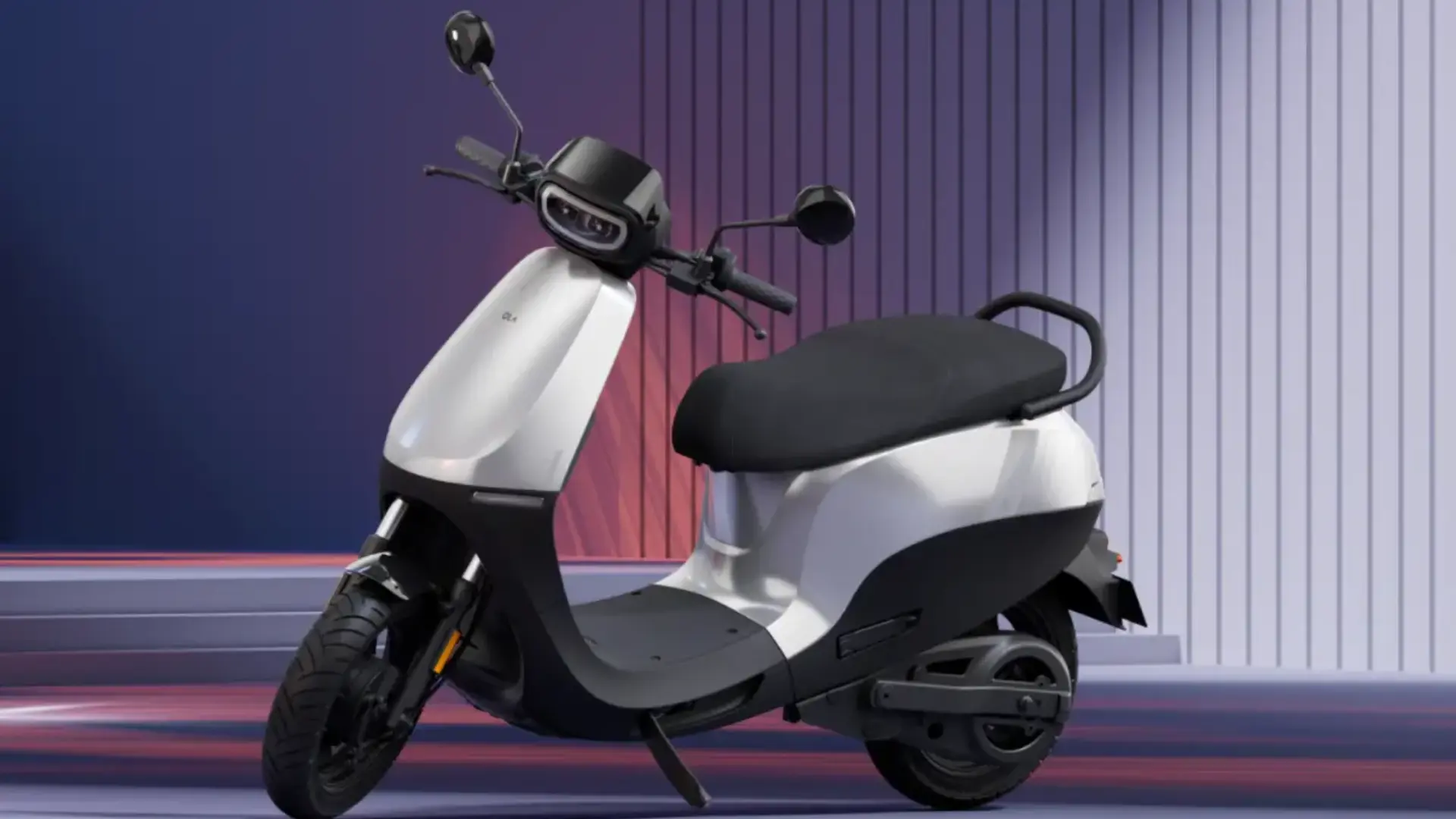
Ola Electric Opens Up to Dealers
Ola Electric will transition to a dealer-led sales and service network across India, ending its direct-to-consumer model. The move signals a major operational shift as the company looks to improve customer experience and strengthen its market position.


Category:
Tag:
- Ola Electric
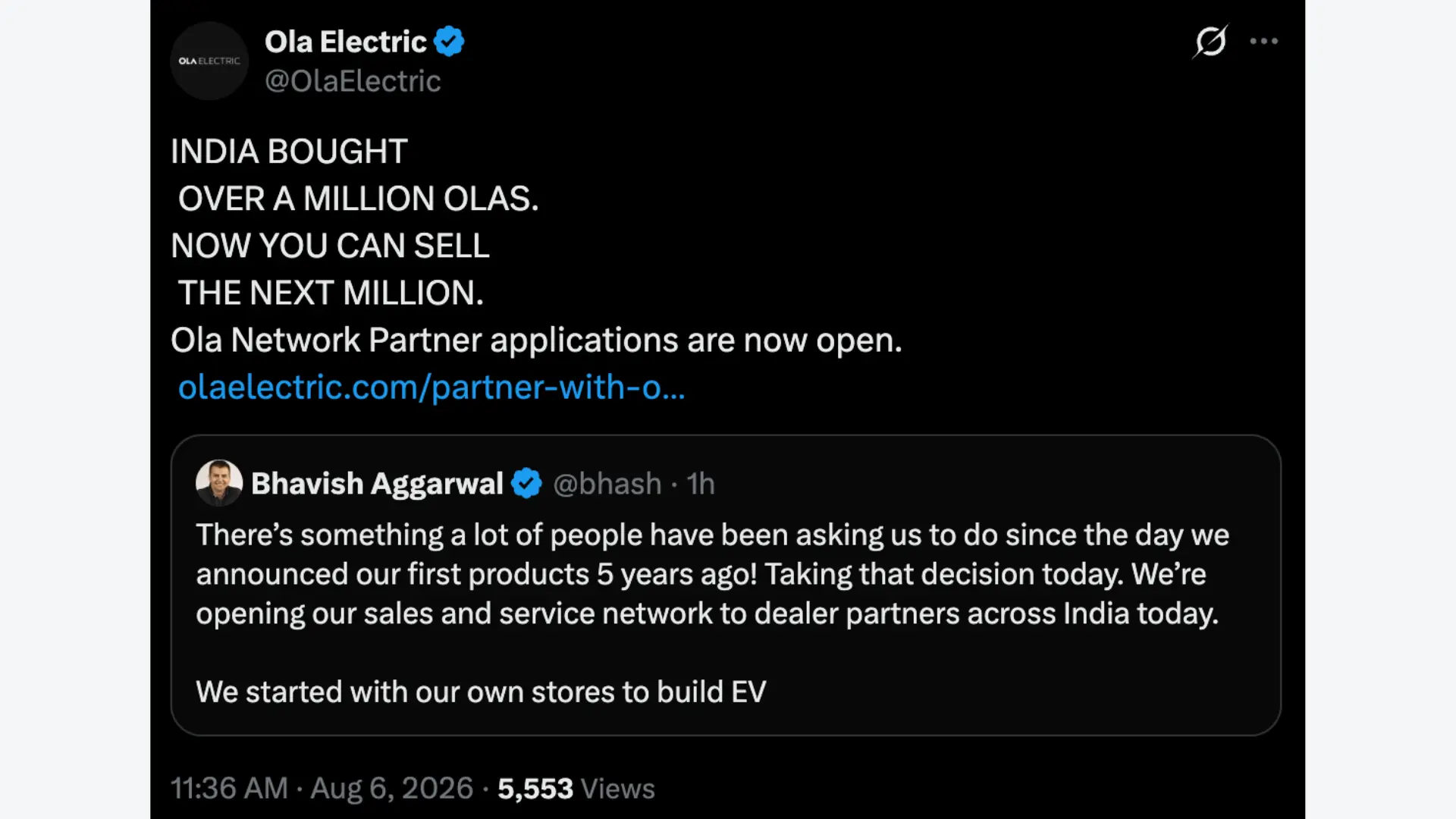
Ola Electric is opening its sales and service network to independent dealer partners across India, ending the direct-to-consumer model it has followed since launch.
Founder and CEO Bhavish Aggarwal announced the move on August 6, saying the company plans to build a significant dealer network by Diwali 2026. The transition marks one of the biggest changes to Ola Electric's retail strategy since entering the electric two-wheeler market.
What Changes
Under the new model:
- Company-owned stores will become experience centres focused on product displays and test rides.
- Independent dealers will handle sales, deliveries and after-sales service.
- Dealers will retail Ola's complete product portfolio, including electric scooters, motorcycles and the Shakti home battery.
- Ola will continue managing spare parts through a centralised supply chain.
- Former Hyundai Motor India executive BVR Subbu has joined as Senior Advisor to oversee the rollout.
Subbu previously served on Ola Electric's board and brings decades of experience in building dealer networks.
Moving Towards an Industry Standard
Unlike Ola Electric's direct-to-consumer strategy, most established two-wheeler manufacturers, including TVS Motor, Bajaj Auto and Ather Energy, have long relied on dealer-led sales and service networks.
The transition brings Ola's operating model closer to the broader automotive industry, where manufacturers focus on products and supply chains while local dealerships manage customer relationships and after-sales support.
Why the Timing Matters
The announcement follows a period in which after-sales service became one of Ola Electric's biggest operational challenges.
Over the past year, customers have frequently reported delays in repairs, spare-parts availability and service turnaround times. A wider dealer network could increase local service capacity, particularly in cities where company-operated centres have struggled to keep pace with demand.
The broader business environment has also become more competitive.
Ola's share of India's electric two-wheeler market has declined from a peak above 36% to around 16%, while rivals such as TVS Motor, Bajaj Auto and Ather Energy have strengthened their positions. During the same period, the company has seen several senior leadership exits, and investor SoftBank has reduced its shareholding.
During the Q4 FY26 earnings call, Aggarwal described the previous quarter as an "execution reset", focused on improving service operations and supply-chain efficiency. The dealer rollout aligns with that broader operational strategy.
More Than a Sales Network
The shift isn't simply about opening more retail outlets.
A dealer network distributes customer-facing operations across local businesses instead of relying primarily on company-managed centres. That can improve responsiveness, shorten service timelines and create stronger local accountability, provided dealers are adequately trained and supported.
For Ola, it also changes how the brand scales. Future growth will depend not only on manufacturing capacity and product launches, but also on the quality and consistency of execution across hundreds of independent partners.
What Dealers Get
Dealers will sell Ola's complete product portfolio while servicing a customer base of more than one million Ola EVs already on Indian roads.
Beyond vehicle sales, recurring revenue from servicing and energy products such as the Shakti home battery could make dealerships more financially sustainable over time. The company has not yet disclosed dealer margin structures.
The Execution Test
Building a nationwide dealer network is a major operational exercise.
It requires onboarding partners, training technicians, maintaining consistent service standards and integrating new dealerships with existing experience centres.
Ola plans to achieve a meaningful rollout before Diwali 2026, leaving only a few months to execute one of the largest operational transitions in the company's history.
What to Watch
The rollout will ultimately be judged by outcomes rather than announcements.
Key questions include:
- Will service turnaround times improve?
- Can Ola maintain consistent standards across independently operated dealerships?
- Will the expanded network help stabilise market share?
- Can the company execute the transition before the festive season?
What This Means
Opening the network to dealers represents a significant shift in how Ola Electric operates.
For customers, the change could mean better access to sales and faster after-sales support. For the company, it aligns its retail strategy with an approach that has long been the industry standard while placing greater emphasis on local execution.
The announcement sets a new direction. Whether it becomes a turning point for Ola Electric will depend on how effectively the company translates the strategy into a consistently better ownership experience over the coming months.
Recent Articles
Trending Articles
Kerala Makes EVs More Affordable: Revised Road Tax Structure to Accelerate Adoption
India Car Sales by Fuel Type — March 2026: EV Share Hits New High, CNG Surges, Petrol Loses Ground
No Fire Safety Certificate Will Be Declined Over EV Chargers, Says Haryana Fire Department
Haryana Releases Draft Fire Safety Guidelines for EV Charging