
No More Basement Battles: Haryana Makes EV Charging Mandatory in New Homes & Offices
Haryana has made EV charging mandatory in new buildings. But what are the new rules? How many chargers are required in residential vs commercial projects? And what about basement charging and pending fire safety norms?


Category:
Tag:
- EV Charging
- DTCP Guidelines
- EV
Building on our earlier coverage of the draft proposals in late April 2026, when the Town and Country Planning Department (DTCP) first floated amendments to allow charging in basements and stilt parking, Haryana has now moved from consultation to concrete action. On June 5, 2026, DTCP notified the final amendments to the Haryana Building Code, 2017, making EV charging infrastructure a mandatory element in new and renovated projects across the state.
This marks a significant evolution. What began as a draft responding to community concerns, including social media campaigns and questions around fire NOCs has now crystallised into enforceable rules. For EV owners in Gurugram, Faridabad, and other urban centres who previously faced resistance from RWAs or unclear approval processes, the notification brings long-awaited regulatory clarity.
It’s also important to note that these guidelines aren’t limited to new projects. For existing buildings, the rules explicitly allow individual allottees (flat owners) to install EV charging infrastructure in their allocated parking space. This is permitted subject to approval and certification from the Fire Department and the concerned DISCOM (electricity distribution company), ensuring compliance with electrical and fire safety norms
What the Final Rules Require
The amendments apply to residential and non-residential projects with parking for 10 or more vehicles. Key provisions include:
- Minimum Charging Provision: Commercial buildings such as malls, offices, hotels, and shopping complexes must install at least one dedicated EV charging point for every three parking spaces. Residential projects, including group housing societies, cooperative housing, and RWA-managed complexes, must provide one charging point for every five parking spaces.
- 100% EV-Ready Design: All parking spaces in new constructions and major renovations must include pre-installed electrical conduits and wiring infrastructure. This ensures chargers can be added later with minimal disruption and cost.
- FAR Exemption: EV charging infrastructure will not be counted towards Floor Area Ratio (FAR), removing a previous financial disincentive for developers.
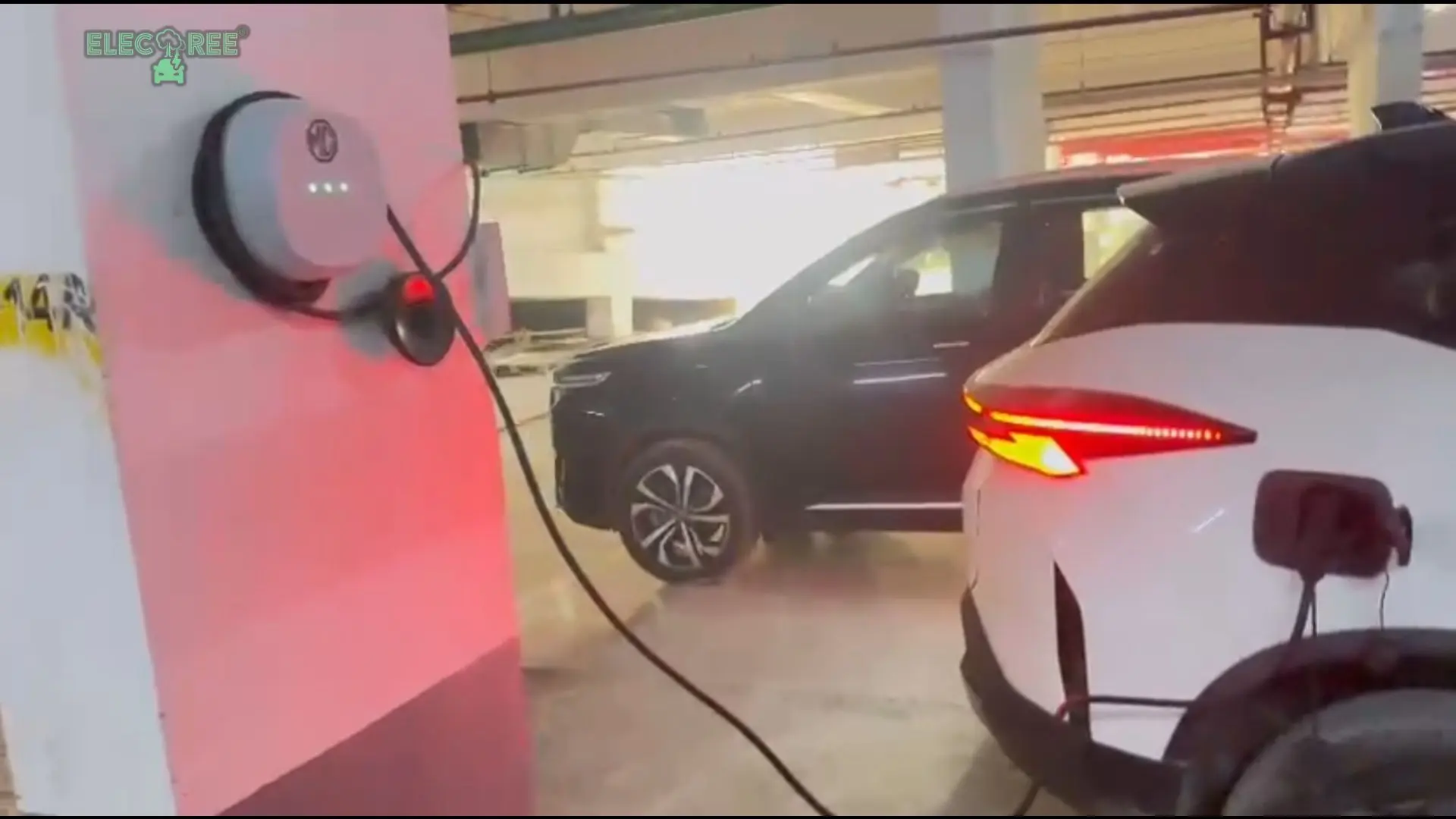
- Basement and Stilt Parking Permitted: Charging facilities are explicitly allowed in basement and stilt areas, subject to compliance with prescribed fire safety and electrical norms. This directly builds on the draft language that many in the EV community welcomed as a positive signal.
These changes shift EV charging from an optional or contentious add-on to a planned, standard feature of building design.

Practical Implications for Buyers, Residents, and Developers
For homebuyers, EV readiness is now a question worth asking during property searches. New projects will increasingly market dedicated charging points or pre-wired parking as standard features rather than premium upgrades. This levels the playing field for families considering their first electric vehicle without worrying about “where will I plug in every night?”
Existing residents and RWAs gain a clearer reference point. While the rules primarily govern new and renovated projects, they set a benchmark that can help resolve ongoing disputes in older societies. The earlier draft had already pushed back against arbitrary bans; the final version strengthens that position with explicit permissions.
Developers now have both obligation and incentive. The FAR relief helps offset costs, while early movers who integrate thoughtful charging zones, with proper load management, ventilation planning, and scalability, will stand out in a market where buyers are increasingly EV-aware.
Looking Ahead: What These Guidelines Could Unlock
Beyond immediate compliance, the amendments open the door to deeper collaboration between the real estate and EV sectors. Builders may increasingly partner with established charge point operators and energy companies to design, install, and even manage charging infrastructure as part of project delivery. Such tie-ups could bring professional-grade equipment, maintenance contracts, and even bundled home-charging solutions for residents. This means turning what was once a fragmented, owner-driven effort into a more seamless ecosystem.
More importantly, reliable home and workplace charging removes one of the biggest psychological and practical barriers that previously held back EV adoption in urban apartment-heavy markets like Haryana. When people know they can charge conveniently where they live and work, without depending solely on public stations or navigating society permissions, the decision to switch to an electric vehicle becomes far more straightforward. Over time, this infrastructure certainty could accelerate the shift towards EVs among middle-income buyers who were earlier hesitant due to charging logistics.
These rules also position Haryana competitively within India’s broader EV transition. States that embed charging readiness into urban planning tend to see faster private infrastructure growth, which complements public charging networks and improves overall utilization.
Safety Norms: The Next Piece of the Puzzle
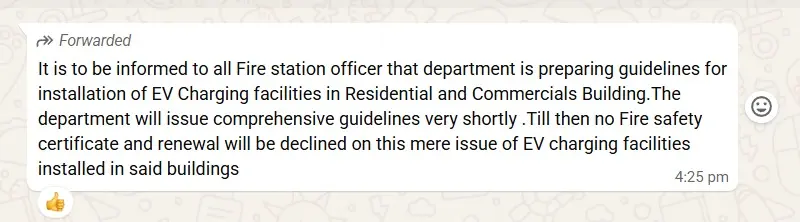
One thing that’s still a bit murky is the fire safety and electrical guidelines for EV chargers in basements and enclosed parking. The new rules clearly say that basement and stilt charging is allowed, but only if it meets the fire safety norms, which haven’t been fully finalized yet by the Haryana Fire Department.
This means that until those detailed guidelines come out, project approvals and society-level permissions will likely move slowly. Developers and RWAs will have to show that they’re taking “reasonable” safety measures, but without clear rules, everyone’s playing it safe. Some might delay installations, while others could get overly cautious and push back on charger requests.
It’s a classic case of regulators wanting to get things right rather than rushing and creating bigger problems later. While that’s understandable, it does leave some uncertainty on the ground, especially for existing EV owners in societies who are still waiting for clarity, and for developers who are trying to plan new projects. The gap between the building code permission and actual on-ground implementation will probably take a few more months to close properly.
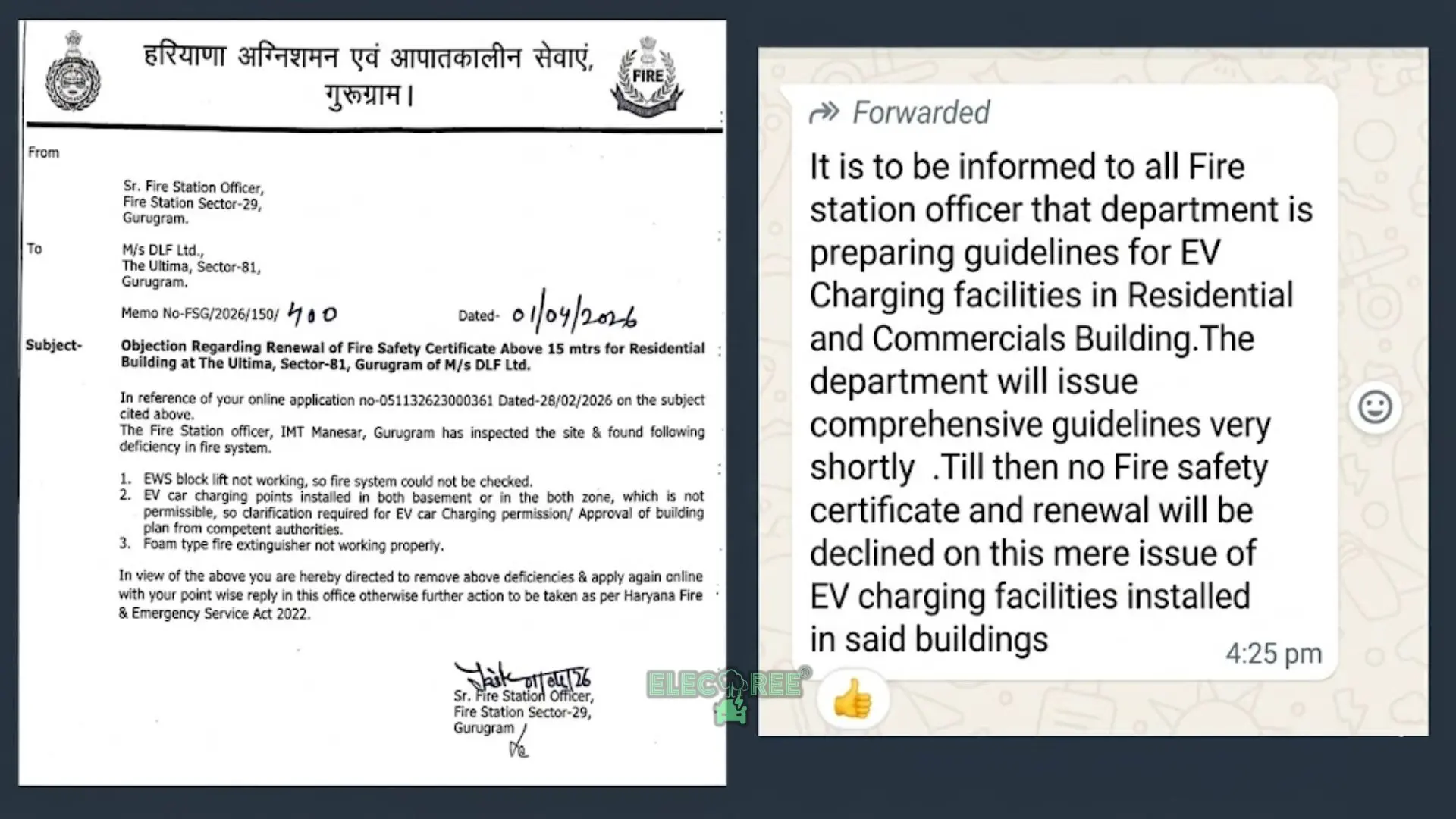
It’s worth remembering that even before these building code changes, the Haryana Fire Department had clarified that fire safety certificates wouldn’t be denied just because of EV chargers, at least until proper guidelines are issued. That temporary assurance still holds, but the absence of detailed installation norms for basements means many projects and societies are likely to move cautiously until the final guidelines are notified.
A Step Towards Normalizing EV Living
Haryana’s decision to finalize these building code amendments reflects a maturing policy environment. It moves beyond headline incentives and vehicle subsidies to address the everyday realities of EV ownership, where and how people actually charge?
For the EV community that advocated during the draft stage, and for buyers who have been waiting for clearer signals, this notification is meaningful progress. It doesn’t solve every challenge overnight, but it removes unnecessary regulatory friction and sets a foundation for smarter infrastructure planning.
As implementation begins in earnest, the real test will be how effectively developers, RWAs, and charge point providers come together to turn these mandates into reliable, safe, and user-friendly charging experiences. If that collaboration materializes, Haryana could well see a noticeable uptick in EV adoption driven not just by vehicle choice, but by the simple fact that charging finally feels integrated into daily life.
Sources:
- Amendments to the Haryana Building Code, 2017, notified by the Haryana Town and Country Planning Department (DTCP) on June 5, 2026.
- ElecTree’s earlier coverage of the draft amendments (April 28, 2026), which highlighted basement/stilt permissions and community advocacy around fire safety concerns.
Disclaimer:
All articles, images, and content on ElecTree are protected by copyright. Reproduction or distribution of any content without prior written permission is strictly prohibited.
When sharing or republishing any article, proper credit must be given to ElecTree with a link to the original source. Removal or modification of ElecTree’s logo and images constitutes copyright infringement.
To comment and participate in discussion Click Here
Recent Articles




Trending Articles
Kerala Makes EVs More Affordable: Revised Road Tax Structure to Accelerate Adoption

India Car Sales by Fuel Type — March 2026: EV Share Hits New High, CNG Surges, Petrol Loses Ground
No Fire Safety Certificate Will Be Declined Over EV Chargers, Says Haryana Fire Department
Haryana Releases Draft Fire Safety Guidelines for EV Charging