BYD Just Cut ₹9 Lakh From The Sealion 7’s Entry Price
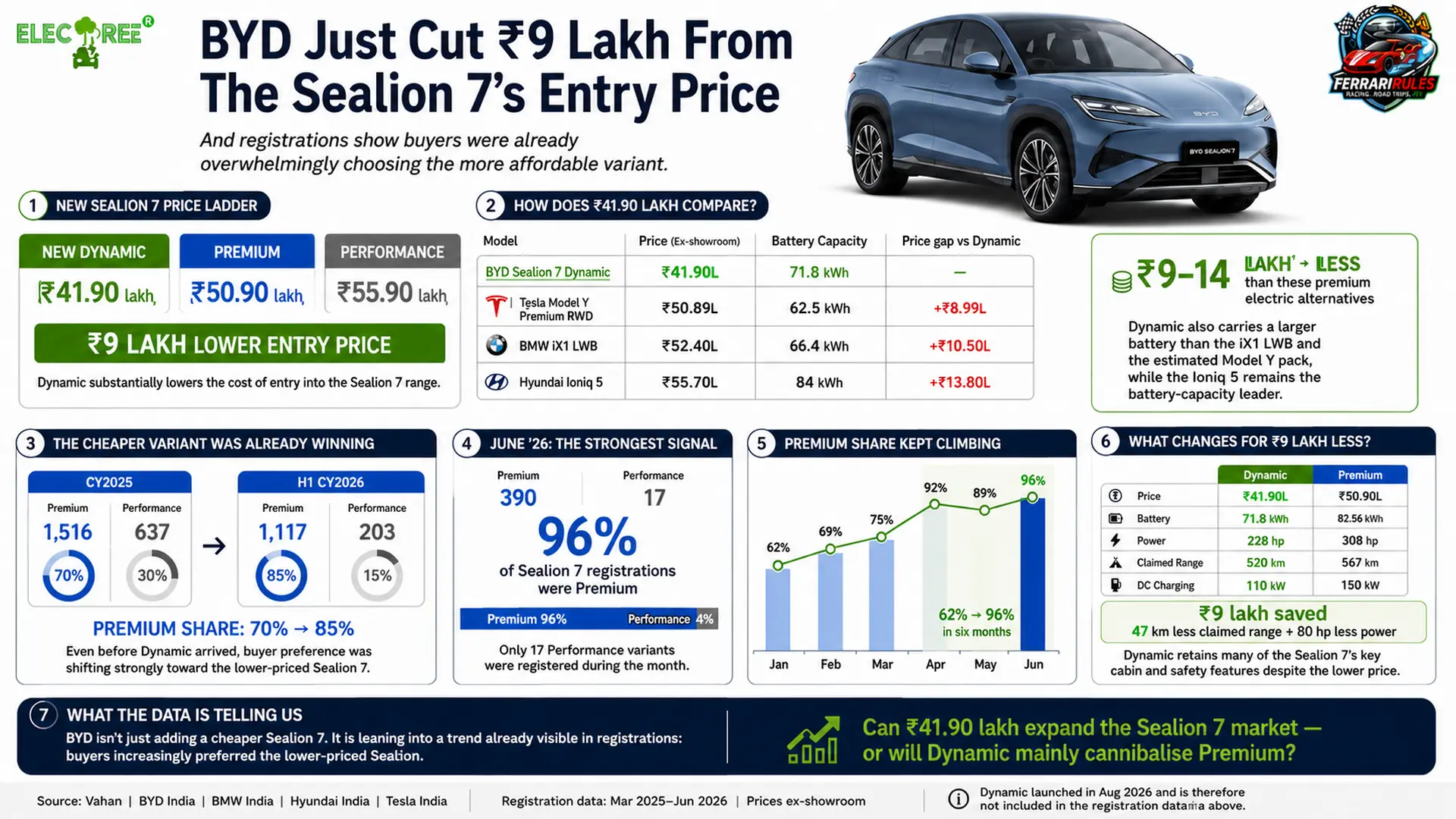
BYD has launched the Sealion 7 Dynamic at ₹41.90 lakh, cutting the model’s entry price by ₹9 lakh. Vahan data shows why that matters: Premium’s share rose from 70% in CY2025 to 85% in H1 CY2026 and hit 96% in June. Dynamic also undercuts the Model Y Premium RWD, BMW iX1 LWB and Hyundai Ioniq 5 by roughly ₹9–14 lakh, testing just how price-sensitive India’s premium EV market is.


Category:
Tag:
- BYD Sealion 7
- BYD Sealion 7 Dynamic
- BYD India
BYD has made the Sealion 7 significantly more accessible in India with the launch of the new Dynamic variant at ₹41.90 lakh ex-showroom. On the surface, this is a straightforward price-led expansion of the range. But registration data from the existing Sealion 7 variants suggests there may be a deeper reason behind the move.
Buyers were already overwhelmingly gravitating toward the cheaper version of the electric SUV. Until now, the Sealion 7 range consisted of the Premium at ₹50.90 lakh and the Performance at ₹55.90 lakh. The new Dynamic therefore lowers the entry price by a substantial ₹9 lakh compared with the Premium.
That is not a minor repositioning. It changes where the Sealion 7 sits in India's premium EV market.
Sealion 7 Buyers Were Already Moving Toward The Cheaper Variant
Vahan registration data shows that the Premium had already become the dominant Sealion 7 variant well before the Dynamic arrived.
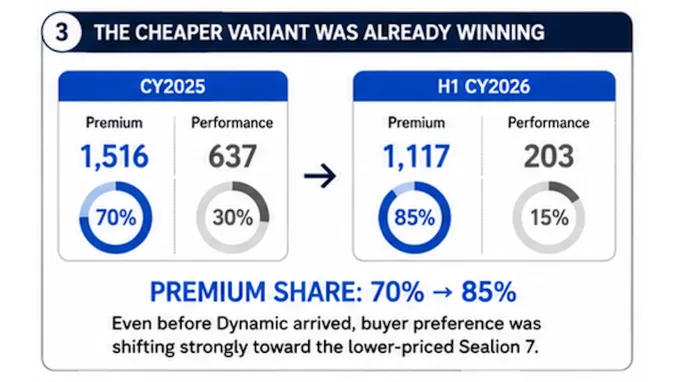
During CY2025, 1,516 Premium variants were registered compared with 637 Performance variants. That gave the Premium approximately 70% of Sealion 7 registrations, with the Performance accounting for the remaining 30%.
The difference became considerably larger in H1 CY2026. Premium registrations reached 1,117 units during the first six months of 2026, while the Performance managed just 203. The Premium's share consequently increased to around 85%, leaving the Performance with only 15%.
In other words, the lower-priced Sealion 7 moved from roughly seven out of every ten registrations in 2025 to more than eight out of every ten during H1 2026.
The trend becomes even clearer when looking at the monthly data. Premium's share of Sealion 7 registrations increased from 62% in January to 69% in February and 75% in March. It then jumped to 92% in April, remained at 89% in May, and reached 96% in June. June was particularly striking. Of the 407 Sealion 7s registered during the best-ever sales month, 390 were Premium variants. Just 17 were Performance models. That means almost 96% of Sealion 7 registrations in June came from the cheaper of the two variants then available.
BYD Has Now Gone Another ₹9 Lakh Lower
The new Dynamic effectively takes that pricing strategy much further.
At ₹41.90 lakh, it is ₹9 lakh cheaper than the Premium and ₹14 lakh below the Performance. The lower price does come with compromises. The Dynamic uses a 71.8 kWh battery compared with the Premium's 82.56 kWh pack. Power drops from 230 KW in the Premium to 170 kW, but the torque remains the same, while claimed range decreases from 567 km to 520 km.
DC fast-charging capability is also lower at 110 kW versus 150 kW. So this is not simply the same Sealion 7 with a lower sticker price. BYD has reduced battery capacity, performance, and charging capability to create a much more affordable entry point. The question is whether those compromises matter enough to buyers to offset a ₹9 lakh saving. The existing registration mix suggests price could prove to be a powerful factor.
At ₹41.90 lakh, the Sealion 7 also moves much closer to the upper end of the mainstream premium market rather than sitting exclusively among ₹50 lakh-plus electric SUVs.
Read more in our coverage in the article
₹41.90 Lakh Also Changes The Competitive Picture
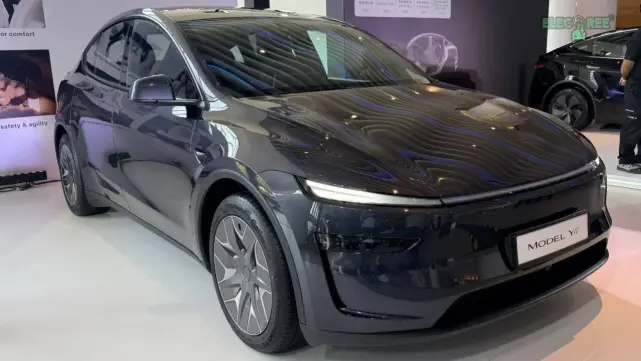
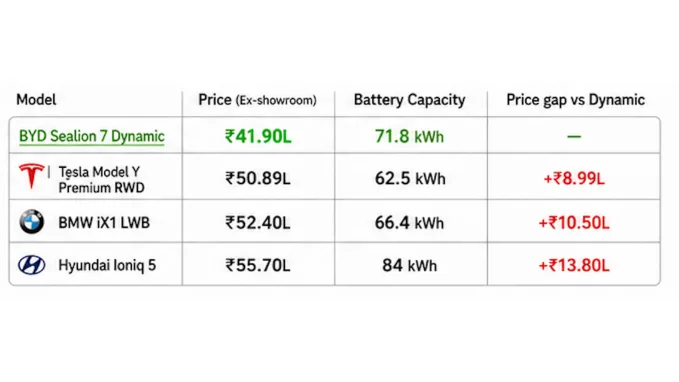
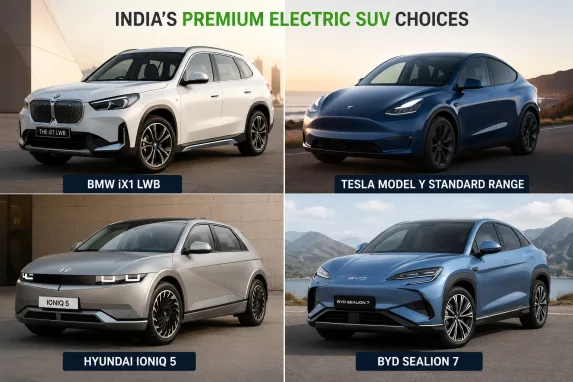
The Dynamic's pricing becomes even more interesting when it is placed alongside other premium electric vehicles available in India. The Tesla Model Y Premium RWD is priced at ₹50.89 lakh, while the BMW iX1 LWB costs ₹52.40 lakh. Hyundai's Ioniq 5 is priced at ₹55.70 lakh. That puts the Sealion 7 Dynamic roughly ₹9 lakh below the Model Y Premium RWD, ₹10.5 lakh below the BMW iX1 LWB and ₹13.8 lakh below the Ioniq 5.
Battery capacity also makes the comparison noteworthy. The Sealion 7 Dynamic gets a 71.8 kWh battery, compared with 66.4 kWh in the BMW iX1 LWB. The Model Y Premium RWD is generally reported with a battery of around 64 kWh, although Tesla does not officially disclose battery capacity in India. The Ioniq 5 remains the largest of the four with an 84 kWh pack.
Price alone never tells the complete story, especially in the premium EV segment where efficiency, range, charging speed, equipment, brand appeal and ownership experience all matter. But the Dynamic now enters the comparison with a significant price advantage.
The Next Few Months Will Be More Interesting Than The Launch
The real test starts now. There are two very different ways the Dynamic could affect Sealion 7 registrations.
It could simply cannibalise the Premium, with existing buyers switching from the ₹50.90 lakh variant to the cheaper ₹41.90 lakh model. Or it could bring a new group of customers into the Sealion 7 altogether and increase the model's overall volumes. That distinction will become visible once Dynamic registrations begin appearing in Vahan data.
For now, one thing is already clear: BYD's decision to move the Sealion 7 down to ₹41.90 lakh is happening against a backdrop where Indian buyers had already shown a very strong preference for the more affordable variant. The Dynamic is therefore more than another trim. It is a test of just how price-sensitive India's premium EV buyer really is.
To comment and participate in discussion Click Here
Trending Articles