Affordable Electric SUVs Coming to India by 2027: 2 Models to Watch
Hyundai and JSW Motors are preparing new electric SUVs for India. Here's what we know about their expected launches, pricing and specifications in 2027.


Category:
Tag:
- Upcoming Electric SUVs
- Electric SUVs India
- 2027 EV Launches
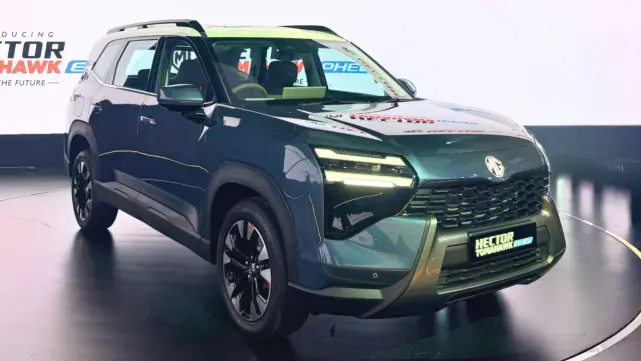
India's affordable electric SUV segment could see some interesting additions in 2027. Hyundai is preparing a locally developed compact EV, and JSW Motors is developing an electric SUV based on the Chery iCar V23.
However, not all three have equally clear launch timelines. While Hyundai's upcoming EV is expected in early 2027, JSW's iCar-based SUV could arrive later.
Here's what prospective buyers should know.
Upcoming electric SUVs at a glance
| Model | Expected timeline | Expected Price positioning |
|---|---|---|
| Hyundai HE1i / Ioniq P | 2027 | ₹11-₹17 lakh |
| JSW iCar V23-based SUV | 2027–28; uncertain | ₹17–20 lakh |
These are expected timelines, not guaranteed delivery dates. None of the three manufacturers has announced final Indian pricing.
1. Hyundai HE1i (expected to be called Ioniq P)
Hyundai's upcoming compact electric SUV, internally codenamed HE1i, could be one of the most important launches in India's affordable EV segment in 2027. Expected to make its debut in Q1 2027, the model will be designed and manufactured specifically for India, expanding Hyundai's electric portfolio beyond the Creta Electric and Ioniq 5.
The SUV is widely expected to carry the Ioniq P name. Hyundai management referred to the Ioniq P during its October 2026 earnings call, although Hyundai Motor India has not yet officially confirmed that this is the production name of the HE1i project. Until the company makes a formal announcement, HE1i remains the confirmed project identity.
Platform and battery options
The HE1i will use Hyundai's E-GMP (K) platform, a compact EV architecture that also underpins the international Hyundai Inster. However, the Indian model is being developed with its own market requirements in mind and should not be treated as a direct copy of the Inster.
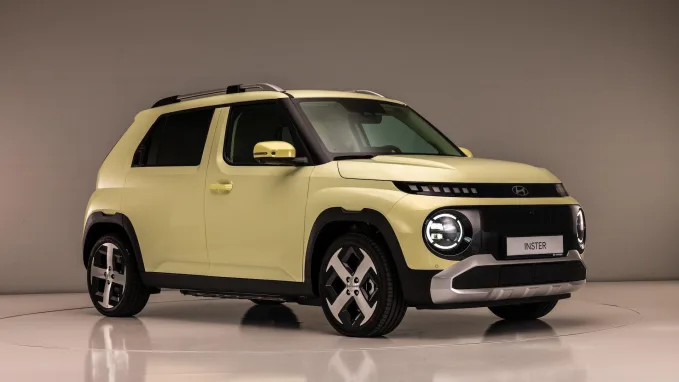
Hyundai is expected to offer two battery configurations: a standard-range version and a long-range version. Exact battery capacities, motor outputs and certified range figures have not yet been announced. For reference, the international Inster is offered with 42kWh and 49kWh battery packs, but these figures should not be assumed to apply to the India-spec SUV.
The HE1i is also expected to use locally sourced battery solutions, with Hyundai's partnership with Exide Industries forming part of its localisation plans. The extent and timing of local cell sourcing will be important factors to watch as production approaches.
Features and positioning
Hyundai has indicated that the upcoming SUV will receive a next-generation infotainment system and Level 2 advanced driver assistance technology. These features could help it stand out in a segment where buyers increasingly expect more than just a competitive battery and driving range.
The model will be manufactured at Hyundai's Sriperumbudur facility in Tamil Nadu. Local production could help the company control costs and make the vehicle more competitive against established offerings such as the Tata Nexon EV and Mahindra XUV 3XO EV.
Its final pricing will determine how aggressively Hyundai can compete. With two battery options expected, the company could appeal to both buyers prioritising affordability and those willing to pay more for additional range. Hyundai has not announced an official price yet.
Why it matters: A locally developed electric SUV with two range options could help Hyundai compete in a segment where pricing, range and service support are major buying considerations.
2. JSW Motors' Chery iCar V23-based electric SUV
JSW Motors is preparing an electric SUV based on the Chinese-market Chery iCar V23. The India-specific version has been spotted testing, and its design has appeared in an Indian patent filing.
The SUV is expected to retain the V23's distinctive boxy proportions, circular headlamps and rugged styling, although the patent images reveal some exterior differences.
For reference, the international iCar V23 is offered with two battery options:
| Specification | RWD | AWD |
|---|---|---|
| Battery | 59.93kWh | 81.76kWh |
| Power | 136hp | 211hp |
| Torque | 180Nm | 292Nm |
| Claimed CLTC range | 401km | 510km |
These are China-market specifications, not confirmed figures for the Indian version. Reports suggest that JSW could consider a dual-motor AWD configuration for India, but this remains unconfirmed.
A heavily camouflaged test vehicle based on the model has already been spotted on Indian roads. The vehicle's design has also been patented in India, offering an early indication of how JSW Motors could differentiate its version from the international model.
Design changes for India
The Indian design patent suggests that the JSW-badged SUV will retain the overall silhouette of the iCar V23 while receiving some exterior changes. These include a redesigned blanked-off front grille and changes to the front-end detailing.
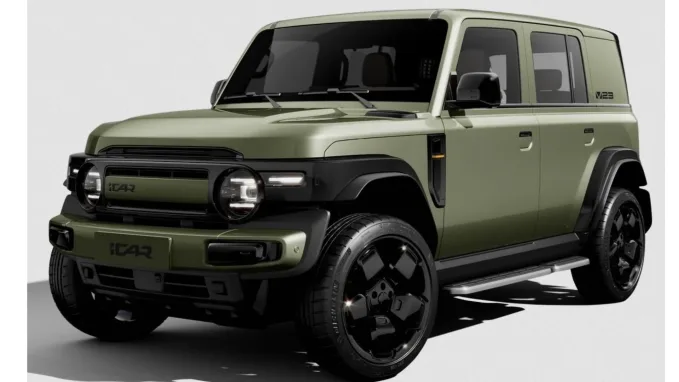
The vehicle is expected to be assembled in India, with JSW Motors reportedly planning to use its manufacturing facility at Chhatrapati Sambhajinagar, Maharashtra. The model will form part of JSW Motors' independent passenger-vehicle portfolio rather than being introduced under its MG joint venture.
Battery, performance and range
The China-spec iCar V23 is offered with two electric powertrain configurations. Its rear-wheel-drive version uses a 59.93kWh battery and produces 136hp and 180Nm, while the all-wheel-drive version gets an 81.76kWh battery with 211hp and 292Nm.
The corresponding claimed CLTC driving ranges are 401km and 510km. The international model also supports DC fast charging, with reported peak charging capabilities varying between approximately 85kW and 104kW depending on the battery configuration.
These figures provide an indication of the platform's capabilities, but they are not confirmed specifications for the Indian version. JSW Motors could make changes to the battery, motor configuration and equipment to suit local requirements and pricing.
Expected price and launch timeline
The India-spec SUV is expected to be positioned below ₹20 lakh, with current estimates placing it around ₹17–20 lakh ex-showroom. If achieved, this could make it an interesting alternative to the Hyundai Creta Electric, MG ZS EV, Mahindra BE 6 and other electric SUVs in the segment.
The launch timeline, however, is not entirely settled. Some reports point towards a 2027 introduction, while earlier reporting suggested that the model could arrive in 2028 after other JSW-Chery products. It is therefore safer to treat 2027 as an expected timeline rather than a confirmed launch date.
With its distinctive styling, potential AWD configuration and local assembly plans, the iCar V23-based SUV could bring something different to India's electric SUV market. Its eventual success will depend on how much of the international model's capability JSW retains while keeping the Indian version competitively priced.
Why it matters: If priced competitively, the V23-based SUV could offer something different from the conventional electric crossovers currently available in India, particularly with its boxy design and potential AWD configuration.
Another model to watch arriving much sooner: Honda ALPHA
Another major electric SUV to watch is the Honda ALPHA, which is scheduled to make its global debut in India on 2 December 2026. The model will be Honda Cars India's first locally manufactured electric SUV, with production planned at the company's Tapukara facility in Rajasthan. India is also expected to serve as a production and export base for the model.
First previewed as the 0 Alpha concept at the Japan Mobility Show in October 2025, the ALPHA represents Honda's entry into a rapidly growing electric SUV segment. The concept showcased an upright design, distinctive proportions and an emphasis on interior space. The production version is expected to retain much of this styling, although its final specifications and design details are yet to be revealed.
What have we seen so far?
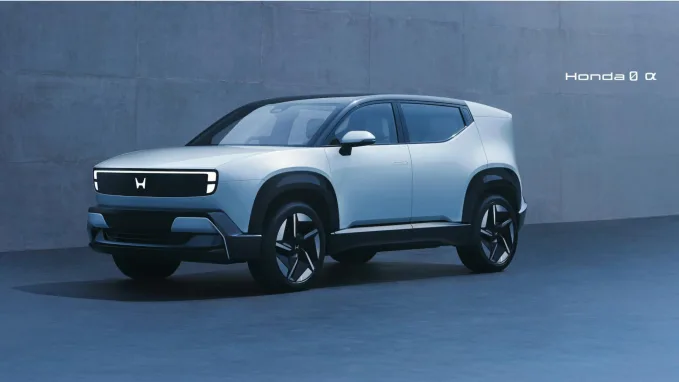
The ALPHA has already been spotted undergoing road testing in India. Electree EV previously reported on a camouflaged prototype being spotted in Faridabad. Our report, Spied on Test: Honda Zero Alpha Electric SUV Caught Testing in Faridabad, included dashcam footage that offered an early look at the SUV's proportions and cabin.
The prototype appeared more compact than the Honda Elevate, while its dashboard featured a prominent floating infotainment screen. These are visual observations rather than confirmed production specifications. The vehicle has also reportedly been spotted testing in Manali, indicating that Honda has been evaluating it in varied Indian conditions.
Battery, range and expected positioning
Honda has not yet confirmed the ALPHA's battery capacity, motor configuration, driving range or charging performance. Reports have suggested the possibility of battery packs in the 65–75kWh range and a single-motor configuration, but these details remain unconfirmed.
Its final pricing will be particularly important. The ALPHA is expected to compete in the midsize electric SUV segment, potentially alongside the Hyundai Creta Electric, Maruti Suzuki e Vitara, Mahindra BE 6 and MG ZS EV. However, Honda has not announced pricing, so its position in the affordable EV segment remains uncertain.
We previously covered the model's development and India strategy in greater detail in Honda Alpha Global Debut Set for 2 December: First Made-in-India Electric SUV Nears Production.
The December debut should finally provide clarity on the production design, specifications and positioning. Until then, the ALPHA remains an important upcoming launch to watch, particularly given Honda's decision to make India central to its electric SUV programme.
Which electric SUV is worth waiting for?
Hyundai's HE1i currently has the clearest early-2027 timeline and the strongest India-specific product positioning., while JSW's iCar V23-based SUV could offer a more distinctive alternative if it arrives at the expected price.
Honda ALPHA is another important upcoming model, but its December reveal should provide the first meaningful indication of its market positioning.
For now, the next wave of affordable electric SUVs looks promising. But battery specifications, real-world range and final pricing will ultimately determine whether these launches can make electric SUVs more accessible to Indian buyers.
Editorial note: Information updated as of November 28, 2026. Expected specifications, prices and timelines are subject to change. International-market specifications are identified separately and should not be interpreted as confirmed Indian specifications.
Trending Articles
Recent Articles