A Doctor Shares his Tata Harrier EV Adventure 65's Ownership Experience
Featuring Dr. Jagpalinder Singh, who transitioned from a 25,000-km-driven Skoda Kushaq ICE to a Tata Harrier.ev, this blog delivers an analysis of real-world electric SUV ownership.


Category:
Tag:
- Tata Harrier.ev
- EV Ownership Review
- Tata Motors
- Electric SUVs
The transition from internal combustion engine (ICE) architecture to battery-electric vehicles (BEVs) in the Indian market still remains clouded by skepticism, theoretical range anxiety, and misconceptions regarding long-term reliability. To dismantle these myths, a comprehensive feature by Xroaders, shot and produced by Dr. Mohd. Parvez Farooqi (@Xroders_001) titled "Mystifying Myths and Facts in a Candid Interaction with My Ex-Boss Now a Tata Harrier.ev Owner" provides a granular breakdown.
Watch the Full Ownership Interaction Video
Below is the complete ownership discussion video by Dr. Mohd. Parvez Farooqi from XRoaders.
Moving from a Skoda Kushaq ICE to the Tata Harrier.ev Architecture
The discussion opens by discussing the friction points that trigger a car buyer to abandon conventional internal combustion engines in favor of an EV such as the Tata Harrier.ev
Having logged over 20,000 kilometres in a Skoda Kushaq petrol automatic, the owner noted: "Driving the Kushaq is a pleasure. It's a very solid car. It's a very nice car to drive. If it's petrol then it's heavy on the pocket. The average isn't that good."
The Shift to Electric: Drawn toward modern architectures, the owner explained: "I always wanted to buy an electric—was fascinated with the technology... it was about shifting to a newer technology, a greener technology."
As local EV architectures matured and charging ecosystems expanded past metropolitan boundaries, the hesitation surrounding early-generation EV limitations dissolved. The decision to purchase the Tata Harrier.ev was driven by his test drive experience and assessment of lower operating costs, instant torque availability, and structural build quality.
Daily Commuting and Range Anxiety in the Harrier.ev
Range anxiety remains the single most common deterrent cited by prospective electric vehicle buyers. The owner breaks down how theoretical fears contrast starkly with practical, day-to-day utilization of the Tata Harrier.ev, at least for him.
The Safety Net: Talking about operating with a comfortable buffer, the owner stated: “My safety range, my safety net... is I've never come down below 20%. Or maybe I might have come down to 17-18%. So for me the safety net in which I drive the car is about 300 km.”
Solar Integration: Combining domestic photovoltaic energy production with EV ownership creates an ideal economic loop, as the owner utilizes a home solar setup to charge the vehicle
Powertrain Mechanics and Minimalistic Cabin
In conventional diesel or turbo-petrol engines, drivers experience a fraction-of-a-second delay while exhaust gases spool the turbocharger. The Harrier.ev’s motor architecture delivers instant, linear torque the moment the accelerator pedal is depressed.
The EV Powertrain Experience: Emphasizing the primary draw, the owner stated: “One very, very lucrative idea was to save money running cost... when you buy an electric car you just end up paying for the EMI... and the running cost comes down many folds.”
Avoiding Screen Clutter: Explaining why he skipped competitor options loaded with multiple displays, he noted: "If you get into a Mahindra car it looks like you're sitting in a spaceship... there's so many screens... and they can distract you more... I love this car because it has only one central screen... it makes more sense driving a car with minimal distractions."
Why he Chose the 65 kWh Battery Pack
For prospective buyers, navigating the battery size options and selecting the right one for their use case is a big descision. Dr. Jagpalinder breaks down his specific rationale for choosing the 65 kWh battery pack variant of the Tata Harrier.ev.
Cost vs. Marginal Range Gain: Pointing to the steep price gap, the owner noted: “The price difference between the 75 and 65 was pretty large... it was 2.5 to 3 lakhs. That's a lot of money for... increasing your range just by 50 to 60 km.”
Charging Convenience: Highlighting home-charging dynamics, he observed: “When you're charging a 65 kW battery at home... it takes around 5 to 6 hours. Just imagine if you have another 10 kW right, that adds another 2 hours to charge it... so the charging time increases your range doesn't really increase by that much.”
Secondary Vehicle Utilization: Because the EV serves as part of a multi-car household, he reasoned: "It's not your primary car... if I have to go somewhere really far or if I'm going to carry a lot of people... I might just opt to take my Crysta."
Comfort and Value
Vehicle refinement heavily dictates long-term ownership satisfaction.
Acoustic Isolation: Describing the cabin environment during high-speed transit, the owner highlighted: “This car is silent... even now we're driving fast and the cabin is almost silent as opposed to other cars. So this car is very smooth. It's very quiet and you tend to tire less in this car.”
Value Proposition: Summarizing the variant choice, he added: "I paid 22 lakhs for this car... in 22 lakhs you get such a solid car with such a solid background with such good technology... the Adventure S... is a very good value for money variant."
Maintenance and Total Cost of Ownership
Long-term financial projections and service overhead form a core part of the car buying descision for any potential EV owner who is transitioning from ICE.
Every vehicle platform has areas requiring refinement, and the owner highlighted a specific operational quirk:
Detailing a real-world learning curve, he pointed out: "EV has a learning curve... the biggest problem I face in this particular car is when I'm reversing... when I put it into R mode I don't know if it's gone into R mode... after reversing when I put it into D it doesn't go into D it goes into neutral... the gear selector doesn't have a proper tactile feel."
An internal combustion engine contains thousands of wear-prone mechanical components including fuel injectors, spark plugs, timing belts, multi-gear transmissions, and exhaust systems, none of which exist in a pure BEV powertrain. Also, as regenerative braking handles the vast majority of deceleration tasks, friction brake pad and rotor wear is drastically reduced compared to heavier ICE SUVs.
Overcoming Family Skepticism and the Final Ownership Verdict
The interview concludes by highlighting how initial domestic hesitation turned into full household acceptance.
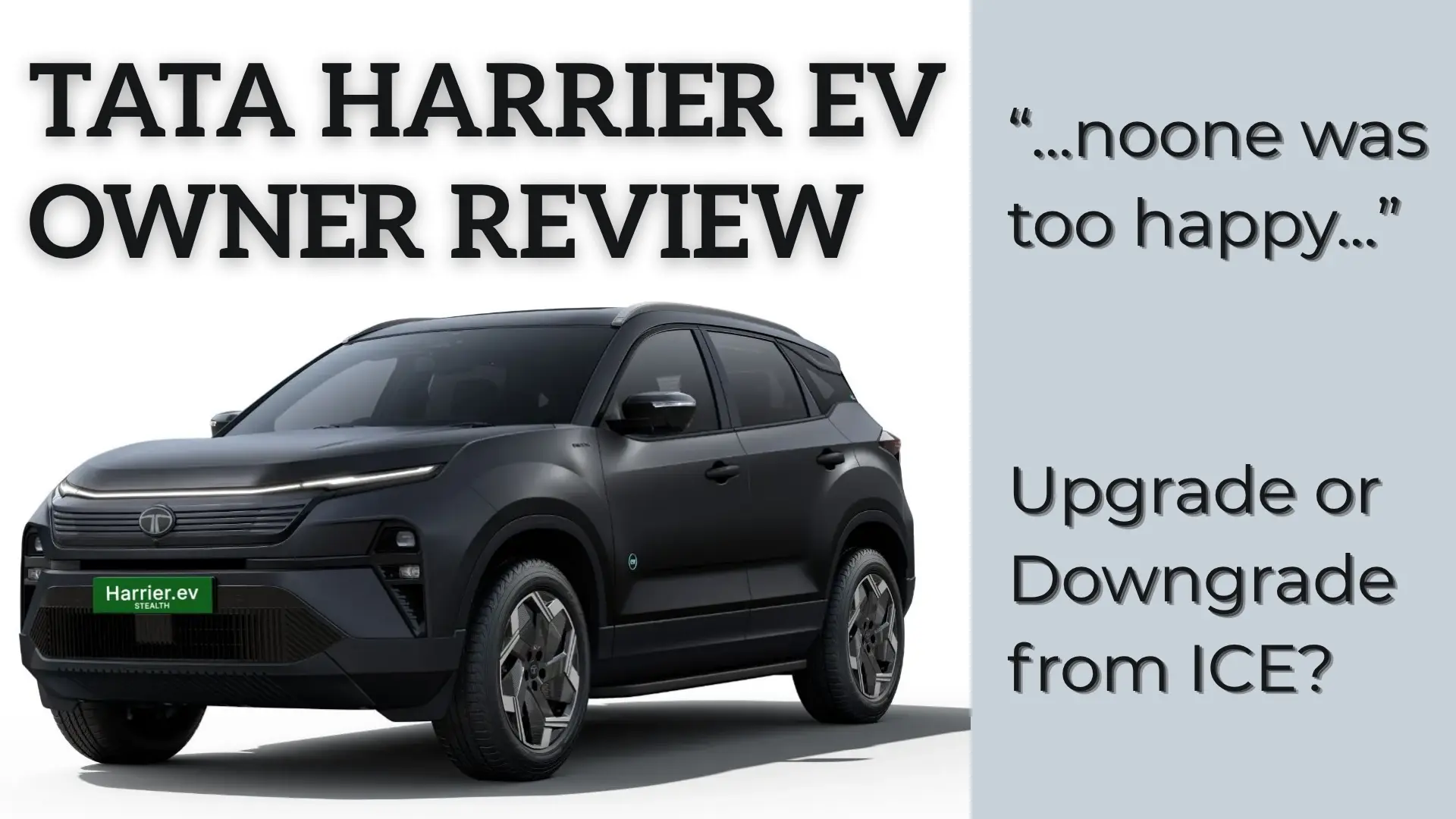
Reflecting on the initial purchase pushback, he shared: “No one at home was convinced and noone was too happy with the idea... it was like 'what the hell are you doing?'... let's just go for some other car.”
Once the family experienced the vehicle firsthand, opinions shifted completely: "Now they're very happy... because of course it is economical... it's comfortable, it's a very nice car... there's nothing lacking in this car which would make them miss the other cars... if you don't have an electric just go ahead and buy one. One should experience the powertrain."
Summarizing his journey from a hesitant household fence-sitter to a fully converted electric vehicle advocate, the owner delivers the ultimate verdict on modern mobility: "You have to take the plunge. You can't keep testing the water... if you're convinced that it's a good technology, just go ahead and buy one—because once you experience the powertrain, you'll never look back."
Trending Articles