
Tata and Mahindra Beat Tesla, BYD and Others to Top Global EV Efficiency Rankings
A recently released ICCT report on the most energy efficient EV brands ranked Tata and Mahindra in the top 2 positions respectfully, beating out several globally established OEMs


Category:
Tag:
- Tata Motors
- Mahindra automotive
- EV efficiency
The International Council on Clean Transportation (ICCT) is a globally recognized independent non-profit research organization that aims to provide unbiased and comprehensive technical analysis and policy advice to environmental regulators and governments. It is the same organization that uncovered the Volkswagen group's massive DieselGate Scandal back in 2015.
Every year, the ICCT publishes a Global Automaker Ranking report, based on which OEMs they think were the most ‘green’ that year.
In a major milestone for the Indian EV industry, domestic giants Tata Motors and Mahindra Automotive have been deemed the top 2 most energy efficient EV manufacturers as per the ICCT.
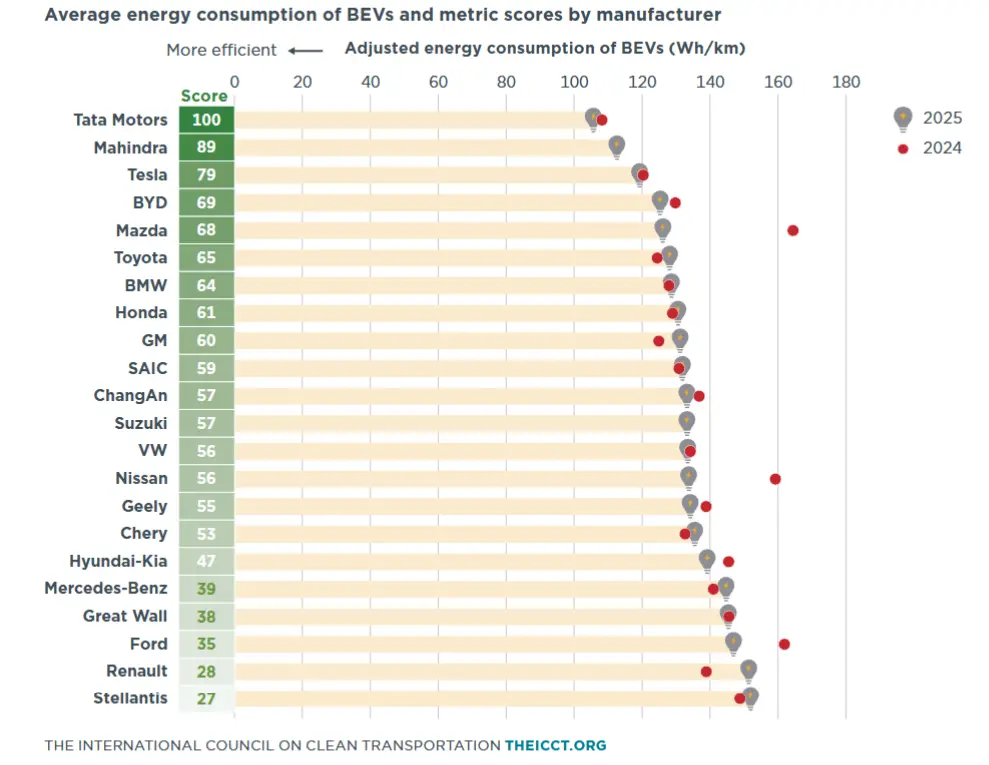
image credit ICCT- theicct.org
The Actual Numbers
The ICCT rankings are based on weight-adjusting all the BEVs before calculating for their energy efficiency
- Tata Motors - 106 Wh/km
- Mahindra Automotive - 113 Wh/km
- Tesla Motors ~ 120 Wh/km
- BYD ~ 125 Wh/km
- Industry Average - 131 Wh/km
Why are Indian EVs Consuming Less Power?
Lower Wh/km figures mean a vehicle requires less electricity to cover the same distance, directly translating to lower charging costs for owners and reduced strain on public power grids.
The ICCT study points out that while Western and Chinese automakers have leaned heavily into larger, heavier electric SUVs with massive battery packs and high horsepower motors, Indian manufacturers have focused on optimized compact crossovers with the priority being placed on everyday usable power with real world efficiency instead of sheer straight line speed and power.
Efficiency vs Overall Transition
While Indian automakers dominated the energy-efficiency parameter, the ICCT clarifies that this is one metric in its broader evaluation. In the overall ‘Zero-Emission Transition’ category, which accounts for global sales volume, fast-charging infrastructure, and manufacturing decarbonization, both Tata and Mahindra remain classified as "Transitioners", given that EVs currently account for around 4% of India's total passenger vehicle market against the national target of 30% by 2030.
Amit Bhatt, the Indian Managing Director at ICCT said
“It is encouraging to see that India's EV transition is being led by strong homegrown manufacturers... Progressive and ambitious CAFE standards can play a crucial role in accelerating this momentum.”
What this means for the Industry
The ICCT recognition underscores that efficiency and not just battery or motor size is becoming the core benchmark of EV engineering maturity. As Indian manufacturers scale up domestic production and prepare for exports to international markets like the UK and Europe, world-class powertrain efficiency offers a major competitive edge on the global stage. How and If the Indian OEMs are going to adapt to the more mature international EV markets is yet to be seen though.
Recent Articles

Trending Articles
Kerala Makes EVs More Affordable: Revised Road Tax Structure to Accelerate Adoption

India Car Sales by Fuel Type — March 2026: EV Share Hits New High, CNG Surges, Petrol Loses Ground
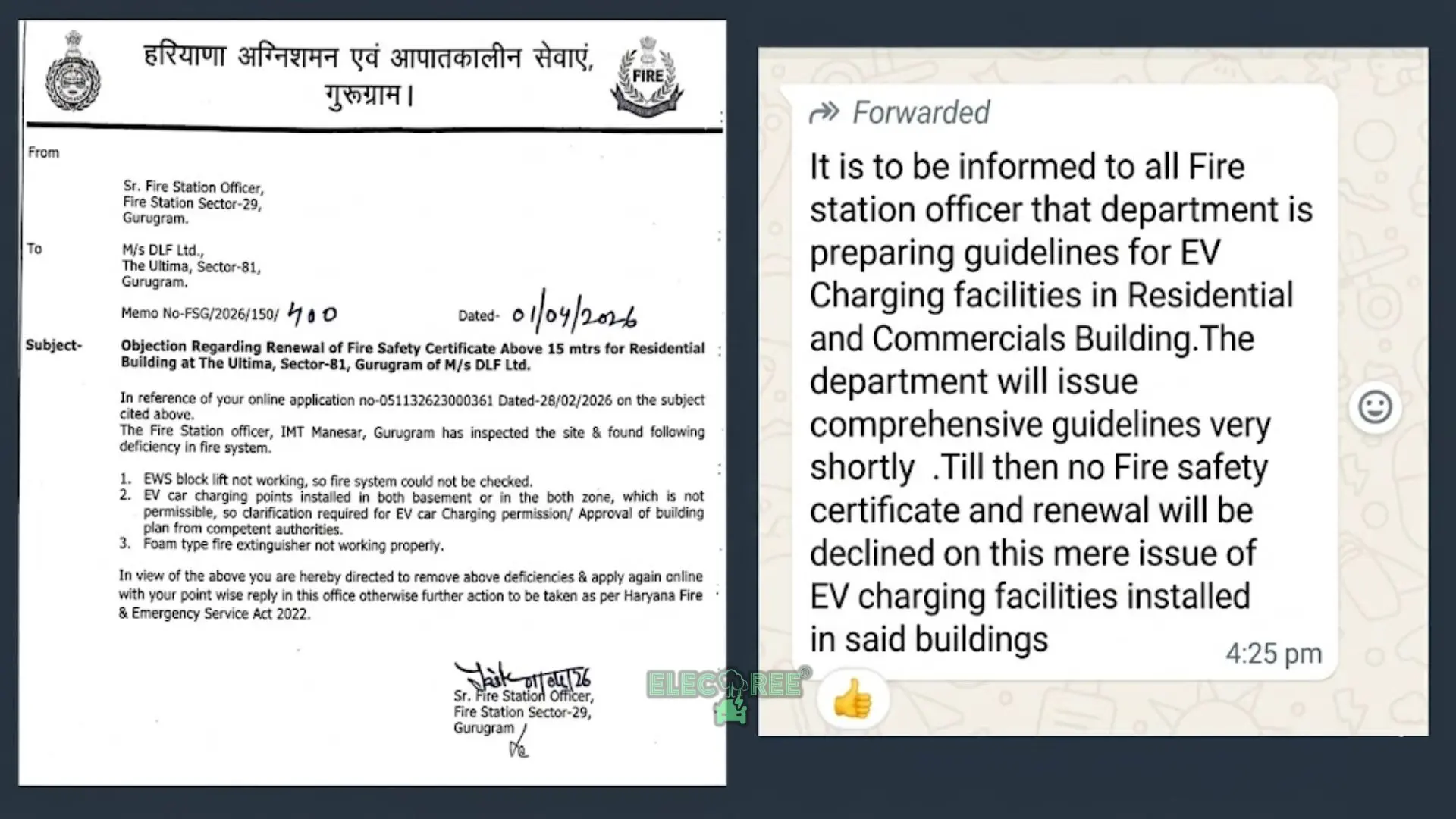
No Fire Safety Certificate Will Be Declined Over EV Chargers, Says Haryana Fire Department
Haryana Releases Draft Fire Safety Guidelines for EV Charging