PM E-DRIVE Funds New EV Crash-Test Facility at Chennai's GARC
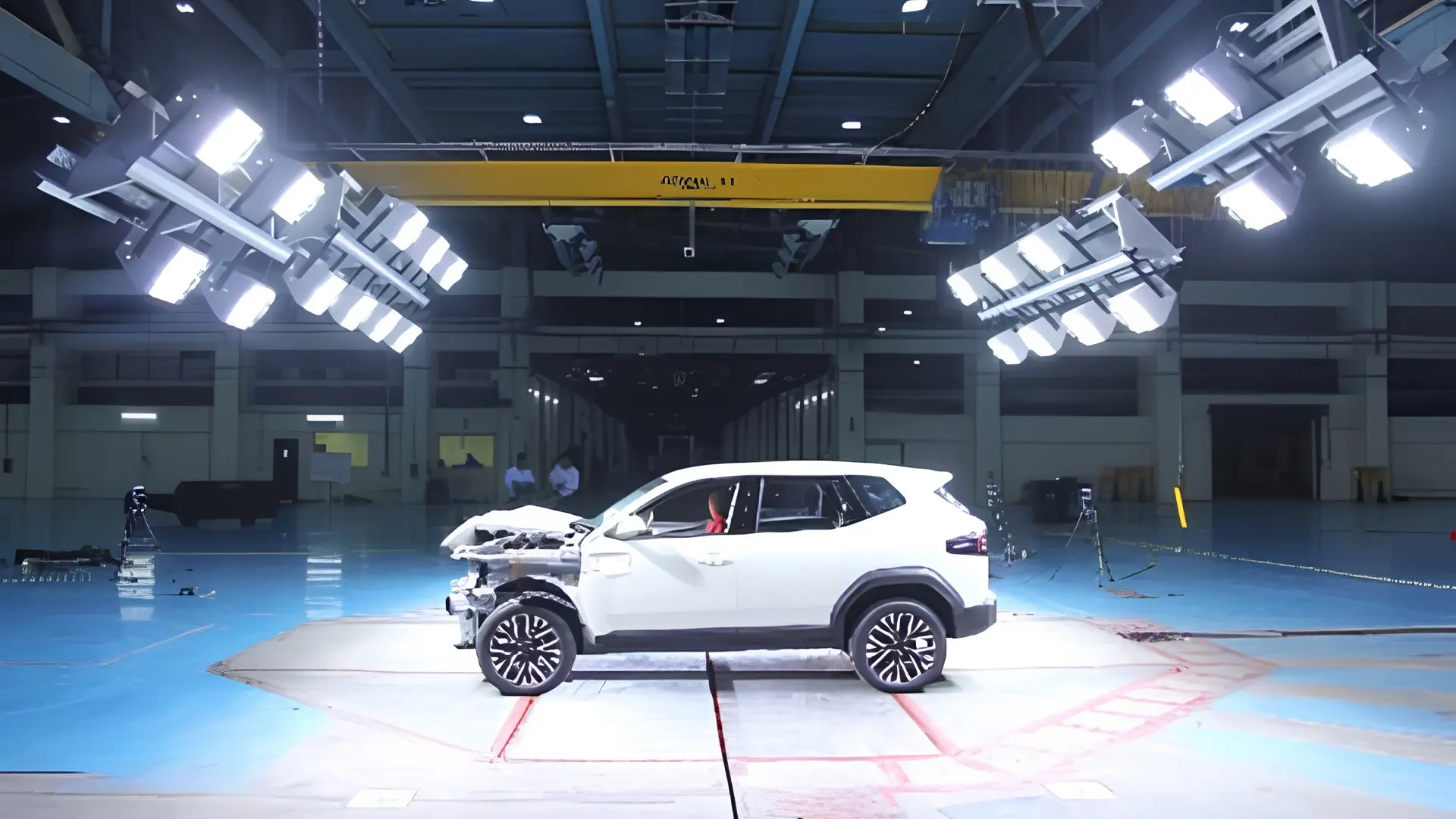
GARC in Chennai has received ₹221.13 crore under the PM E-DRIVE scheme to build a new crash-test facility with high-speed cameras, EV battery testing, and ADAS testing, part of a broader push toward a more instrumented, traceable EV ecosystem in India.


Category:
Tag:
- PM E-DRIVE
The government is putting real money behind India's ability to test and certify EVs on home soil. Under the Ministry of Heavy Industries' PM E-DRIVE scheme, a ₹10,900 crore program with ₹780 crore specifically earmarked for upgrading testing agencies, the Global Automotive Research Centre (GARC) in Oragadam, Chennai has received a ₹221.13 crore allocation and has already issued purchase orders for nearly all the equipment it needs.
A New Crash-Test Facility
GARC's passive safety testing setup is being upgraded with a high-speed, high-resolution camera system, UHD-4K cameras capable of shooting up to 750 frames per second, with Full HD recording up to 3,000 fps. These cameras are built to capture frontal, side, and rear crash tests in detail, tracking vehicle deformation, occupant movement, and airbag deployment, the kind of footage that directly feeds into safety ratings and certification.
The Rest of What's Being Built
Beyond crash testing, GARC's upgrade covers EV and EV battery testing, testing for electronic interference between a vehicle's own components, an increasingly important check as EVs pack in more electronics, a dedicated heavy commercial vehicle testing facility, an upgraded powertrain lab, and new equipment for testing advanced driver assistance systems. Installation of the new equipment is already underway.
The Battery Aadhaar Proposal
Separately, the Ministry of Road Transport and Highways has proposed a Battery Pack Aadhaar Number (BPAN), a 21-character unique ID paired with a QR code that would be permanently affixed to every EV battery sold in India, tracking it from manufacture through use, second life, and eventual recycling or disposal. This is still a draft guideline, not a notified rule, so nothing is mandatory yet. But taken alongside GARC's testing build-out, it points in the same direction: a more instrumented, more traceable EV ecosystem in India, and it's worth watching where the government takes this over the next year or two.
Why This Matters
Four-wheeler EVs made up about 8.3% of India's monthly car sales in September 2026, per Vahan registration data. That's real progress, but it's still modest, and it means most buyers are still weighing an EV against a petrol or diesel option. Crude oil prices, meanwhile, are volatile, Brent has been trading well above the average analysts had forecast for the second half of the year, on uncertainty tied to the tensions in the middle east and the upcoming US midterm elections, even as Indian retail fuel prices have stayed unchanged. In that environment, investments like GARC's testing upgrade, and even a still-draft measure like BPAN, work in EVs' favor. They're the kind of groundwork, safety data, certification rigor, and eventually traceability, that builds buyer confidence at a moment when a lot of prospective buyers are still on the fence.
To comment and participate in discussion Click Here
Trending Articles