
Maruti eVitara Registrations Rise 2.5% in October 2026
Maruti eVitara registrations increased to 1,206 units in October 2026. The 49 kWh version accounted for nearly all the incremental growth, while Alpha remained the leading variant.


Category:
Tag:
- Maruti eVitara sales October 2026
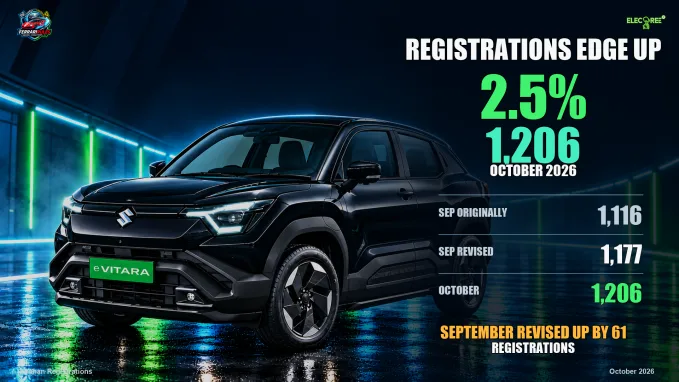
The Maruti eVitara recorded 1,206 registrations in October 2026, according to the latest Vahan data. Registrations increased 2.5% month-on-month from the revised September total of 1,177 units.
Our September eVitara analysis originally reported 1,116 registrations. Vahan has since added 61 delayed registrations to the September database, revising the total upward by 5.5%.
Using this latest base, the eVitara added 29 registrations in October. A year-on-year comparison is not meaningful because the model had no registrations in October 2025.
Alpha Retains the Variant Lead
The top-spec Alpha remained the eVitara’s most popular variant with 471 registrations, accounting for 39.1% of October volume.
The variant mix was relatively balanced:
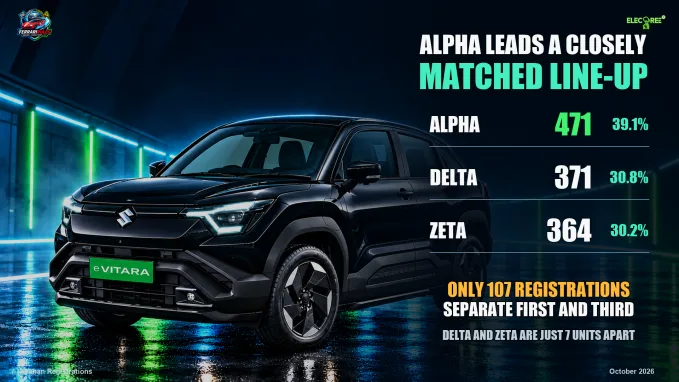
Only seven registrations separated Delta and Zeta. Alpha led Delta by 100 units and Zeta by 107 units.
Alpha and Delta together contributed 69.8% of total registrations, while nearly 61% of buyers selected a variant other than the range-topping Alpha.
61 kWh Battery Retains a 69% Share
The larger 61 kWh battery generated 835 registrations, representing 69.2% of the eVitara’s October volume. The smaller 49 kWh battery contributed 371 registrations and held a 30.8% share.
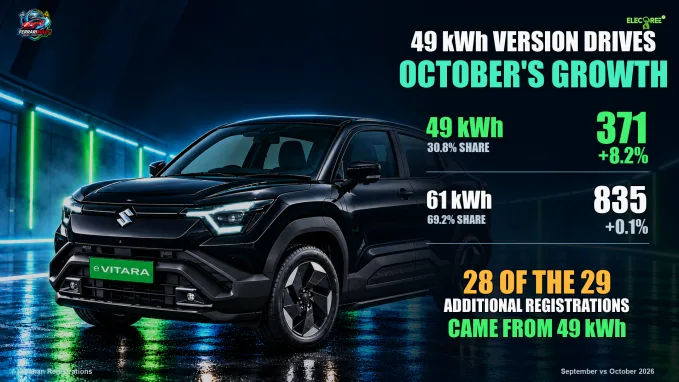
The 61 kWh versions were effectively flat, adding only one registration. The 49 kWh configuration added 28 units and therefore generated almost the entire increase in October. The October data reinforces the gradual broadening of the eVitara’s product mix.
In the original September dataset, Delta had proved more resilient than Alpha and Zeta during the model’s monthly decline. The latest October numbers continue that trend: the smaller-battery configuration increased 8.2%, while registrations for the larger battery remained unchanged.
The 49 kWh version still accounted for less than one-third of October registrations, but its growth prevented the eVitara from remaining completely flat.
Electree Take:
The eVitara’s 2.5% monthly increase follows the sharp decline discussed in our September analysis. However, the revised Vahan base shows that October was a month of stabilisation rather than a decisive recovery.
The larger battery remained dominant, Alpha retained the variant lead, and the overall mix stayed well distributed across all three variants. However, virtually all incremental growth came from the smaller 49 kWh version.
The next monthly reading will indicate whether the eVitara can move materially beyond its current 1,200-unit level or whether registrations are settling into a narrower range following the stronger volumes recorded earlier in 2026.
Sources and Methodology
The analysis uses Vahan retail-registration data for September and October 2026. September figures have been revised to include delayed registrations added after publication of the previous article.
The figures represent vehicle registrations recorded through participating RTOs and should not be interpreted as manufacturer dispatches.
Source: Vahan registration data; October 2026 model-, variant- and battery-wise analysis.
Trending Articles
JSW MG Motor Hikes MG Hector Tomahawk EV Prices by ₹75,000 Just Months After Launch

Electric Scooter Battery Warranties Compared: What Do Ather, TVS, Bajaj and VIDA Actually Cover?

Top 4 Best Selling EVs in October 2026: Punch EV Leads Again
VIDA VX2 and Ather Grid: Which Chargers Work, and Why Charging Stops at 80%
Recent Articles
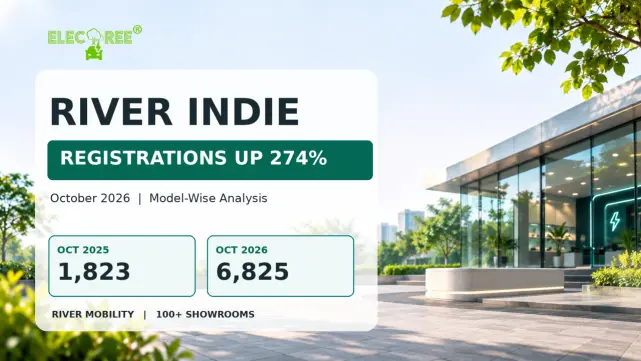
River Indie Registrations Rise 274% in October as River Crosses 100 Showrooms

Denza D9 Launched in India: How the Luxury MPV Segment Performs
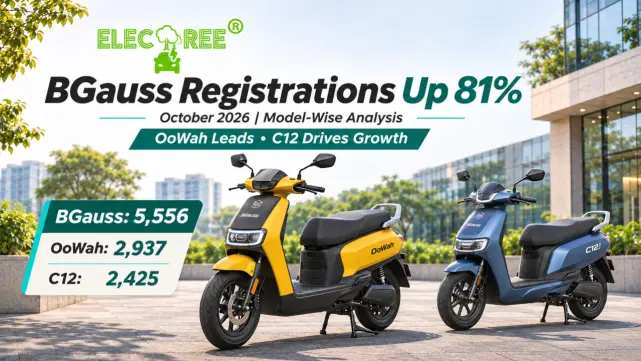
BGauss Registrations Rise 81% in October 2026: OoWah Leads, C12 Drives Growth
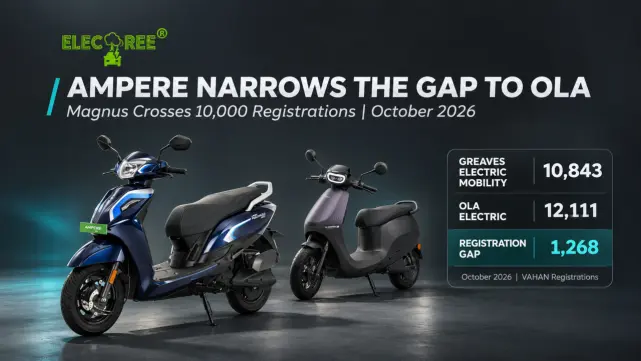
Ampere Narrows the Gap to Ola Electric as Magnus Registrations Cross 10,000 in October 2026