
India’s B-Segment Hatchback Market Isn’t Shrinking—It’s Evolving
For years, the conversation around India’s passenger-vehicle market has focused mostly on SUVs. And yes, SUVs are growing rapidly. But that doesn’t mean hatchbacks have disappeared.


Category:
Tag:
- India Auto Market
- Hatchback Sales
- B-Segment Cars
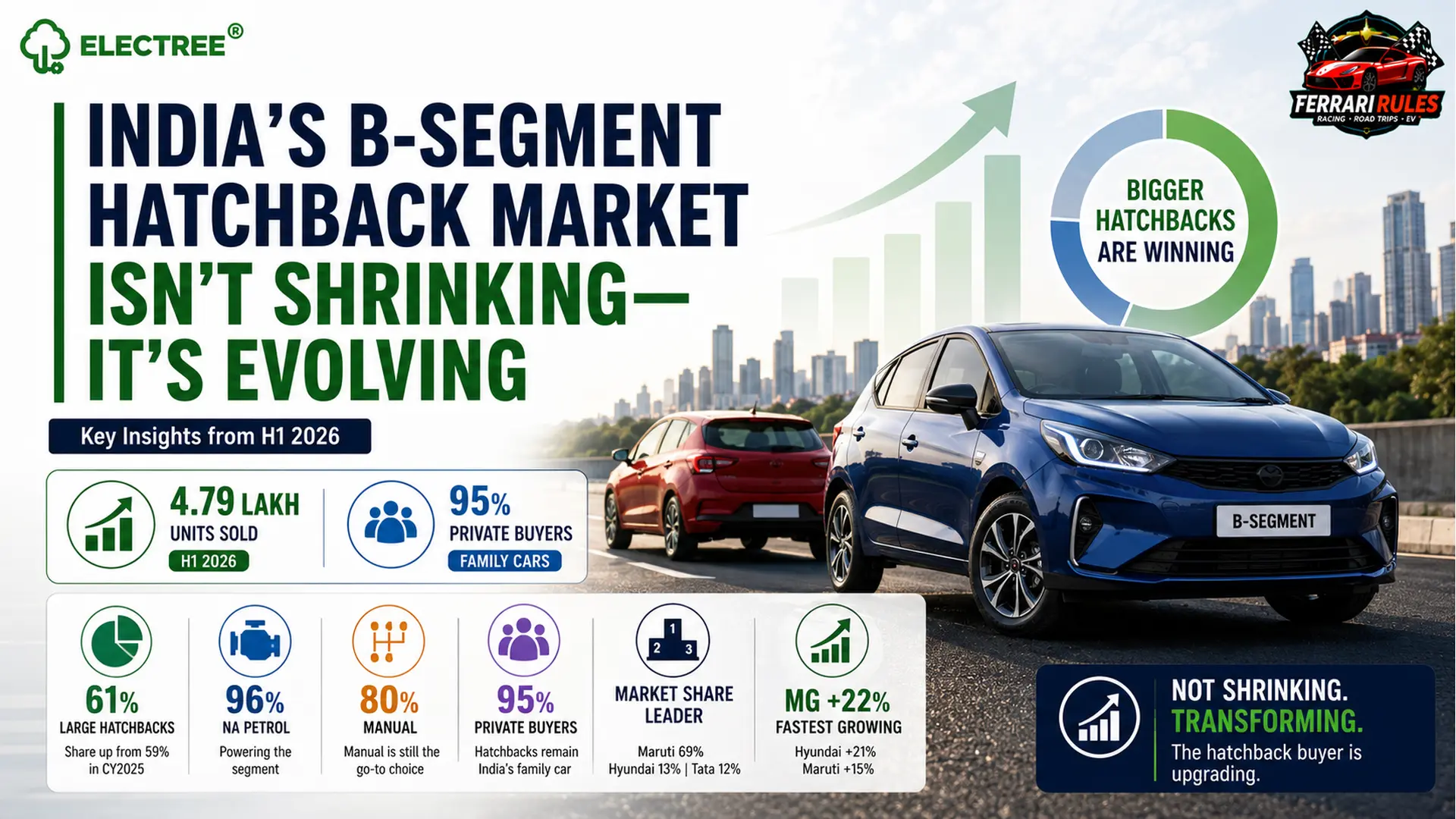
India’s B-segment hatchback market recorded 4.79 lakh sales in H1 2026, following a CY2025 close of approximately 9.19 lakh units. The bigger story is not just the volume—it is how buyer preferences within the segment are changing.
Consumers are not abandoning hatchbacks. They are increasingly upgrading towards larger, better-equipped and more premium hatchbacks.
In this three-part series, we examine how India’s hatchback market is evolving—from small affordable cars to premium large hatchbacks.
Larger hatchbacks - Baleno, Swift, i20, Altroz, Glanza, Ignis
Small hatchbacks - Wagon R, Tiago, Grand i10 NIOS, Comet, Celerio
Bigger Hatchbacks Are Winning
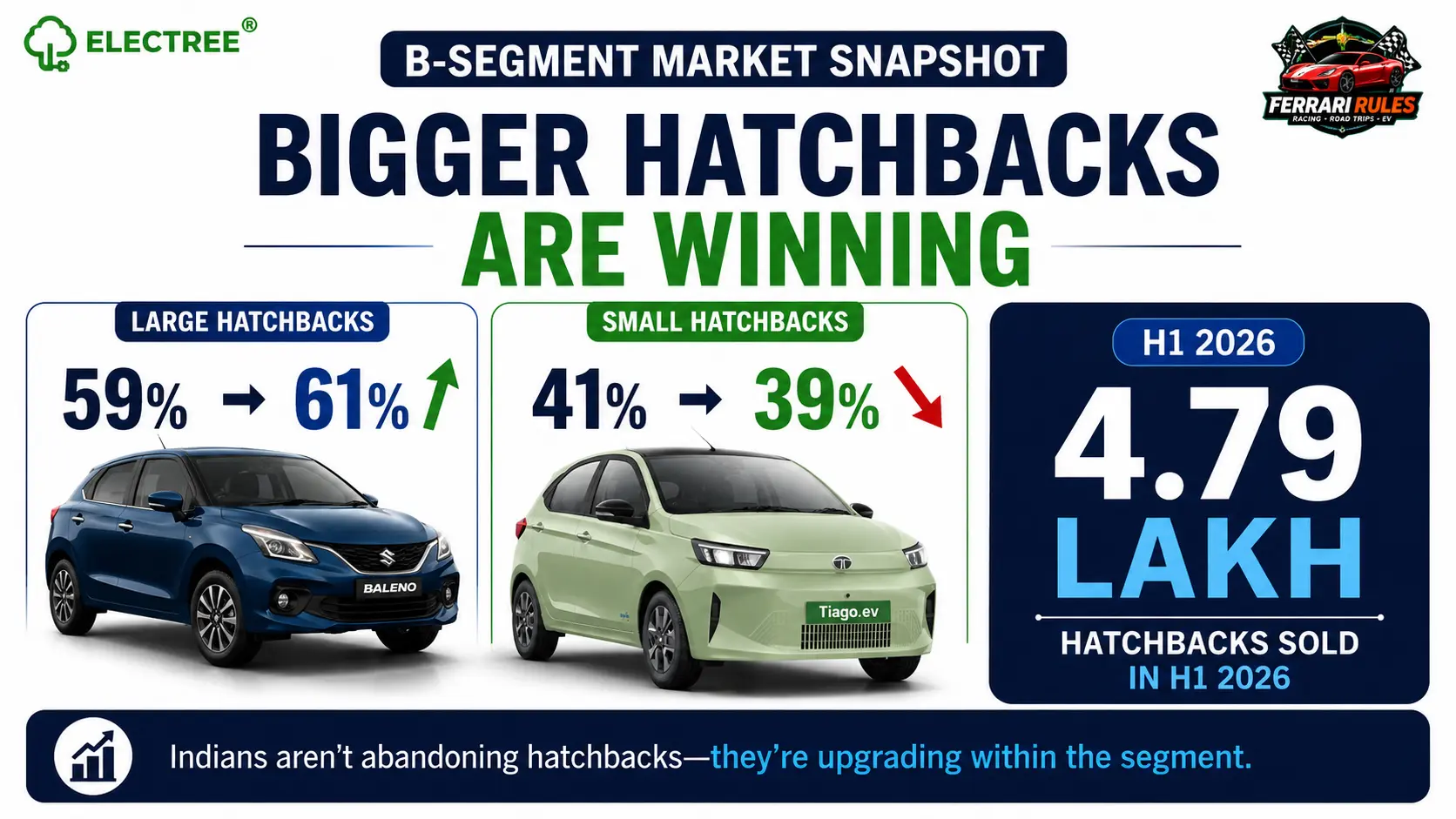
Large hatchbacks increased their share of the B-segment market from 59% in CY2025 to 61% in H1 2026. During the same period, small hatchbacks declined from 41% to 39%. The shift may appear small, but it highlights a broader change in Indian consumer behaviour.
Buyers who still want the practicality and efficiency of a hatchback are increasingly willing to spend more for:
- Better cabin space
- Higher safety levels
- More features
- Better interiors
- Stronger road presence
The hatchback buyer is not disappearing. The buyer is upgrading.
Fuel Choice Changes With Hatchback Size
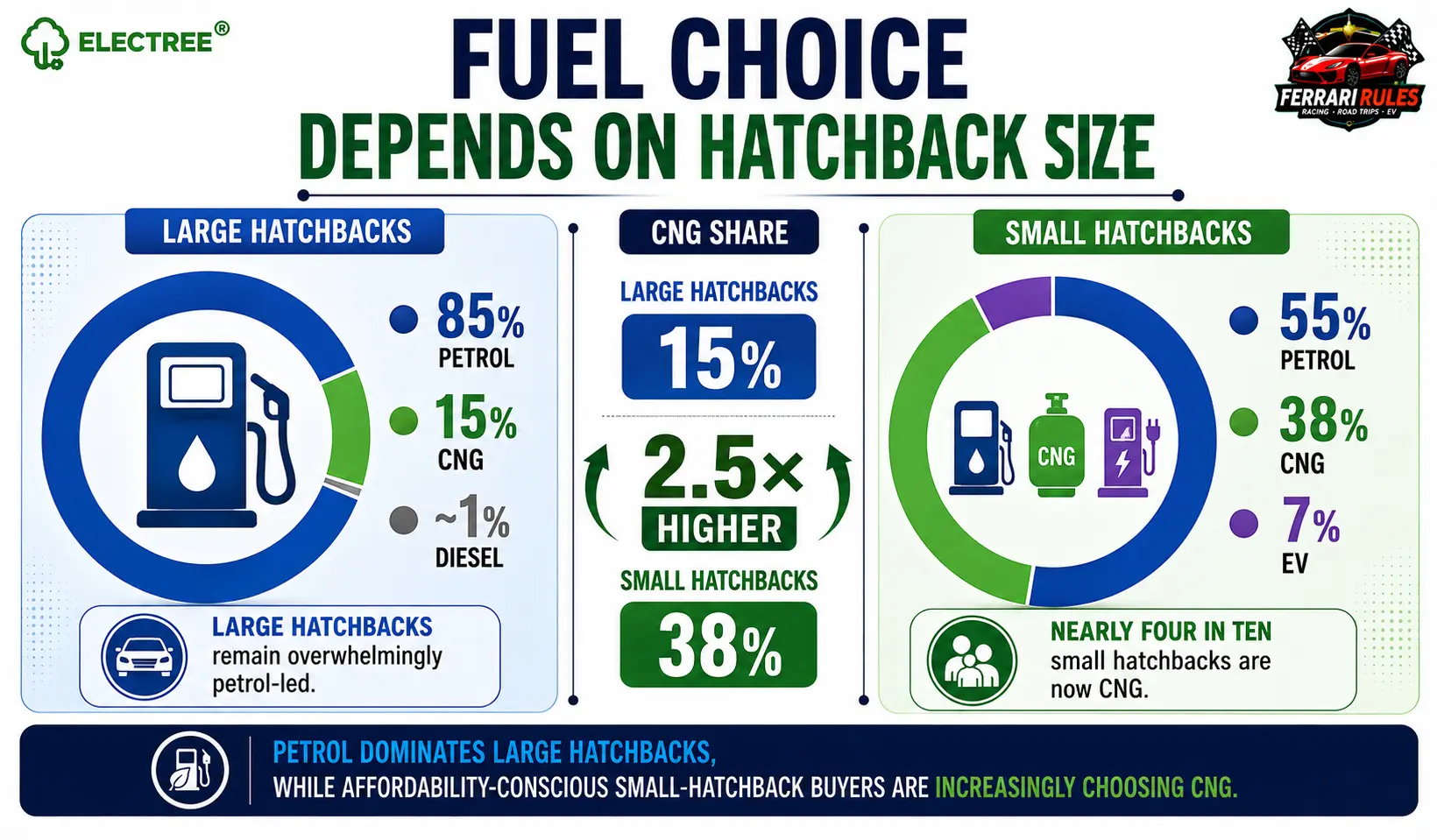
The overall B-segment fuel mix hides an important difference between small and large hatchbacks.
Large hatchbacks remain predominantly petrol-powered:
- Petrol: 85%
- CNG: 15%
- Diesel: ~1%
Small hatchbacks have a much stronger CNG presence:
- Petrol: 55%
- CNG: 38%
- EV: 7%
CNG adoption among small hatchbacks is around 2.5 times higher than large hatchbacks. This reflects the different priorities of buyers.
Large hatchback customers are more willing to pay for features, space and refinement, while small hatchback buyers remain highly focused on running costs.
Petrol dominates larger hatchbacks, while small hatchbacks are becoming the centre of India’s CNG adoption.
Naturally Aspirated Petrol Still Owns the Segment
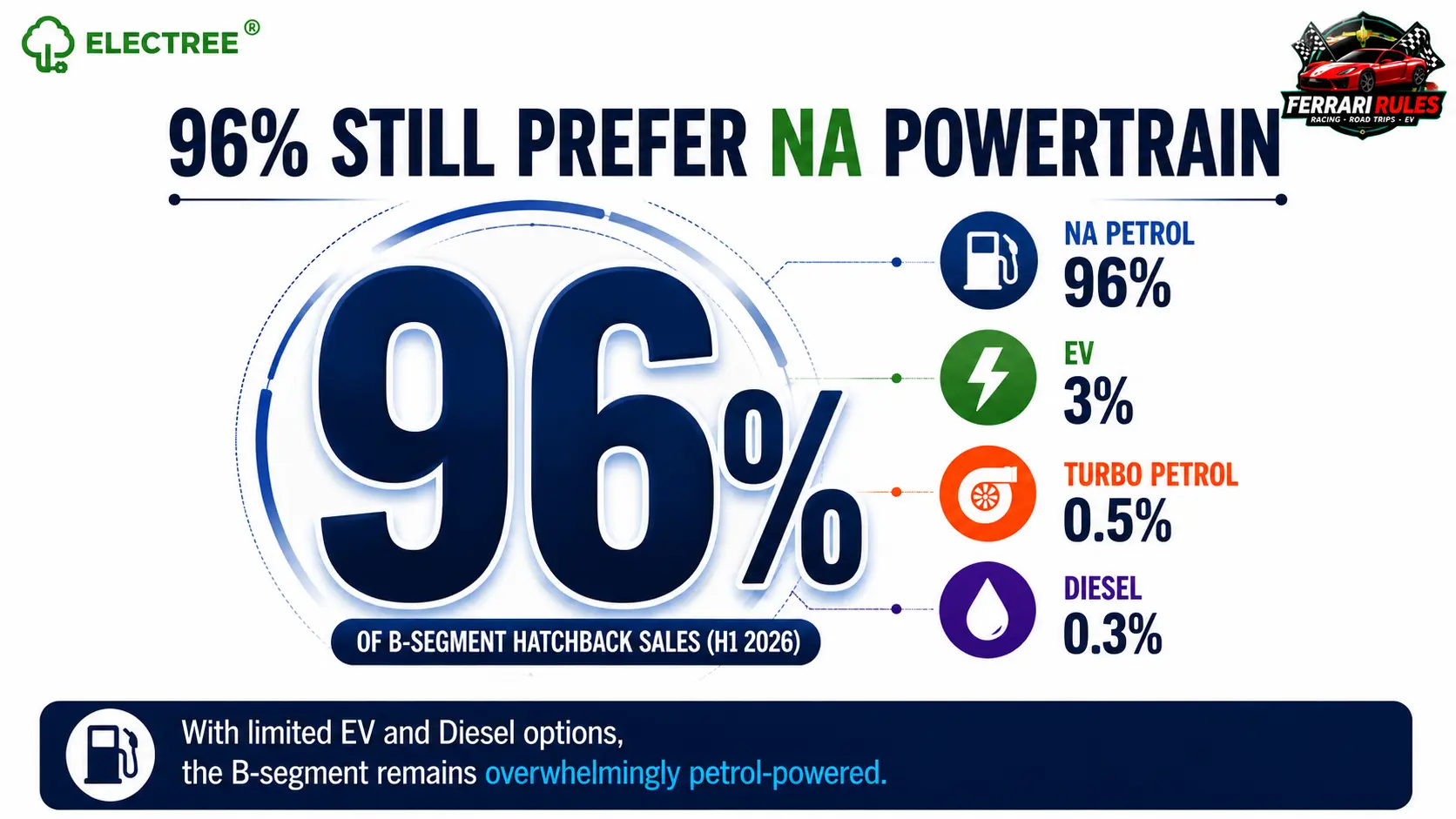
Despite the growing focus on EVs and alternative powertrains, B-segment hatchbacks remain overwhelmingly dependent on naturally aspirated petrol engines.
In H1 2026:
- Naturally aspirated petrol: 96%
- EV: 3%
- Turbo petrol: 0.5%
- Diesel: 0.3%
However, this needs to be viewed alongside fuel choice. Engine architecture and fuel type are different classifications. Most CNG hatchbacks also use naturally aspirated petrol engines, which is why NA petrol dominates from an engine perspective.
The reason for this dominance is simple—buyers in this segment continue to prioritise:
- Lower purchase cost
- Reliability
- Affordable maintenance
- Reasonable fuel efficiency
With limited EV and diesel options available, petrol remains the default choice for B-segment buyers.
Manual Isn’t Dead
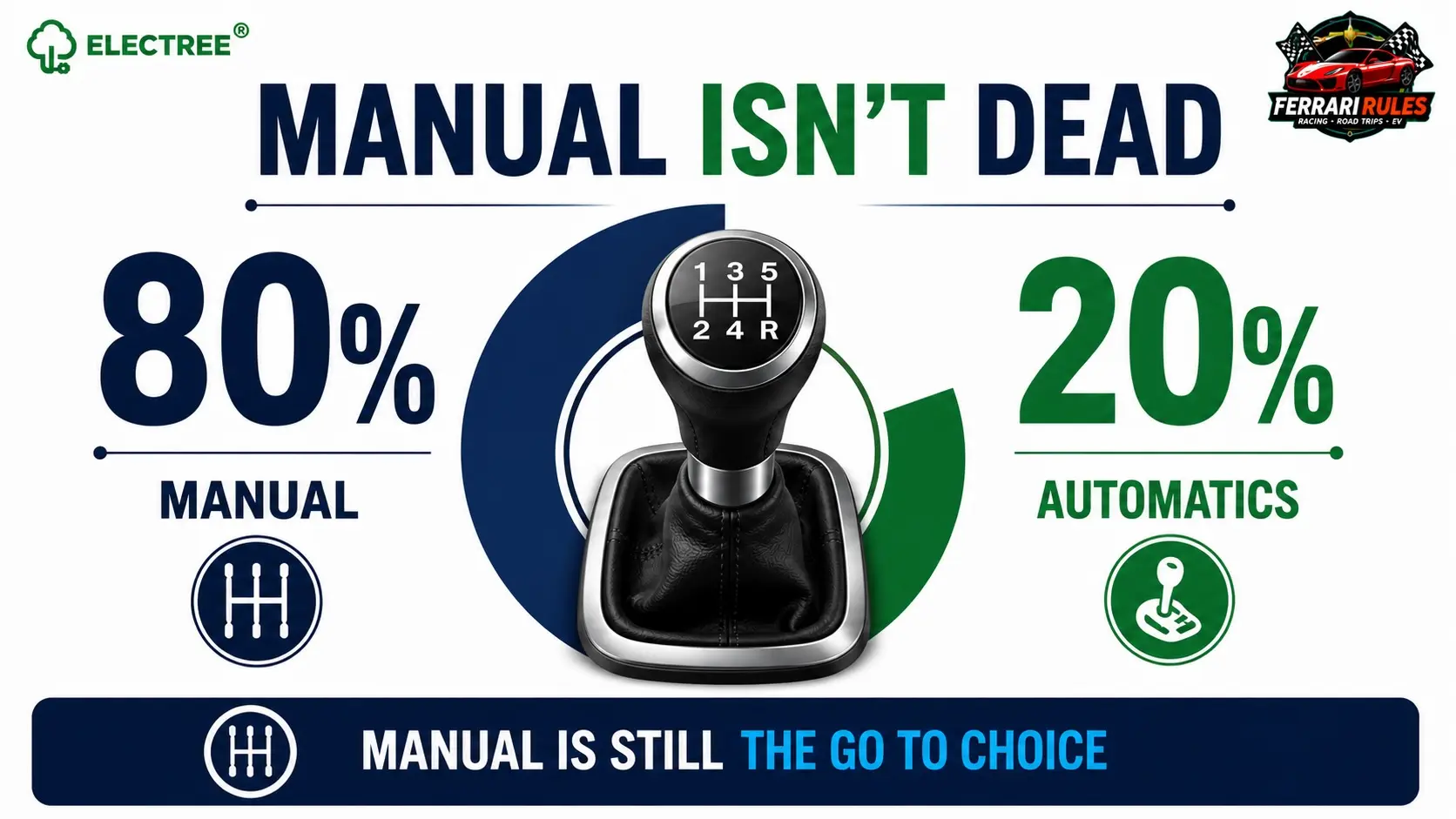
While automatic transmissions are becoming increasingly common in SUVs and premium vehicles, hatchback buyers continue to prefer manual gearboxes. Manual transmissions accounted for 80% of B-segment hatchback sales in H1 2026, while automatics contributed approximately 20%.
Manuals continue to appeal because they offer:
- Lower upfront cost
- Lower maintenance expenses
- Wider availability across variants
- Better affordability for first-time buyers
AMTs have helped expand automatic adoption, but the price gap remains a major factor in this segment.
In B-segment hatchbacks, manual remains the go-to choice.
Hatchbacks Remain Primarily Family Cars
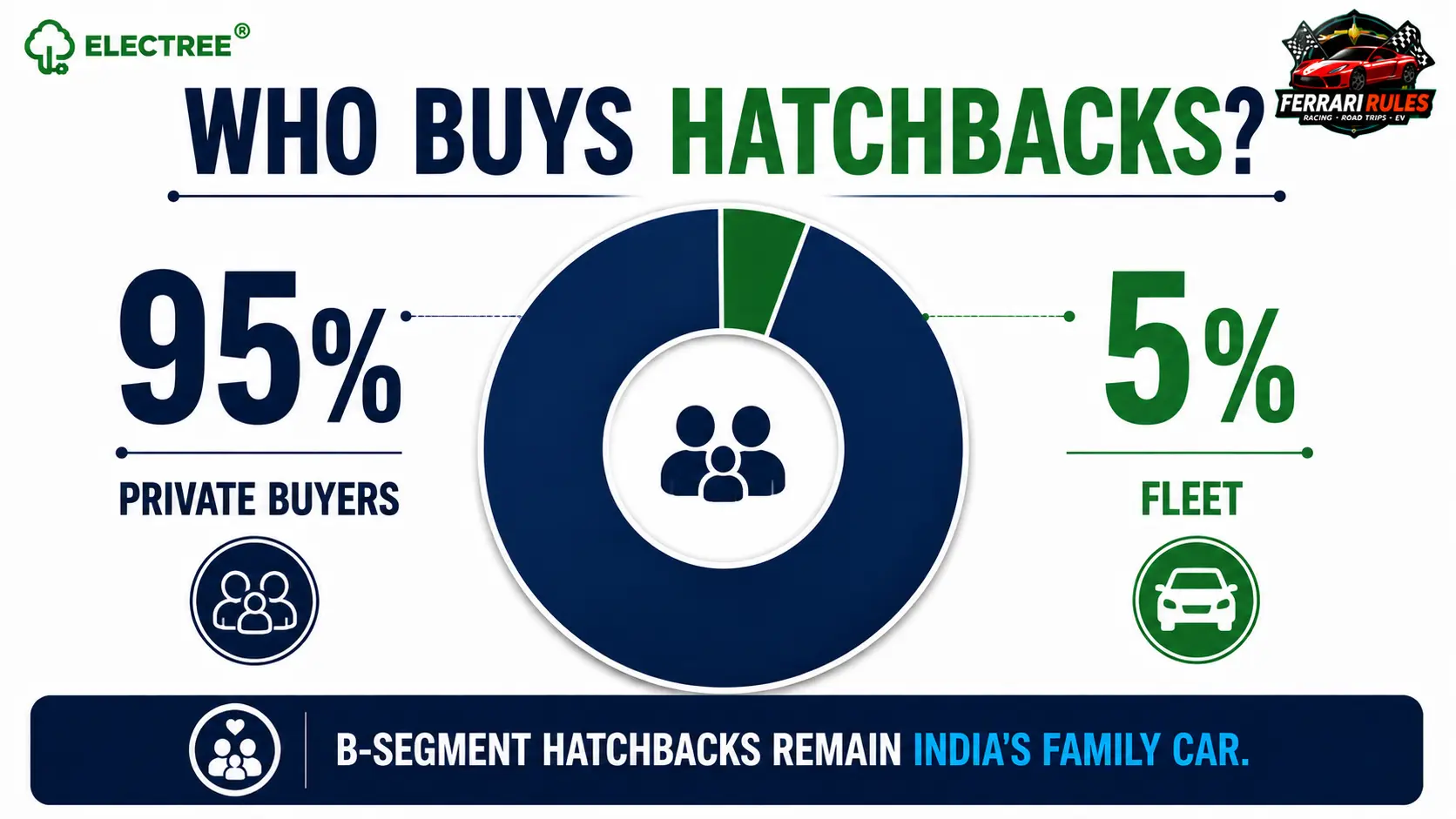
Private buyers accounted for 95% of B-segment hatchback sales in H1 2026, while fleet buyers contributed only 5%.
Unlike some commercial-heavy segments, hatchbacks continue to be driven primarily by personal ownership.
These cars remain popular among:
- First-time buyers
- Urban families
- Daily commuters
- Second-car households
B-segment hatchbacks remain India’s family car.
Maruti Continues to Own the Market
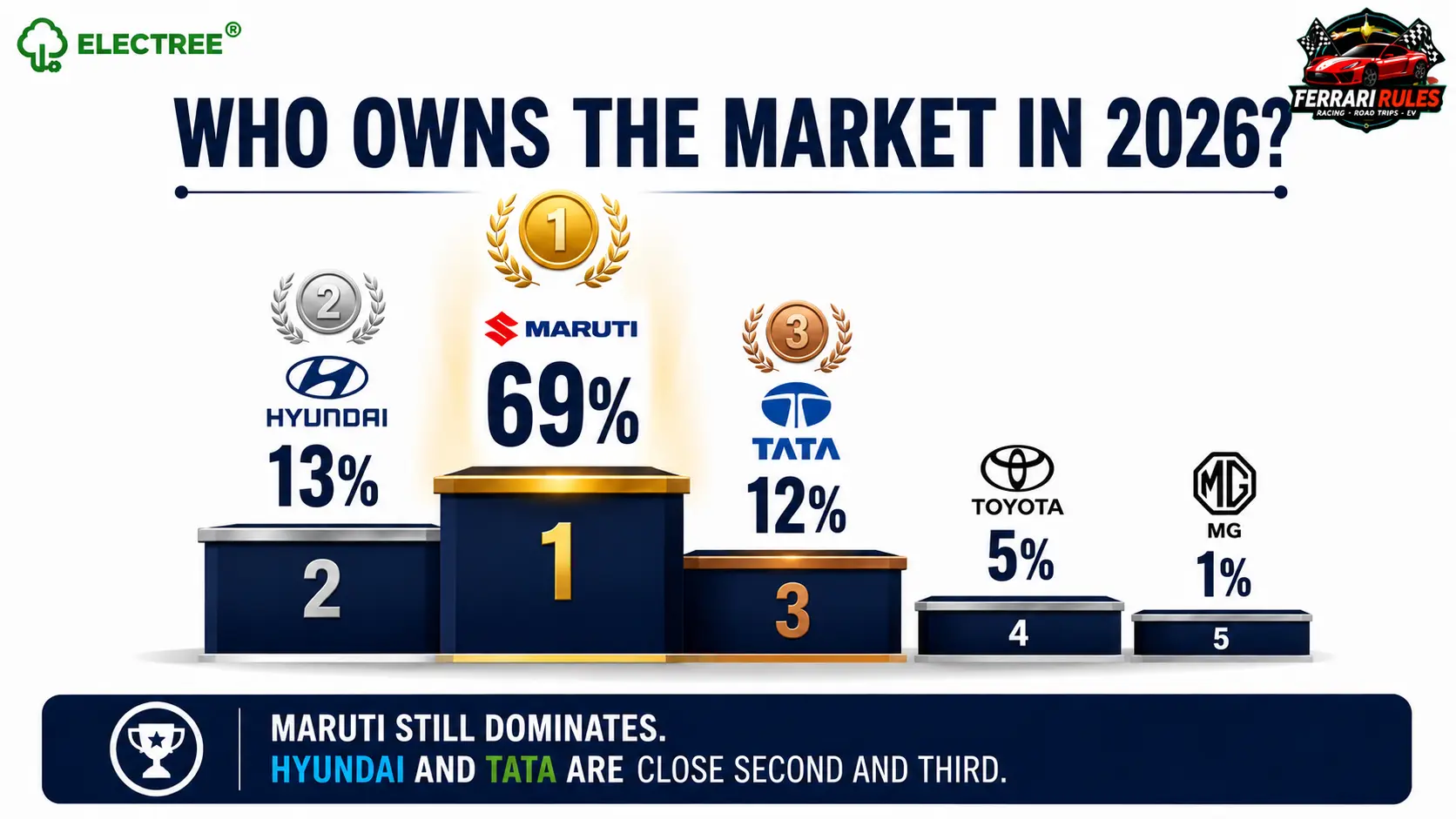
The B-segment hatchback market remains one of the most concentrated categories in India.
Maruti Suzuki commanded a massive 69% market share in H1 2026.
It was followed by:
- Hyundai: 13%
- Tata: 12%
- Toyota: 5%
- MG: 1%
Maruti’s dominance is built on its wide product portfolio, extensive dealership network, strong resale value and reputation for affordable ownership. The company has products spread across both small and large hatchback categories, allowing it to address buyers at multiple price points.
Hyundai and Tata are much closer to each other. With shares of 13% and 12%, respectively, the battle for the second position is significantly more competitive than the fight for market leadership. Toyota’s presence is supported largely through its rebadged product strategy, while MG remains a relatively small player in absolute terms.
The Biggest Growth Is Coming From Smaller Bases
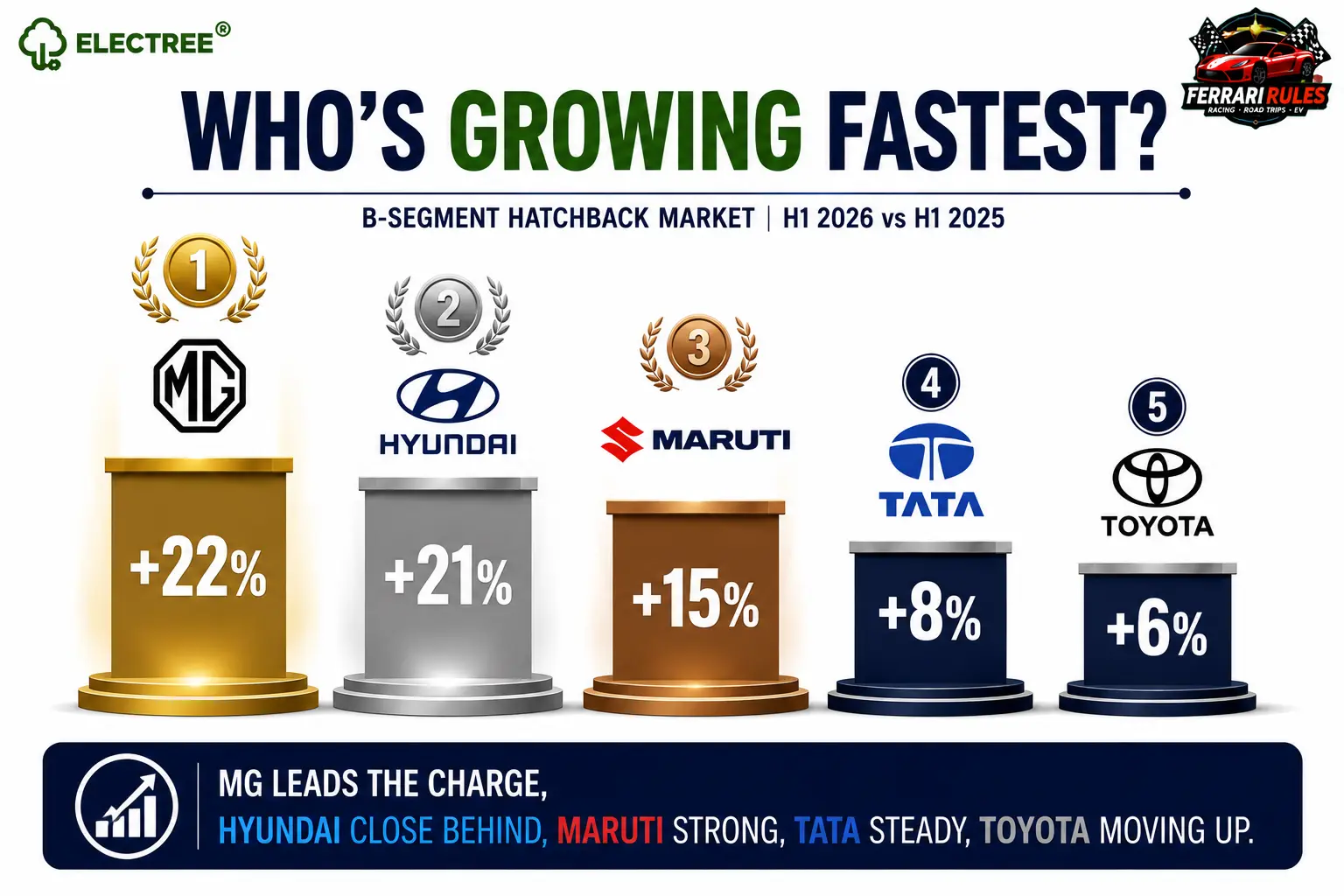
When H1 2026 sales are compared with H1 2025, all five manufacturers recorded positive growth.
- MG recorded the highest percentage growth, although it continues to operate from a much smaller sales base.
- Hyundai’s 21% growth is more significant from a competitive standpoint because it has helped the company increase its market share and move ahead of Tata in the segment.
- Maruti’s 15% growth may be lower in percentage terms, but because of its dominant base, it still added the highest number of incremental units.
- Tata and Toyota also grew, but at a slower pace than the overall market leaders.
The data therefore tells two different stories:
MG is the fastest-growing brand in percentage terms, while Hyundai is the strongest growth story among the major challengers.
Conclusion
The SUV wave may dominate headlines, but India still sold 4.79 lakh B-segment hatchbacks in the first half of 2026. This is not a dying segment. It is a segment adapting to changing consumer expectations.
Large hatchbacks are gaining share, petrol remains dominant, manuals continue to rule, and private buyers remain the foundation of demand.
Maruti continues to lead, but Hyundai is emerging as the most important challenger.
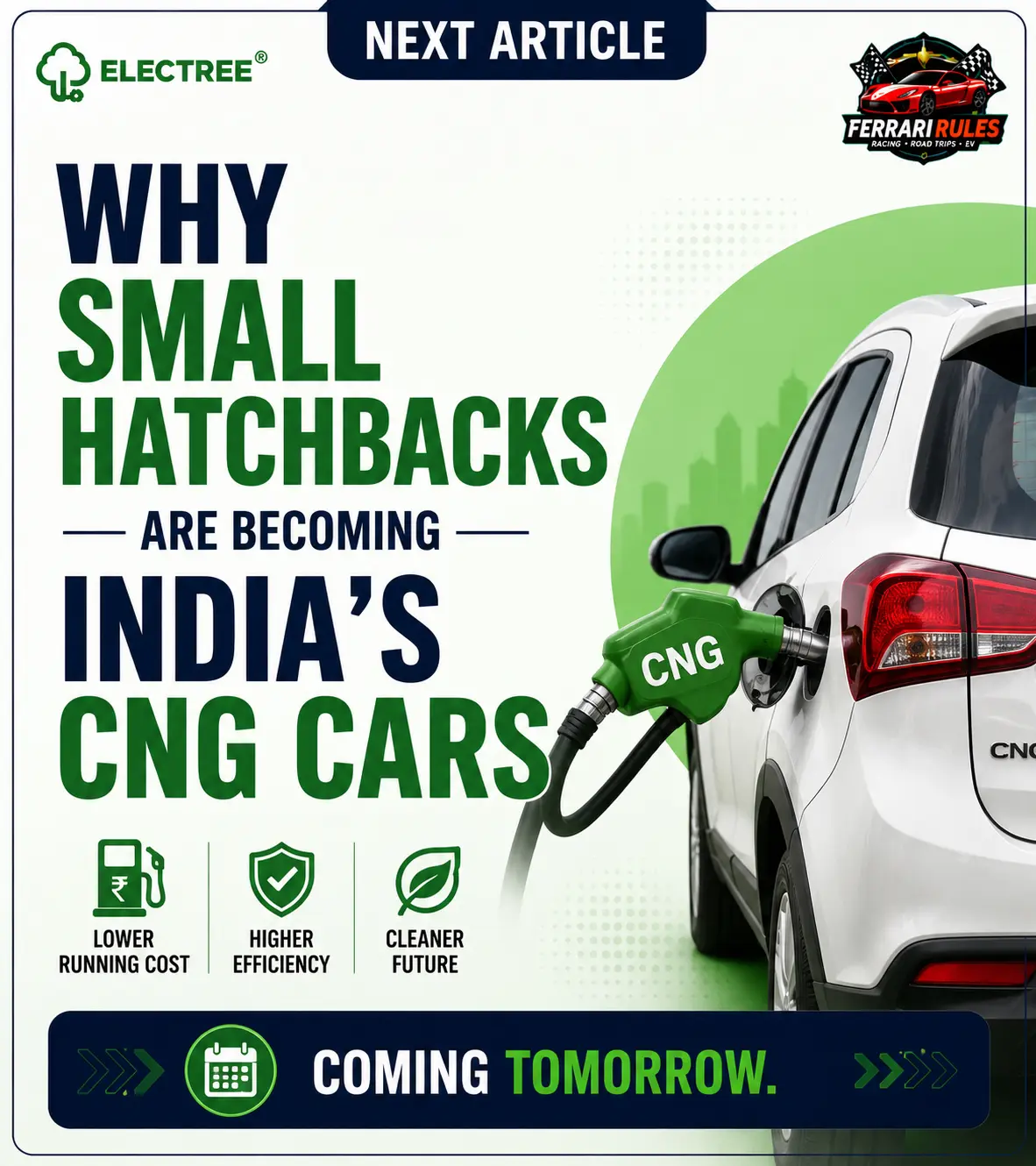
Next: Why Small Hatchbacks Are Becoming India’s CNG Cars — and how affordability is reshaping the entry-level market.
Methodology Note
Data classification:
- Sales refer to B-segment hatchback registrations analysed for CY2025 and H1 2026.
- Small and large hatchbacks are classified based on market positioning and vehicle category.
- Fuel type and engine architecture are analysed separately.
Note: Some percentages may not add up exactly to 100% due to rounding.
Source: Vahan
To comment and participate in discussion Click Here
Recent Articles
Trending Articles
Kerala Makes EVs More Affordable: Revised Road Tax Structure to Accelerate Adoption
India Car Sales by Fuel Type — March 2026: EV Share Hits New High, CNG Surges, Petrol Loses Ground
No Fire Safety Certificate Will Be Declined Over EV Chargers, Says Haryana Fire Department
Haryana Releases Draft Fire Safety Guidelines for EV Charging