
Hyundai India Confirms Sub-4M Electric SUV Launch in FY27
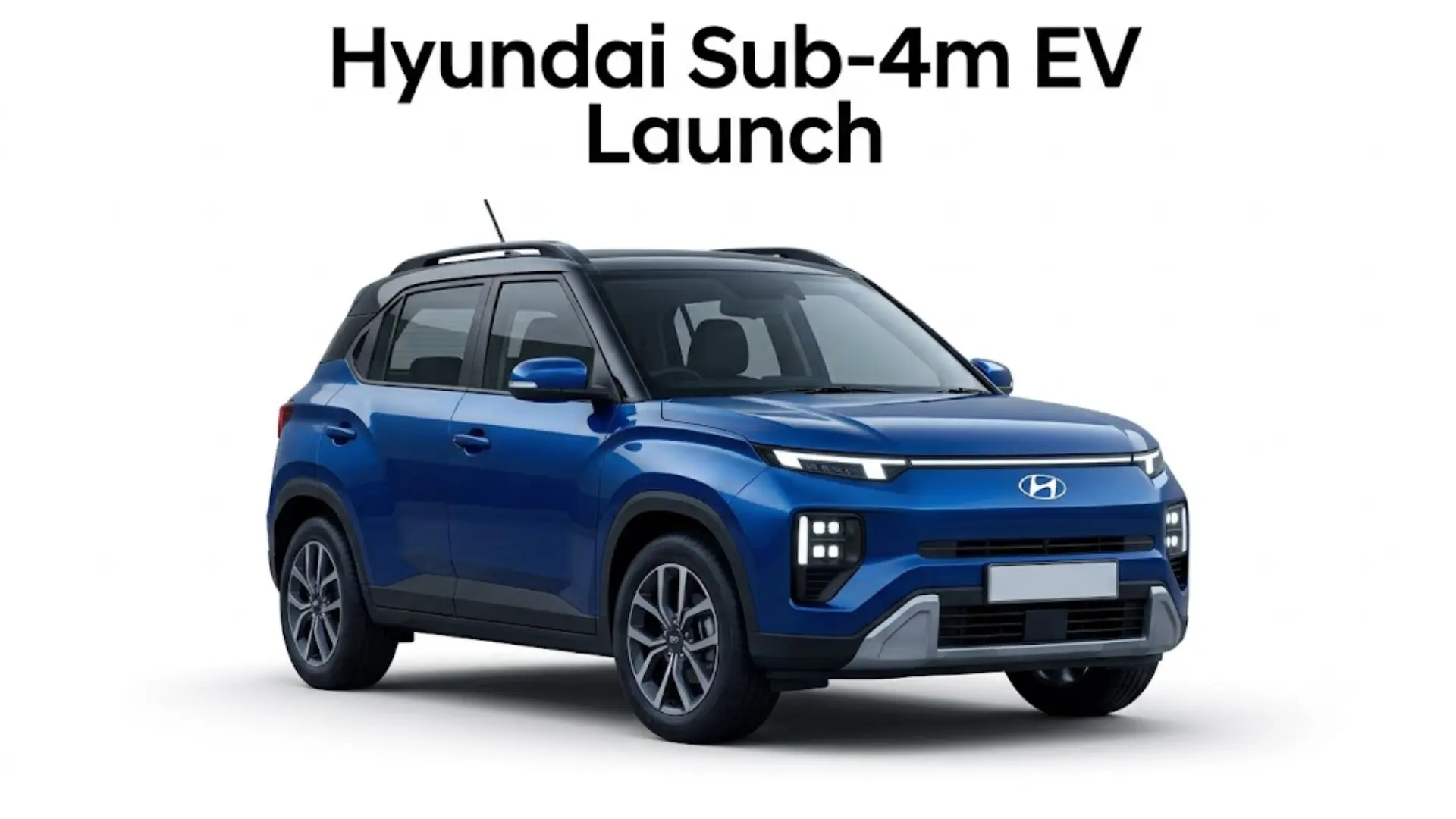
Speaking at the Business Today India@100 Summit, Hyundai Motor India MD & CEO Tarun Garg outlined the brand’s mass-market EV offensive. Backed by rising domestic adoption, localized battery cell development with Exide Energy, and an aggregated 30,000 station charging network on the myHyundai app, the Korean carmaker is preparing to enter the high-volume sub-4m electric SUV space before March 2027.


Category:
Tag:
Speaking at the Business Today India@100 Summit in New Delhi, Tarun Garg, Managing Director and CEO of Hyundai Motor India Limited (HMIL), outlined the automaker’s aggressive mass-market electrification strategy. Countering narratives of a global EV stagnation, Garg revealed that passenger EV penetration in India reached 7% in July 2026, which was up from 2.4% eighteen months prior, and officially confirmed that Hyundai will debut an all-new, India-specific sub-4-metre electric SUV within the current fiscal year.
Architecture, Design and Footprint
Unlike a straight conversion of an existing petrol platform, Hyundai’s upcoming sub-compact electric SUV utilizes the dedicated E-GMP (K) architecture, which is shared globally with the Hyundai Inster. It will be adapted specifically for Indian roads and crash safety standards.
| Confirmed & Expected Details | |
|---|---|
| Internal Codename | HE1i |
| Platform | Dedicated E-GMP (K) Skateboard EV Architecture |
| Dimensions & Stance | Sub-4-metre length, tall-boy upright profile, high ground clearance |
| Design Elements | Split LED DRLs, parametric pixel lighting, flared wheel arches & functional roof rails |
| Manufacturing Hub | Sriperumbudur facility, Tamil Nadu (with export capability) |
| Market Rivals | Tata Punch.ev, Tata Nexon.ev, Mahindra XEV 3XO, Citroën ë-C3 |
Powertrain, Localized Exide Cells and Range Estimates
To achieve high price competitiveness and meet domestic EV Incentive mandates, Hyundai is sourcing localized battery cells through its strategic partnership and equity investment with Exide Energy.
The SUV is expected to be offered in two distinct battery pack configurations and the speculated specs are:
| Standard Range Variant (Expected) | Long Range Variant (Expected) | |
|---|---|---|
| Battery Capacity and Chemistry | 40 kWh to 42 kWh (LFP) | 49 kWh to 51.4 kWh (LFP) |
| Cell Sourcing | Localized Exide Energy Cells | Localized Exide Energy Cells |
| Motor Output | 95 bhp to 100 bhp / 147 Nm | 115 bhp to 120 bhp / 147 Nm |
| Drivetrain Layout | Single Front-Mounted Motor (FWD) | Single Front-Mounted Motor (FWD) |
| Expected Claimed Range | 330 km – 360 km | 430 km – 460 km |
| Estimated Real-World Range | 250 km – 275 km | 320 km – 350 km |
| DC Fast Charging | Up to 110–120 kW | Up to 110–120 kW |
Expected Cabin Tech and Standard Equipment
Hyundai is positioning the new EV as a key step in its Software Defined Vehicle (SDV) roadmap. Highlighting connectivity, the SUV will feature standard connected-car tech across all trim levels alongside key convenience equipment:
| Expected Cabin Equipment & Feature Set | |
|---|---|
| Cockpit Displays | Dual 10.25-inch floating screens (digital cluster + central touchscreen) |
| Connected Mobility | Next-Gen Bluelink with standard OTA updates across all variants |
| Convenience & Comfort | Single-pane electric sunroof, front seat ventilation, wireless charging pad |
| Utility & Charging | Vehicle-to-Load (V2L) bidirectional power output, multi-level regen modes via paddles |
| Safety Suite | 6 airbags (standard), ESC, TPMS, 360° surround camera, optional Level 2 ADAS on top trims |
Expected Pricing and Positioning
Hyundai's management confirmed that the upcoming sub-4m electric SUV will be priced aggressively to capture first-time and mass-market family EV buyers. Here's a list of the expected price list
| Expected Ex-Showroom Price Bracket | Primary Benchmark Rival | |
|---|---|---|
| Base / Standard Range Trims | ₹11.50 Lakh – ₹13.50 Lakh | Tata Punch.ev Long Range |
| Top / Long Range Trims | ₹14.00 Lakh – ₹16.50 Lakh | Tata Nexon.ev (45 kWh) / Mahindra XEV 3XO |
The Summit
Beyond the vehicle confirmation at the Business Today India@100 Summit, Garg addressed the macro landscape, noting that Indian passenger EV penetration reached 7% in July 2026, up from 2.5% eighteen months prior.
He credited government backing via the PM E-DRIVE scheme, which prioritizes infrastructure enablement over blanket subsidies, along with the expansion of the myHyundai app, which now aggregates over 30,000 public charging points nationwide to eliminate highway range anxiety ahead of the HE1i's commercial rollout.
To comment and participate in discussion Click Here
Recent Articles
Trending Articles
Kerala Makes EVs More Affordable: Revised Road Tax Structure to Accelerate Adoption
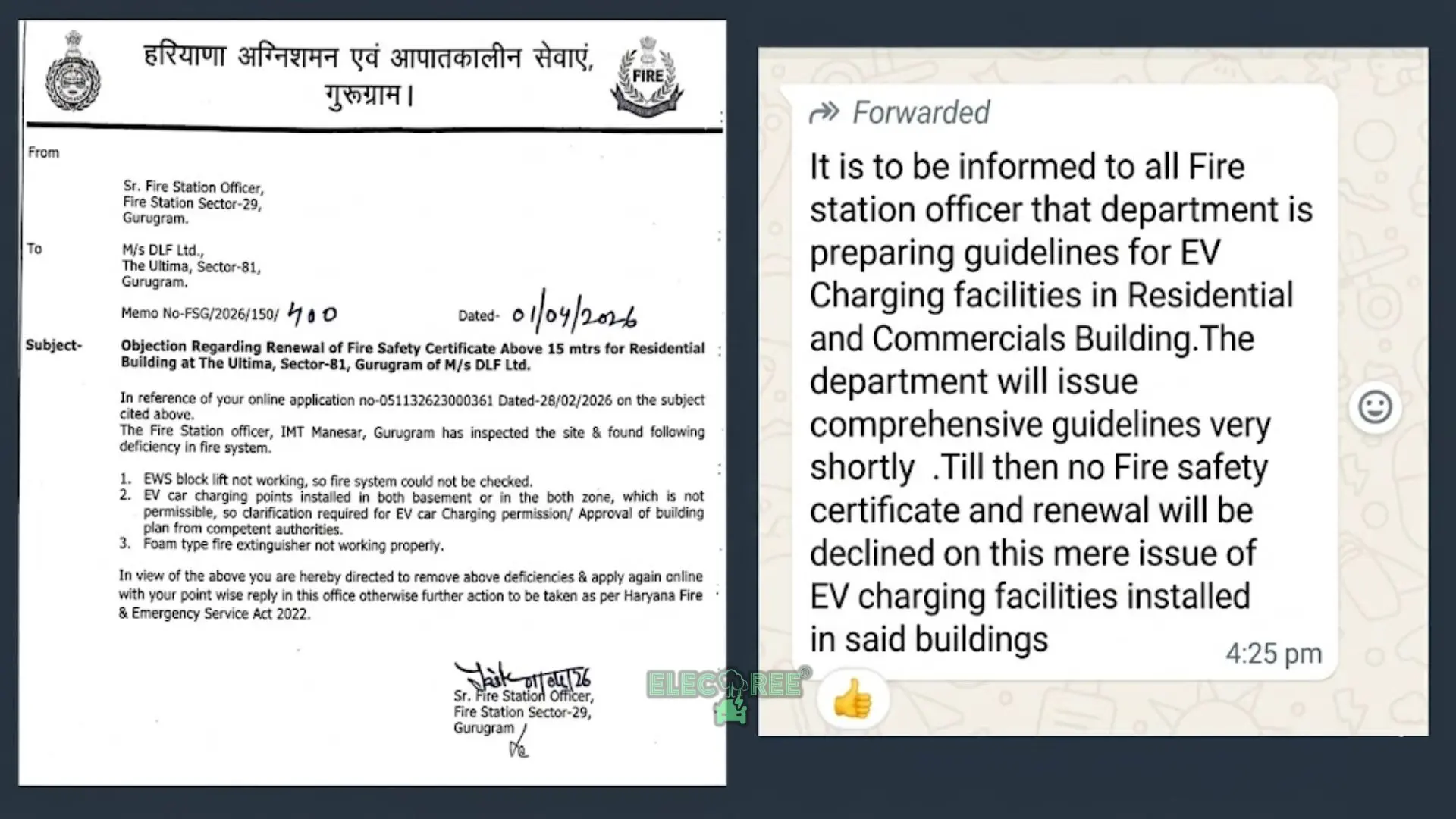
No Fire Safety Certificate Will Be Declined Over EV Chargers, Says Haryana Fire Department
India Car Sales by Fuel Type — March 2026: EV Share Hits New High, CNG Surges, Petrol Loses Ground
Haryana Releases Draft Fire Safety Guidelines for EV Charging