
9,260 km in a Mahindra BE 6: A Father-Son EV Drive to the Siachen Region
A 27-day journey in a Mahindra BE 6 took George Varghese and his 82-year-old father from Kerala to the Ladakh region and back, covering 9,260 km. The trip highlights the EV's reported efficiency while also showing how charging infrastructure continues to shape long-distance EV travel.


Category:
Tag:
- Mahindra BE 6
A 27-day journey from Kottayam to Ladakh and back put a Mahindra BE 6 through long highway runs, high-altitude passes and rough mountain roads, while highlighting both the potential and infrastructure gaps of long-distance EV travel.
For George Varghese M, the idea was as much about the journey as the destination.
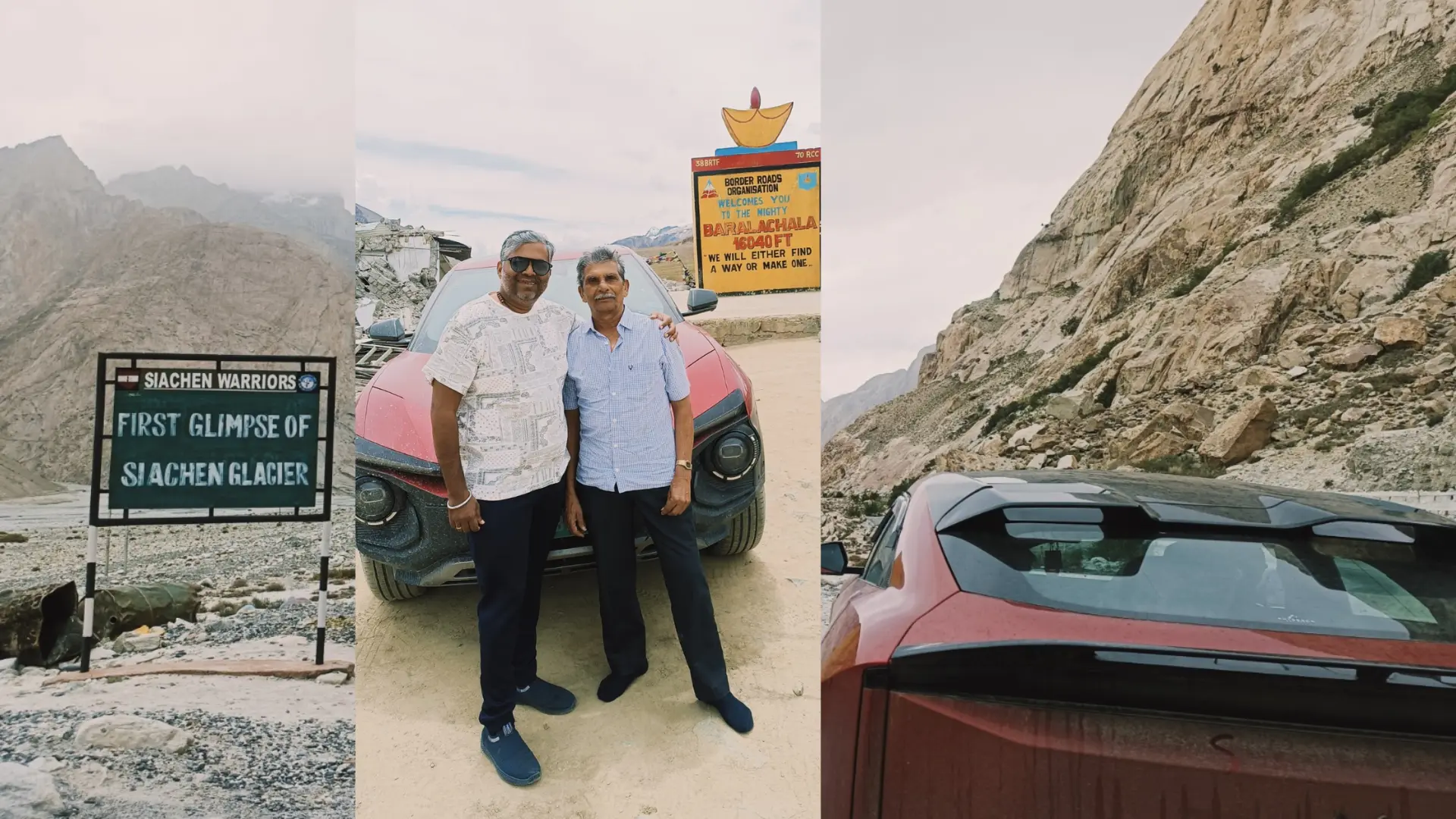
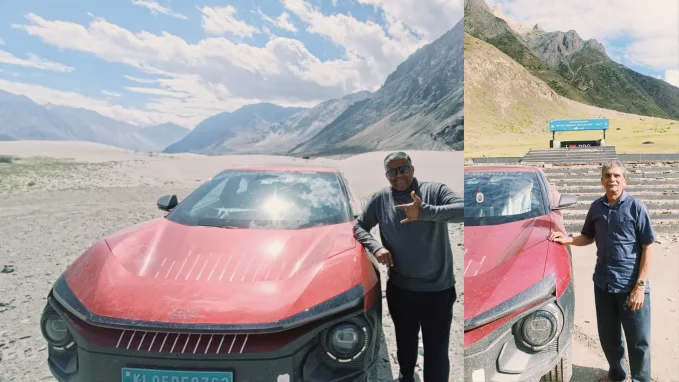
A long-time biker, Varghese set out from Kottayam, Kerala, with his 82-year-old father for a 27-day road trip to Ladakh and back. Their vehicle was a Mahindra BE 6 FE3, and by the time they returned home, the car had covered 9,260 km, according to Varghese's travelogue.
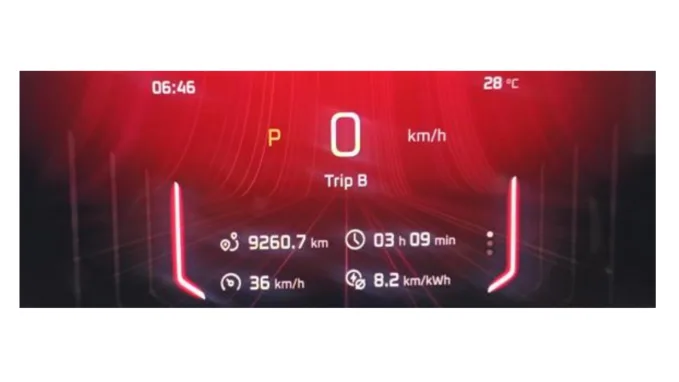
The trip included Hyderabad, Nagpur, Sagar, Gurgaon, Amritsar, Srinagar, Kargil, Leh, the Siachen region, Sumur, Pangong Lake, Jispa and Manali before the return to Kerala. Varghese reports an overall efficiency of 8.2 km/kWh.
The trip in numbers
| Parameter | Details |
|---|---|
| Starting point | Kottayam, Kerala |
| Total distance | 9,260 km |
| Duration | 27 days |
| EV | Mahindra BE 6 FE3 |
| Battery | 79 kWh |
| Reported average efficiency | 8.2 km/kWh |
| Travelling companion | 82-year-old father |
| Longest continuous drive | 1,129 km |
| Longest mountain section covered | Leh-Jispa, 377 km |
| Key destinations | Ladakh, Siachen region, Pangong Lake, Manali |
The first challenge came on Day 1
The journey began with one of its longest drives.
Varghese drove from Kottayam to Hyderabad, covering 1,129 km in 21 hours. He says the car was started with a full charge and the first DC fast-charging stop came only after reaching close to Salem, around 400 km into the journey.
The route then continued through Nagpur, Sagar and Gurgaon before the father-son duo headed towards Amritsar and eventually the Himalayas.
The full itinerary covered:
Kottayam → Hyderabad → Nagpur → Sagar → Gurgaon → Amritsar → Srinagar → Kargil → Leh → Siachen region → Sumur → Leh → Pangong Lake → Leh → Jispa → Manali → Gurgaon → Hyderabad → Kottayam.
From the plains to Ladakh
After Amritsar and Srinagar, the journey moved into the more demanding mountain section.
Kargil became an important stop before Leh. From there, the BE 6 continued towards Leh and the Ladakh circuit.
The charging was planned alongside accommodation rather than treated as a separate part of the journey. The car was slow-charged overnight at homestays and other locations wherever a suitable connection was available.
That approach became increasingly important as the route moved farther away from established charging networks.
The road to Siachen
The Siachen leg was the farthest point of the round trip.
Before leaving, Varghese charged the BE 6 to 100% overnight at his homestay. The pair first crossed Khardung La and then stayed in Sumur, where they checked that the charging connection was working because having a top-up available would be important for the return journey.
The road towards Siachen included narrow sections, off-road stretches and a couple of shallow water crossings.
However, there is an important distinction regarding the destination.
The Siachen Base Camp claim needs context
Varghese describes the destination as Siachen Base Camp and calls the journey “probably the first Mahindra EV” to reach there.
The car and occupants reached an Army checkpost and were turned back. He says a soldier at the checkpost told him that civilian entry had been stopped after bikers had recorded and posted videos from the sensitive area. Varghese says they took photographs without compromising Army positions and returned to their homestay in Sumur.
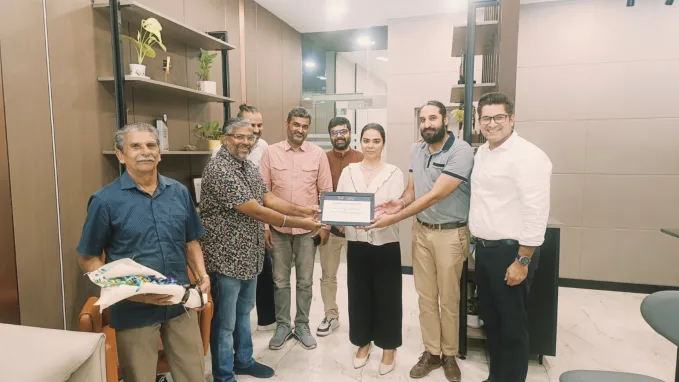
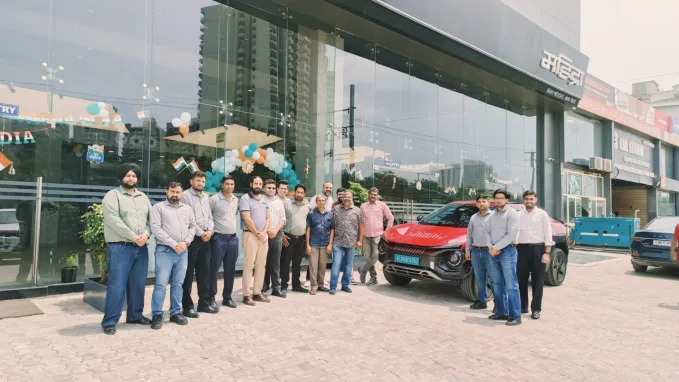
The journey took the BE 6 to the Siachen area, where Varghese says they reached an Army checkpost before being asked to turn back. This is the last civilian point in northern most part of India. He describes the trip as possibly the first by a Mahindra EV to the area and says the team was later felicitated by Mahindra in Gurgaon.
Pangong brought a different EV test
The next major section of the Ladakh circuit was Pangong Lake.
Varghese planned to drive from Leh to Pangong and return on a single charge, including the climb and descent through Chang La.
The journey encountered extreme fog, slush, light rain and around seven kilometres of off-road driving after the travellers missed a section of the road. Varghese says the BE 6's Range and Snow modes handled the section without slipping or losing power.
The BE 6 reached Leh with 47% battery remaining, while its instrument cluster showed more than 270 km of indicated range.
But the journey also showed the limits imposed by charging infrastructure.
Varghese says Hanle and Umling La were the only areas he missed, attributing this to the lack of charging infrastructure in Hanle.
That is perhaps one of the clearest EV lessons from the trip: vehicle range can expand the possible route, but charging availability can still determine where the route ends.
Regeneration became important in the mountains
The return journey towards Manali offered another interesting experience.
He records the Leh-Jispa leg at 377 km, with four high-altitude passes along the way. Varghese says he used low power while climbing and maximum regeneration while descending.
He reported reaching Jispa with 57% charge remaining. The car was then slow-charged overnight to 77%.
He found the mountain descent and regenerative braking useful enough to significantly offset energy consumption during the journey.
Manali offered time to slow down
After Jispa, the BE 6 continued towards Manali, with Varghese describing the vehicle as continuing its “regeneration journey”.
The father-son duo spent two nights in Manali, visiting Vashisht, the Manu Temple, hot springs, Hadimba Temple and other local spots before beginning the return journey.
The final return to Kottayam was completed in two days, with power naps at Narsinghpur in Madhya Pradesh and Hyderabad. The timing was partly driven by the upcoming Onam celebrations back home.
What the 9,260-km trip says about EV travel
The experience is particularly useful because it doesn't present range as the only factor in a long EV journey.
Instead, Varghese's experience points to a combination of charging planning, driving speed, terrain, regeneration and route flexibility.
| What mattered | What the traveller did |
|---|---|
| Starting charge | Slow-charged to 100% before long journeys |
| Highway driving | Generally maintained 75-80 km/h |
| Fast charging | Usually stopped at around 90-95% rather than waiting for 100% |
| Charging planning | Looked for charging options before reaching very low battery |
| Overnight stays | Used slow charging at hotels/homestays where possible |
| Mountain climbs | Used low power while ascending |
| Descents | Used maximum regeneration |
| Remote areas | Adjusted itinerary where charging was unavailable |
(These are the traveller's own practices and observations, not manufacturer recommendations or a controlled EV test.)
The driver's 8.2 km/kWh figure
Varghese reports an overall efficiency of 8.2 km/kWh for the 9,260-km journey.
He also says that maintaining speeds around 75-80 km/h helped him consistently achieve around or above 8 km/kWh during his trip, which he equates to more than 600 km of range.
Driving speed, terrain, temperature, load, air-conditioning use and traffic can all affect EV efficiency. The trip included nights when the AC remained on in the car.
Charging was still the biggest planning factor
Perhaps the most useful takeaway for EV road-trippers is how much attention Varghese paid to charging.
His approach was to identify multiple charging options rather than depend on one charger. For a vehicle with more than 500 km of claimed range, he suggests mapping several chargers after roughly 350 km. He also recommends starting to look for a charger when the battery is around 20-30%, leaving a buffer in case a charger is unavailable, offline or occupied.
He also incorporated slow charging into the journey, including overnight charging in Hyderabad and Manesar and at homestays during the hill circuit.
This becomes particularly relevant in remote mountain regions, where the problem is not necessarily the EV's battery capacity but the absence of a reliable charging point at the next destination.
A long-distance EV story with a limitation
The Kottayam-Ladakh-Kottayam journey demonstrates how far a modern electric SUV can be taken when the trip is planned around its charging requirements.
The BE 6 crossed long highway stretches, climbed high-altitude passes, tackled rough sections around Ladakh and completed a reported 9,260-km journey with an average efficiency of 8.2 km/kWh.
But the journey also shows why India's EV road-trip story cannot be reduced to battery size and claimed range.
Hanle and Umling La remained off the itinerary because of charging limitations. The Siachen section also ended at an Army checkpost rather than allowing entry into the base camp. And the traveller repeatedly relied on overnight and destination charging to make the mountain circuit practical.
For EV owners, the lesson from this particular trip is straightforward: long-distance electric travel is possible, but route planning still has to follow the charging map.
And for India's EV infrastructure story, the journey highlights an equally important point: the next stage of electric mobility will not only be about putting more EVs on the road, but making it possible for those EVs to reach more of the country.
Recent Articles
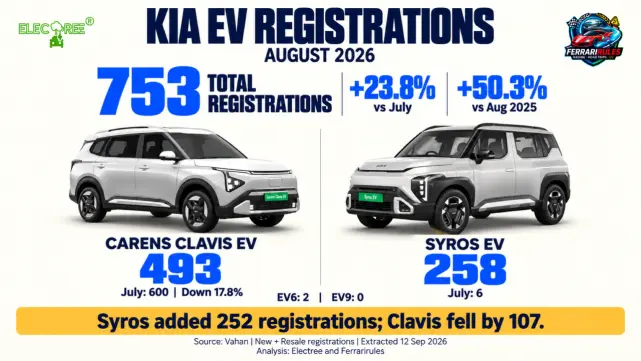
Kia EV Registrations Rise 24% in August as Syros Offsets Clavis Decline
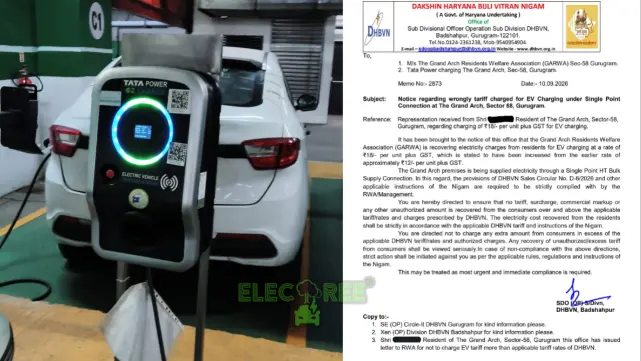
DISCOM Issues Notice to Gurugram RWA for Overcharging EV Users
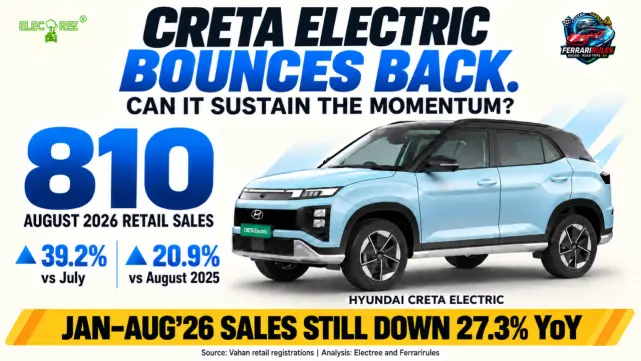
Hyundai EV Sales August 2026: Creta Electric Rebounds, but Year-to-Date Sales Fall
Omega Seiki Mobility Begins Development of Accessible EV for Persons with Disabilities
Trending Articles
Kerala Makes EVs More Affordable: Revised Road Tax Structure to Accelerate Adoption

India Car Sales by Fuel Type — March 2026: EV Share Hits New High, CNG Surges, Petrol Loses Ground
No Fire Safety Certificate Will Be Declined Over EV Chargers, Says Haryana Fire Department
Haryana Releases Draft Fire Safety Guidelines for EV Charging