Is EV the Path to India's Global Motorsport Resurgence?
How Indian-backed powerhouses like Mahindra and Jaguar in Formula E are leading India’s global motorsport resurgence.


Category:
Tag:
- Indian Motorsport
- EV Motorsport
- Mahindra Racing
- Jaguar Racing
For over a decade following the quiet departure of the Indian Grand Prix from the Buddh International Circuit, and the exit of Force India from Formula 1, India’s footprint at the top tier of world motorsport seemed largely gone. Conventional internal combustion racing, backed by a century of European heritage engineering and astronomical budgets, offered limited inroads for emerging nations.
The transition to electric mobility has disrupted this dynamic though.
Electric racing represents an engineering reset. Without the century-old head start of internal combustion development, electric motorsport levels the playing field. Performance is determined by software calibration, thermal battery management, and high-voltage efficiency. The latest FIA World Championship results demonstrate that electric racing is no longer merely an alternative pathway, but has become the primary arena where Indian automotive conglomerates, engineering outfits, and drivers are establishing themselves as global title contenders.
Mahindra and Jaguar in the World Top 3
The definitive proof of this shift arrived at the season finale of the ABB FIA Formula E World Championship. In an arena contested by factory giants like Porsche, Nissan, Stellantis, Citroen, Andretti, etc., Indian-affiliated teams locked out two of the top three positions in the final World Teams' Championship standings.
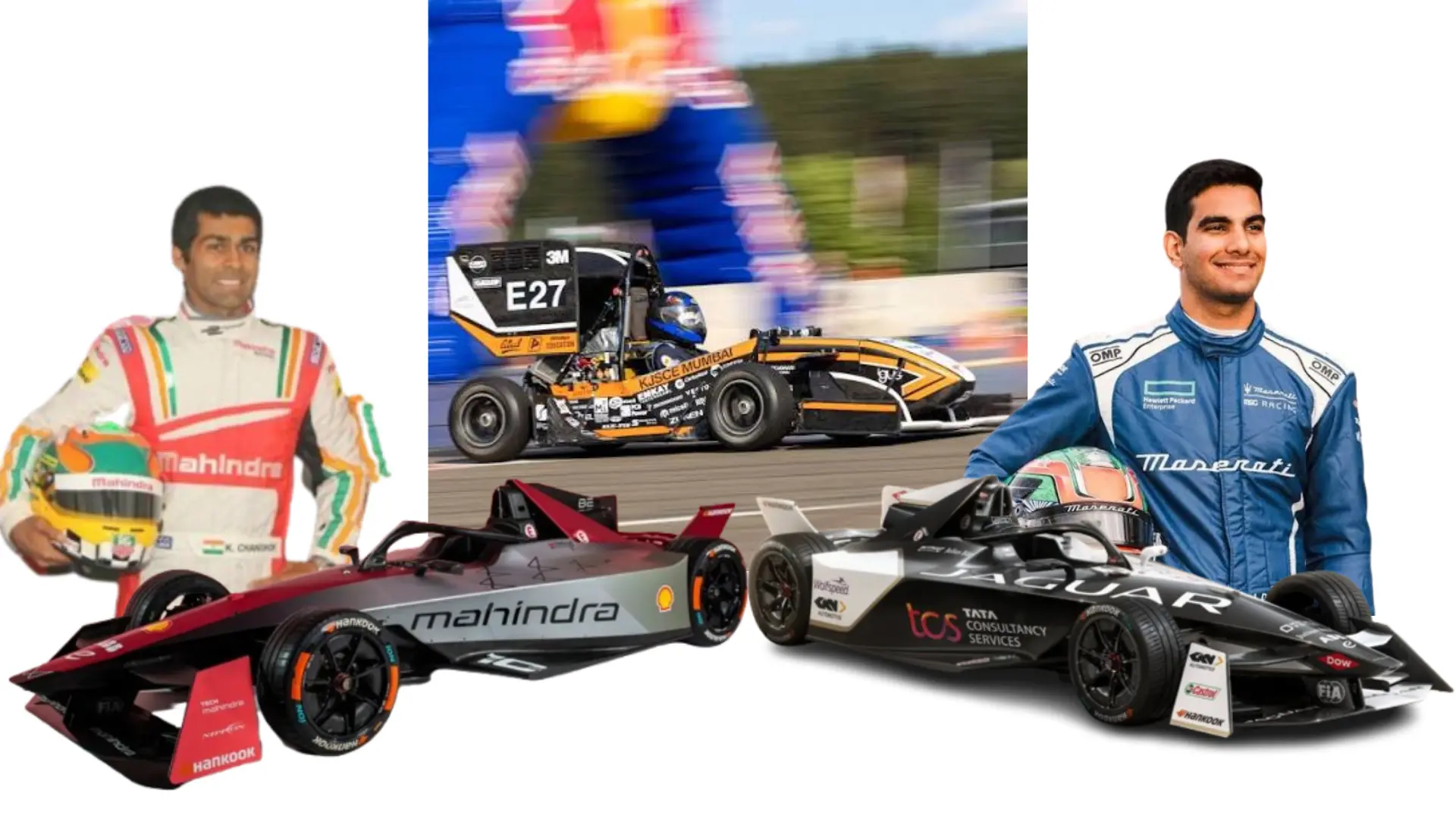
- Jaguar TCS Racing, which is backed by Tata Motors and Tata Consultancy Services, secured the Teams' World Championship title. This proved the efficiency of their electric powertrain across a 16-race global tour, crucially before the launch of their first Model in their revamped global all electric Line-up, the Type 01.
- Mahindra Racing, the only Indian-born manufacturer and a founding member of the championship, completed a historic turnaround by clinching 3rd place overall in the World Teams' Championship. The season was highlighted by a Monaco E-Prix victory, an all-Mahindra 1-2 front-row lockout in London qualifying, and Nyck de Vries' all-time London track record of 1m 06.925s.
Together, Tata's Jaguar and the Mahindra Group represent the highest concentration of Indian-affiliated engineering success ever recorded in one of the top-tiers of FIA world championship motorsport.
Key Milestones for India in Electric Racing
India’s rise in electric motorsport is the result of consistent strategic bets placed over the past decade:
- The Founding Pioneer: When Formula E debuted in 2014, Mahindra Racing committed as a founding entrant, establishing a continuous Indian presence in top-tier FIA racing.
- Driver Trailblazers: Karun Chandhok drove for Mahindra in Formula E’s inaugural season, while Jehan Daruvala represented India as a full-time works driver for Maserati MSG Racing. Former F2 race-winner Kush Maini has served in the paddock as an official reserve and test driver for Alpine and Mahindra, keeping Indian driver talent embedded in high-voltage development.
- Hosting the World Stage: The 2023 Hyderabad E-Prix brought the FIA World Championship back to Indian soil after a ten-year hiatus, proving India's capability to execute complex street-circuit electric races.
- Extreme E & All-Terrain Research: Indian battery research groups and engineering teams have contributed data to the Extreme E electric off-road series, testing thermal resilience in severe operating environments.
- Formula Student Success: At the collegiate level, Indian university teams including IIT Bombay Racing, Team KJSCE, and IIT Madras’ Raftar Formula Racing have consistently earned podiums in international Formula Green design competitions with custom battery enclosures and lightweight EV chassis.
The Track-to-Road Strategic Synergy
The reason electric motorsport succeeds where combustion racing stalled in India comes down to direct commercial and technological alignment.
Formula 1 V6 hybrid engines have limited relevance to Indian consumer vehicles. In contrast, every lap completed in Formula E delivers telemetry that directly impacts Indian production cars:
- Mahindra’s INGLO Architecture: The silicon-carbide inverters, active regenerative braking software, and cell-cooling algorithms developed by Mahindra Racing flow directly into the company’s road-going electric vehicles, including the BE 6 and XEV 9e.
- Tata Motors & acti.ev / EMA: Tata Motors leverages high-voltage efficiency insights from Jaguar TCS Racing to refine battery management systems across its acti.ev and premium EMA skateboard platforms.
For Indian automakers, electric racing functions as an active R&D testbed that accelerates consumer EV development.
The Road Ahead
While the momentum is strong, several structural areas require attention to build a self-sustaining motorsport ecosystem:
- Sustained Home Events: Ensuring a permanent, stable Indian round on the Formula E calendar is critical for long-term domestic fan engagement and corporate sponsorship.
- Grassroots Electric Karting: Developing an accessible, nationwide electric karting infrastructure will lower entry barriers for young drivers transitioning toward single-seaters.
- Domestic Electric Racing Series: Introducing a localized electric touring car or single-make cup would allow homegrown engineering talent and privateer teams to race without requiring multimillion-dollar European budgets.
The Blueprint for Indian Motorsport
By embracing electrification, India has bypassed the structural barriers of legacy motorsport to achieve championship-winning engineering relevance. With Tata’s Jaguar, and Mahindra Racing holding two of the top three spots in the Formula E World Championship, Indian manufacturers and engineers are now setting benchmarks on the global stage, be it directly or not.
As Formula E heads into the all-wheel-drive Gen4 era and the automotive landscape transitions permanently toward zero emissions, electric racing has established itself as India's primary gateway to sustained international motorsport success.
Trending Articles