
Government Directs PSBs and Insurance Firms to Shift to EVs
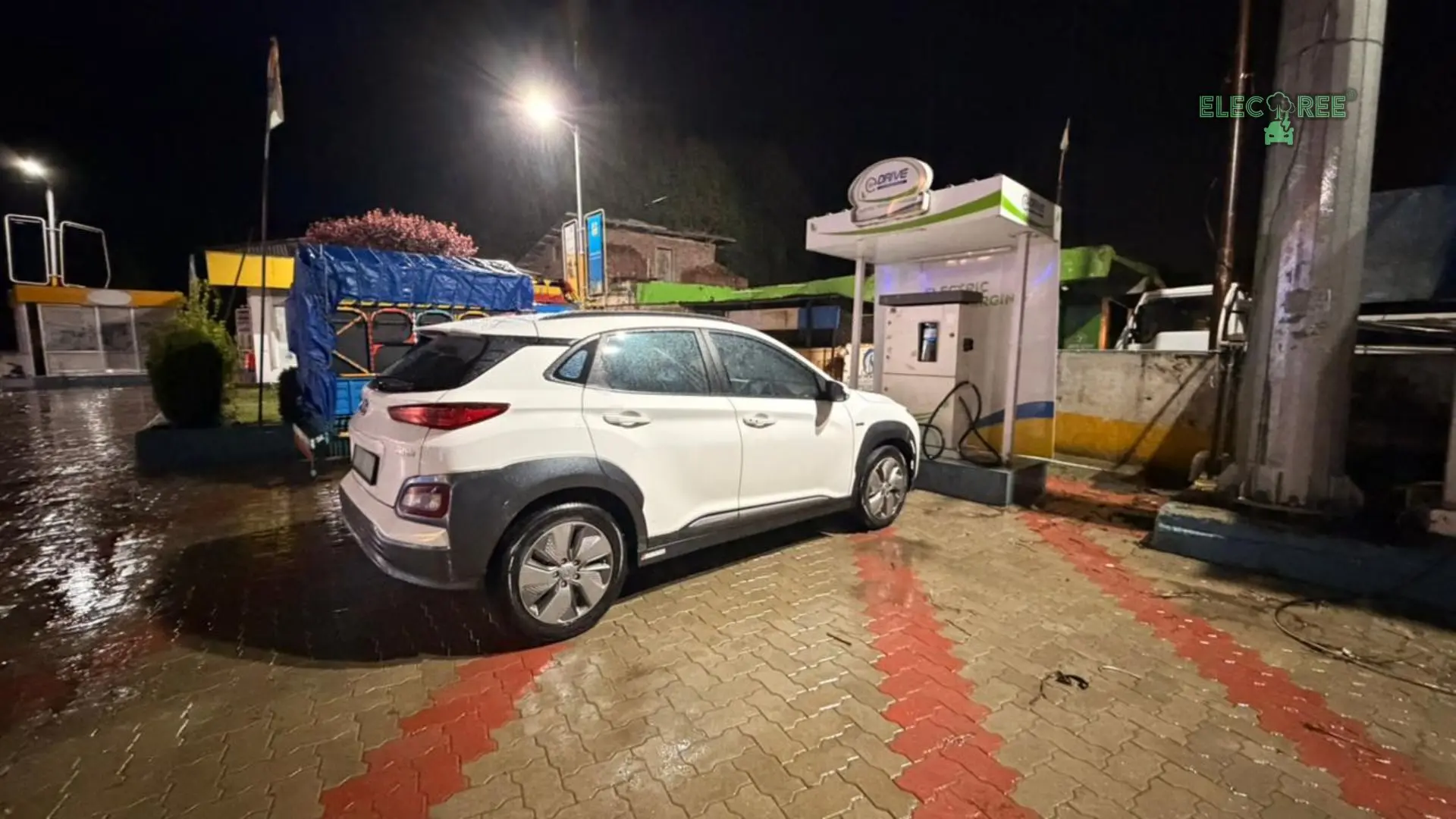
A Ministry of Finance circular dated 18 May 2026 directs all PSBs, RRBs, PSICs and PSFIs to replace petrol and diesel vehicles with EVs in a phased manner. ElecTree examines what this means and what needs to accompany it.


Category:
Tag:
- Ministry of Finance
- EV Policy
The Ministry of Finance's Department of Financial Services issued a circular on 18 May 2026 directing all Public Sector Banks, Regional Rural Banks, Public Sector Insurance Companies and Public Sector Financial Institutions to implement austerity measures with immediate effect. Among the directives is a clear mandate on electric vehicles — all organizations should aim at replacing petrol and diesel cars at their head offices and branch offices with electric cars as far as possible, with existing fleets to be progressively transitioned to EVs in a phased manner.
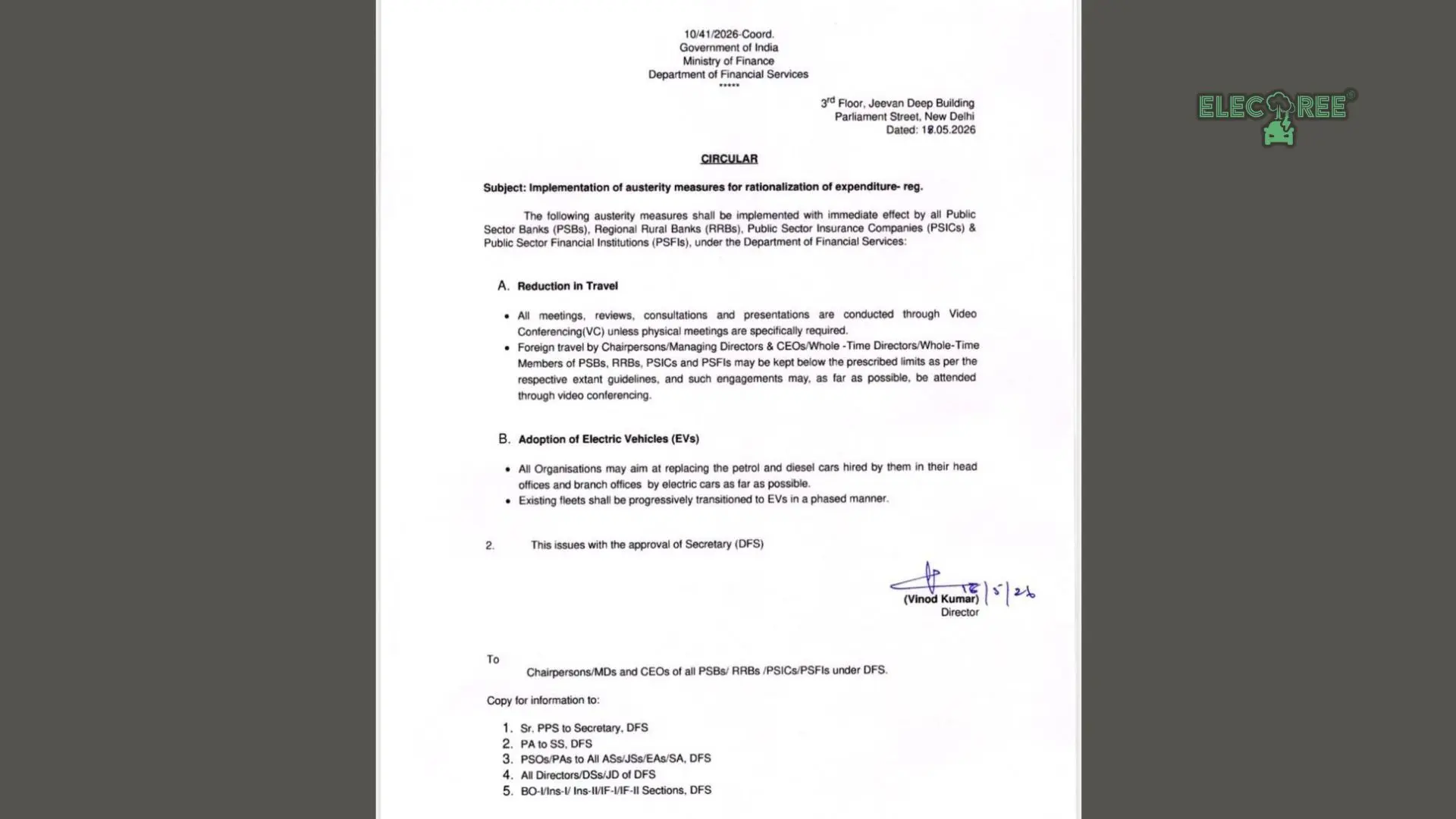
The circular, signed by Director Vinod Kumar with the approval of the Secretary of DFS, covers institutions including State Bank of India, Bank of Baroda, Life Insurance Corporation of India and hundreds of other PSBs and financial entities operating thousands of vehicles across the country.
Why This Matters
Public sector institutions collectively operate one of the largest vehicle fleets in India. A phased EV transition mandate across PSBs, RRBs and PSFIs is not a symbolic gesture — it represents a meaningful, quantifiable demand signal for the Indian 4W EV market. Fleet procurement at institutional scale drives volume, which in turn supports faster localization and cost reduction for EV manufacturers.
The timing is also significant. The circular comes days after petrol and diesel prices were initially hiked by ₹3 per litre and CNG by ₹2, with the government citing energy security concerns amid the West Asia conflict. Fleet electrification at this scale directly reduces institutional fuel expenditure while supporting India's broader goal of reducing crude oil import dependency. CNG and fuel prices were then increased ₹1 at the time of writing this article.
Phased Is the Right Approach — But Infrastructure Must Follow
The circular's use of "phased manner" and "as far as possible" is deliberate and appropriate. As we outlined in our recent article on solving core issues, mass EV adoption — whether individual or institutional — requires functional charging infrastructure, home and workplace charging frameworks, and affordable vehicles before it can be mandated at scale.
A PSB branch in a tier-2 or tier-3 city transitioning its fleet to EVs will immediately run into the same infrastructure gap that individual buyers face — unreliable public chargers, no workplace charging standard, and limited service networks. The government's ₹503 crore allocation for 4,874 new public EV charging stations under PM E-Drive is a step in the right direction.
The fleet transition directive and the charging infrastructure investment need to move in parallel. One without the other creates either stranded EVs or missed targets.
The Bigger Picture
This circular is part of a broader pattern of coordinated government action — fuel price signals, PM-level messaging on EV adoption, charging infrastructure investment, and now institutional fleet mandates. The direction is clear and correct. What India needs now is for the structural enablers — domestic battery manufacturing, reliable charging infrastructure, a national home charging framework — to keep pace with the ambition.
A phased transition of public sector fleets is a stepping stone. The destination is a market where EVs are affordable enough, reliable enough and supported enough for every buyer — not just institutions with procurement budgets — to make the switch.
Trending Articles



Recent Articles

Renault Duster Hybrid vs Maruti Victoris Hybrid: All Variants Compared

Duster Hybrid vs Hyryder Hybrid: Prices, Powertrain and Variants Compared
Top 5 Best Selling EVs This Year: Windsor Leads with Clear Margin

Renault Duster Hybrid vs Maruti Suzuki Grand Vitara Hybrid: Base, Mid, and Top Variant Comparison