EV Car Sales Cross Half of 2025 Total in Just 4.5 Months
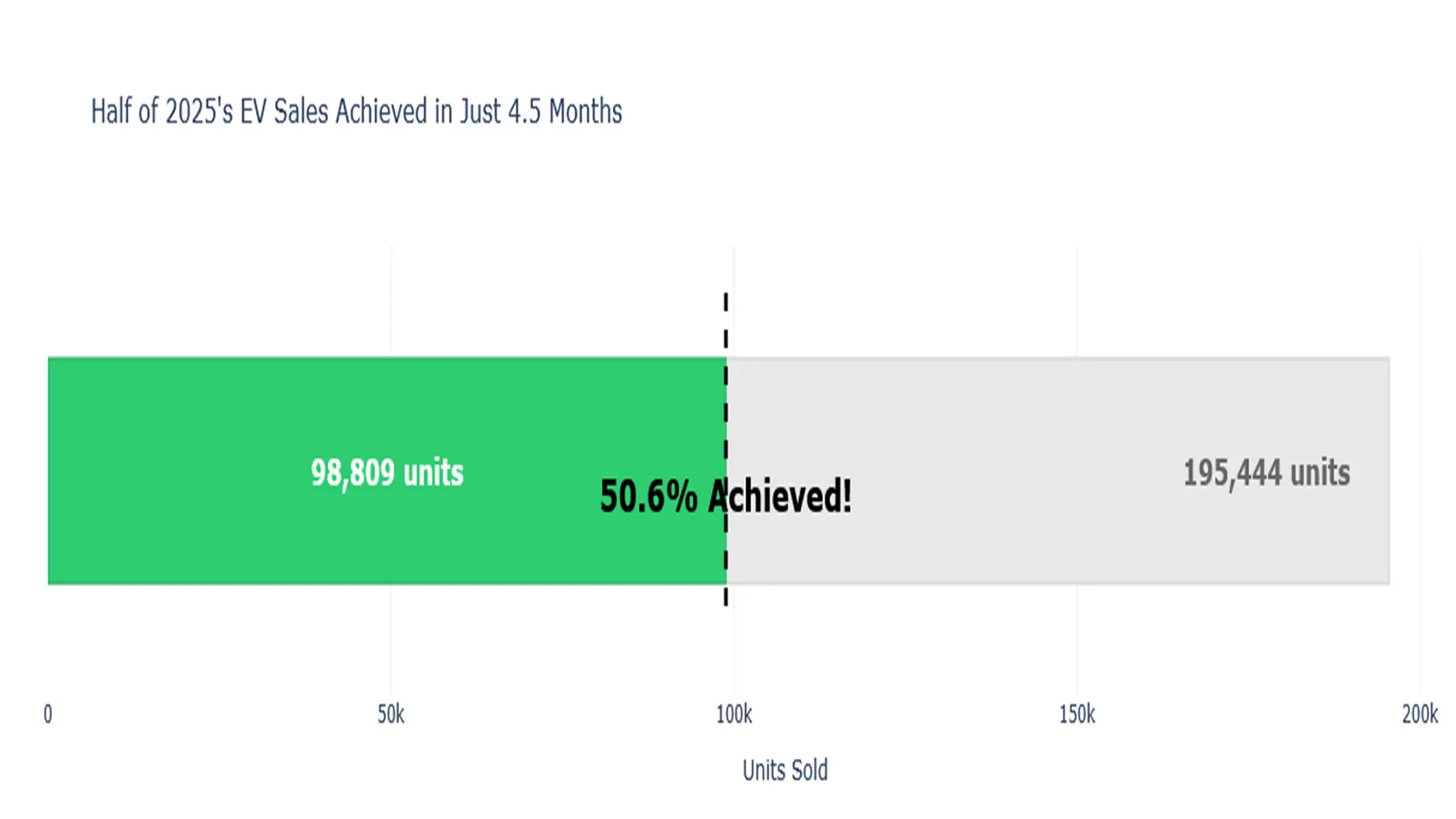
The EV market is experiencing massive acceleration this year. By May 18, 2026, passenger EV sales reached 98,809 units. When compared to the 1,95,444 total EVs sold throughout 2025, the industry has already achieved 50.6% of last year's volume in just four and a half months.


Category:
Tag:
- EV Market Share
- EV Sales Data 2026
We analyze the key factors driving this rapid transformation in the market:
An Explosion of Choices in the EV Market
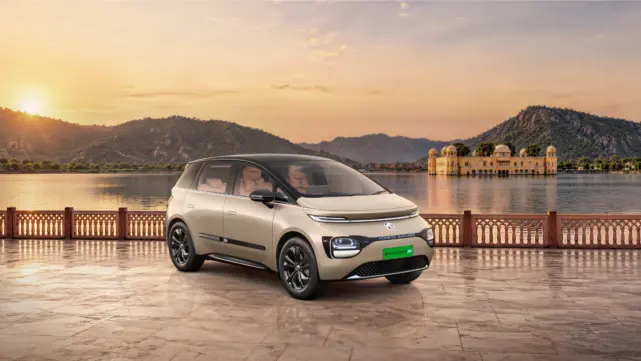
The Indian EV landscape is expanding rapidly, offering consumers a decent variety. Today, buyers can choose from 19 mass-market EVs across seven different manufacturers. A major turning point occurred in January 2026 when market leader Maruti Suzuki officially entered the space with its highly anticipated eVitara. The market also saw crucial diversification this year, with Mahindra and VinFast introducing fully-fledged 7-seater electric vehicles. Meanwhile, Tata Motors continues to disrupt the affordable segment, offering the Punch.EV with a 40 kWh battery pack and a 300+ km range for under ₹11 lakh.
Geopolitical Tensions and Rising Fuel Costs
Since early March 2026, escalating conflicts in the Middle East involving the US, Israel, and Iran have heavily disrupted global markets. Iran’s closure of the Strait of Hormuz—a critical artery for the world’s oil trade—has triggered severe supply chain uncertainties. Consequently, global oil prices and currency exchange rates have surged. To curtail the mounting losses of Oil Marketing Companies (OMCs), the Indian government recently implemented two consecutive fuel price hikes. This rising cost of petrol and diesel has inadvertently made the low running cost of EVs much more attractive to the average buyer.
Rapid Expansion of High-Speed Charging Infrastructure
Over the past year, major OEMs like Tata.EV and Mahindra have heavily invested in building robust charging networks. While Tata has focused on strategic partnerships with private Charge Point Operators (CPOs) to deploy 120kW+ fast chargers, Mahindra has taken a direct approach by building its own network of ultra-fast 180kW chargers. Simultaneously, private CPOs—including ChargeZone, Zeon, Statiq, Tata Power, Voltran, Jio-bp, and Xobolt—are aggressively rolling out 120kW+ fast chargers, with several players now establishing dedicated, multi-point charging hubs across key highways.
To read more about EV charging infrastructure - read here
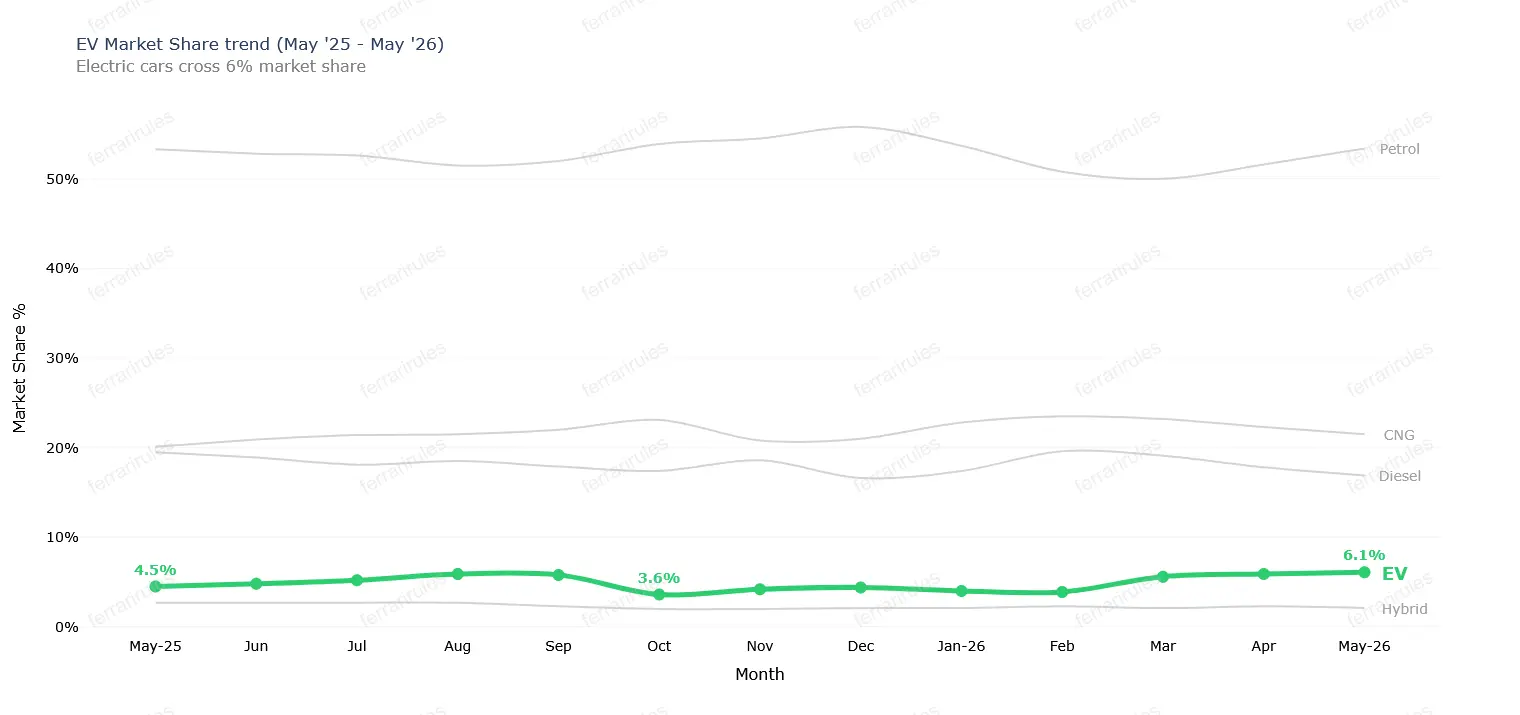
All this has resulted in EV 4W market share reaching an all-time high of 6.1%
What Next
The momentum in the Indian EV market shows no signs of slowing down, with a massive pipeline of new models slated for the next 12 months:
Tata Motors: The market leader will aggressively expand its portfolio by launching the highly anticipated Sierra.ev in Q2 FY26 and Safari.ev in late 2026, followed by the premium Avinya architecture in Q4 FY27.
Maruti Suzuki & Toyota: Following the eVitara, Maruti is set to introduce a 3-row, 7-seater EV in the second half of 2026. Simultaneously, Toyota will roll out the eBella, its rebadged iteration of the eVitara.
Hyundai & Kia: Hyundai is developing a sub-4m electric SUV slated for FY2027, while sister brand Kia is gearing up to launch the Syros EV.
Mahindra: Expanding its "Born Electric" range, Mahindra is scheduled to roll out the BE.07 in Q1 2027.
JSW & MG Motor: MG is preparing to bring the Starlight 560 to India. Meanwhile, the JSW Group is planning a major product offensive with the upcoming Jetour T2, Chery iCar V23, and Jaecoo J5.
Honda: Honda is preparing to launch its '0 Series' Alpha in early 2027,
Vinfast: They are evaluating either the compact VF3 or VF5 for its next Indian release.
Trending Articles