
How the 2026 Fuel Crisis is Rewiring India’s Passenger Vehicle Market
Since the beginning of March 2026, the world has been reeling under a fuel crisis due to the US-Iran war. In this article, a deep dive into how fuel costs and product strategy are reshaping passenger vehicle demand


Category:
Tag:
- powertrain mix
- EV market share
How the Fuel Crisis Is Reshaping Passenger 4W Mix
We recently published a comprehensive powertrain trend analysis tracking India’s passenger 4W market from CY2018 through early 2026. The report resonated strongly across the industry—even catching the attention of Autocar, which featured our findings in a recent deep dive podcast.
Now, the market landscape is shifting once again.
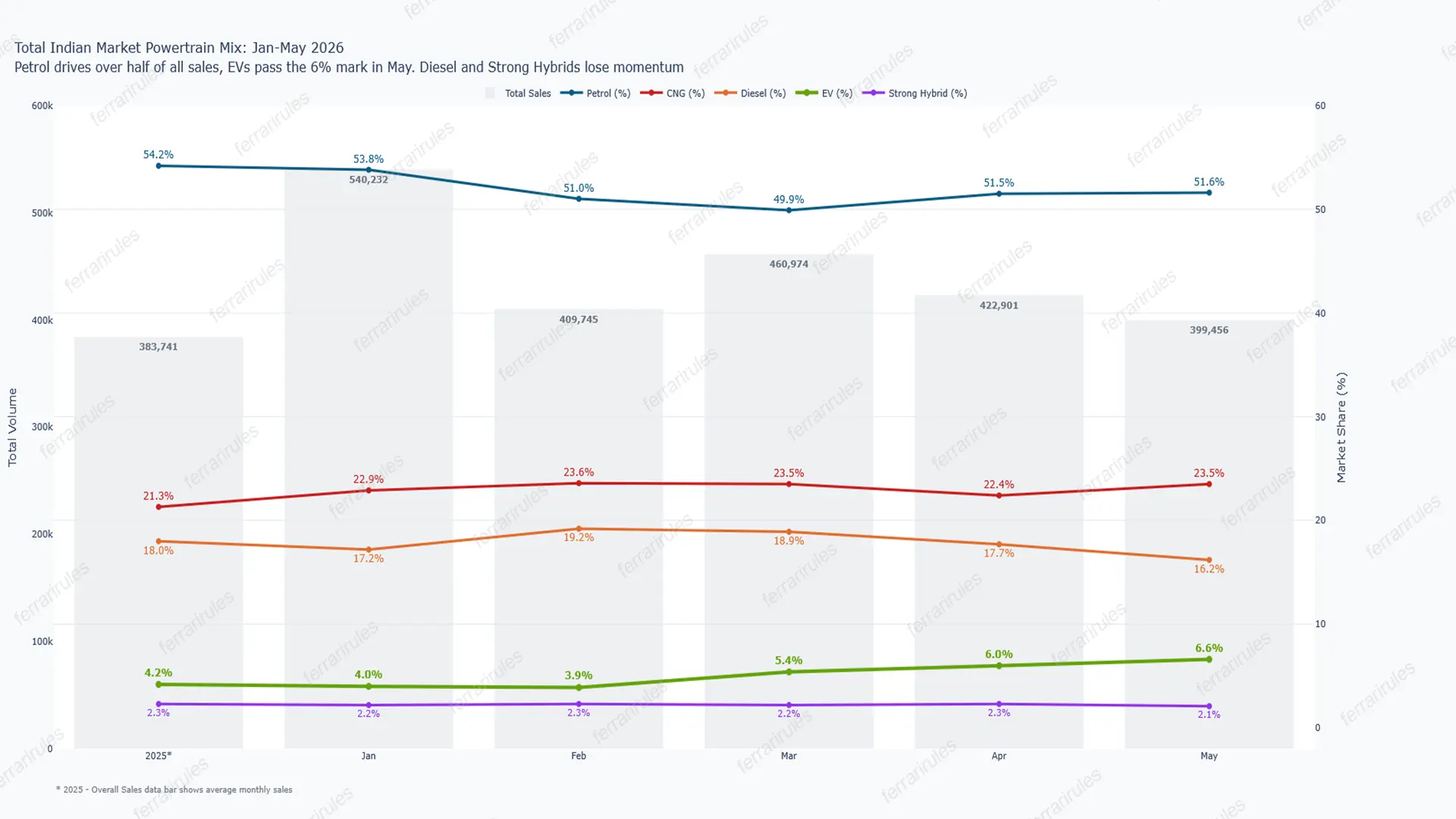
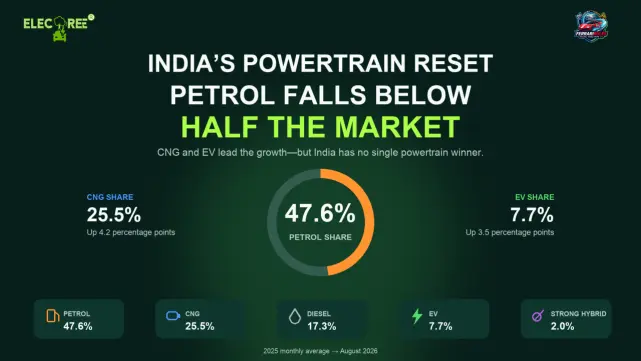
In this update, we examine exactly how the escalating fuel crisis has disrupted powertrain trends in 2026. We closed out 2025 with a powertrain mix: Petrol led at 54.2%, followed by CNG at 21.3%, Diesel at 18.0%, EVs at 4.2%, and Strong Hybrids at 2.3%. However, since the geopolitical conflict triggered a fuel shock in March 2026, consumer buying behavior has reacted almost immediately.
Comparing the 2025 year-end baseline to the current post-crisis reality, a new trend is emerging:
Petrol is softening: Market share has dropped by roughly 3 percentage points, stabilizing at around 51.6%.
CNG is accelerating: Gaining traction as a cost-effective alternative, CNG has increased its share by 2 percentage points to reach 23.5%.
Diesel continues to decline: The downward trend has accelerated, with diesel shedding another 2 percentage points to settle at nearly 16%.
EVs hit a new milestone: Electric vehicles are the biggest relative winners, jumping 2.4 percentage points to capture 6.6% of the market.
Strong Hybrids remain flat: Despite the fuel volatility, strong hybrids have failed to gain meaningful traction, hovering statically around the 2% mark.
As the crisis continues to put pressure on traditional fuel economics, this early data suggests a definitive tipping point for alternative powertrains.
OEMs with multiple mass-market EV models
We look at the OEM which have multiple EV mass-market EV models on sale and how their powertrain mix is looking
JSW MG
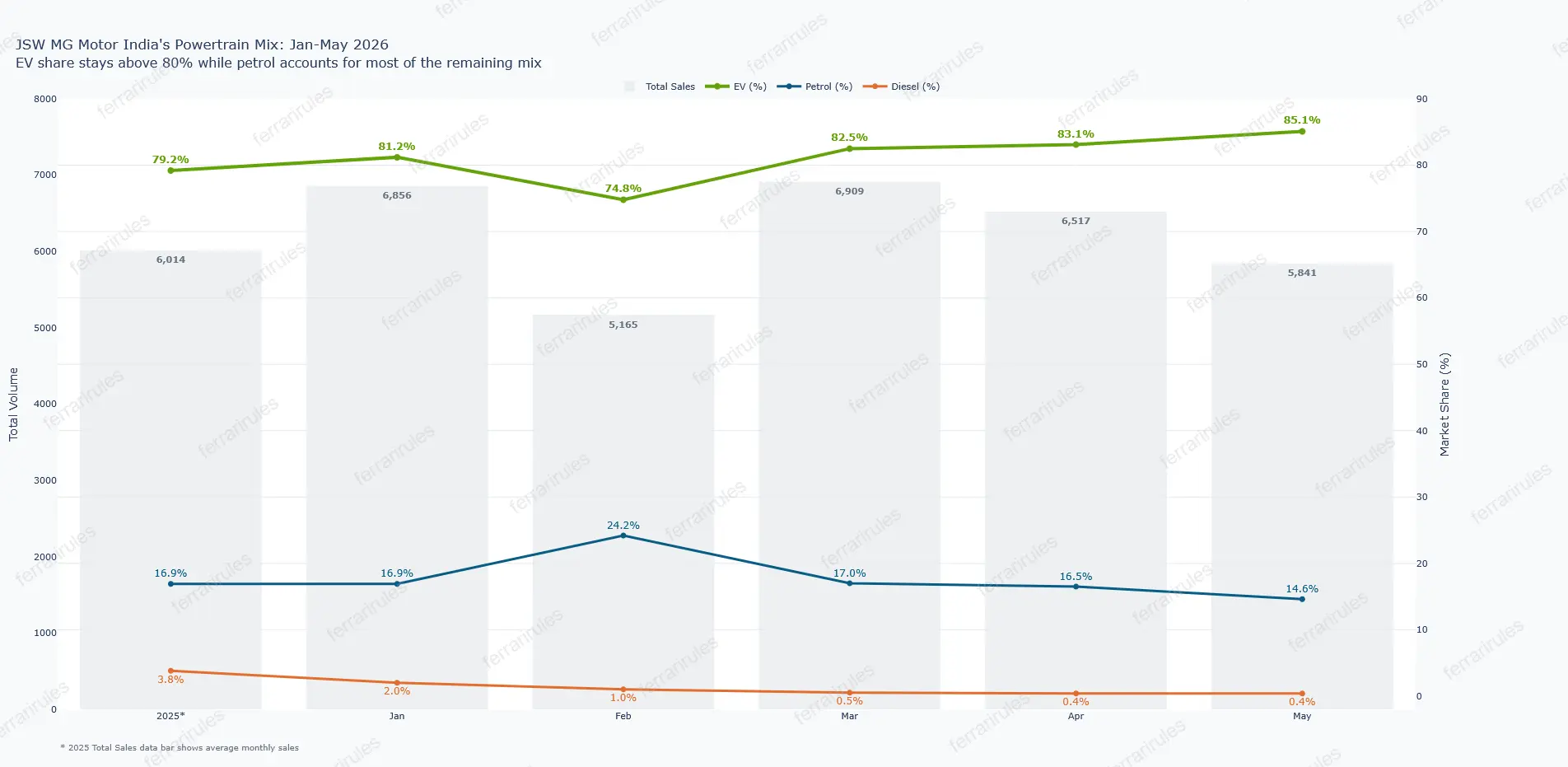
JSW MG’s EV portfolio now includes three mass-market models — Comet, Windsor, and ZS EV — along with two premium EVs, Cyberster and M9. The brand’s powertrain mix now reads like one that has already crossed the electric threshold. EVs accounted for 85.1% of sales in May, up from 79.2% in the 2025 baseline, while petrol stood at 14.6% and diesel had fallen to just 0.4%.
That shift gives JSW MG a very clear identity. EVs are no longer a supporting pillar in the portfolio; they are the portfolio, with ICE models now surviving only at the margins.
Tata Motors
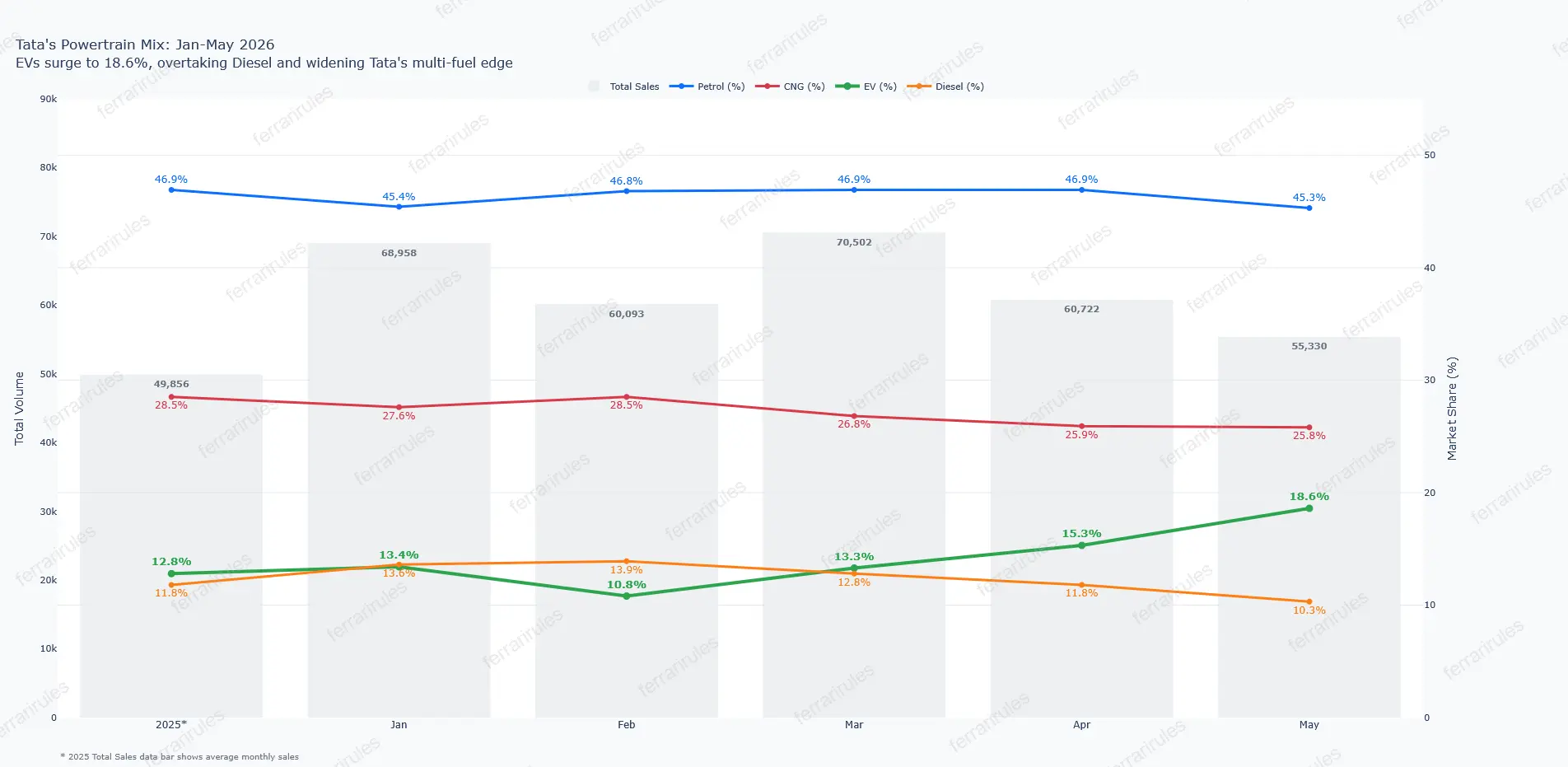
Tata now has six mass-market EVs on sale — Tiago EV, Tigor EV, Punch EV, Nexon EV, Curvv EV, and Harrier EV — and the brand’s EV momentum has become increasingly visible in 2026. The updated Punch EV is gaining strong traction, while the Curvv EV has been repriced to stay below the 20 lakh mark. As a result, Tata’s EV share rose from 12.8% in the 2025 baseline to 18.6% in May. Diesel eased from 11.8% to 10.3%, while petrol stood at 45.3% and CNG at 25.8%.
The bigger story is not just growth, but momentum. EVs are steadily gaining weight inside Tata’s portfolio, and the recent pricing move on the updated Tiago EV should help keep that trajectory intact.
Mahindra
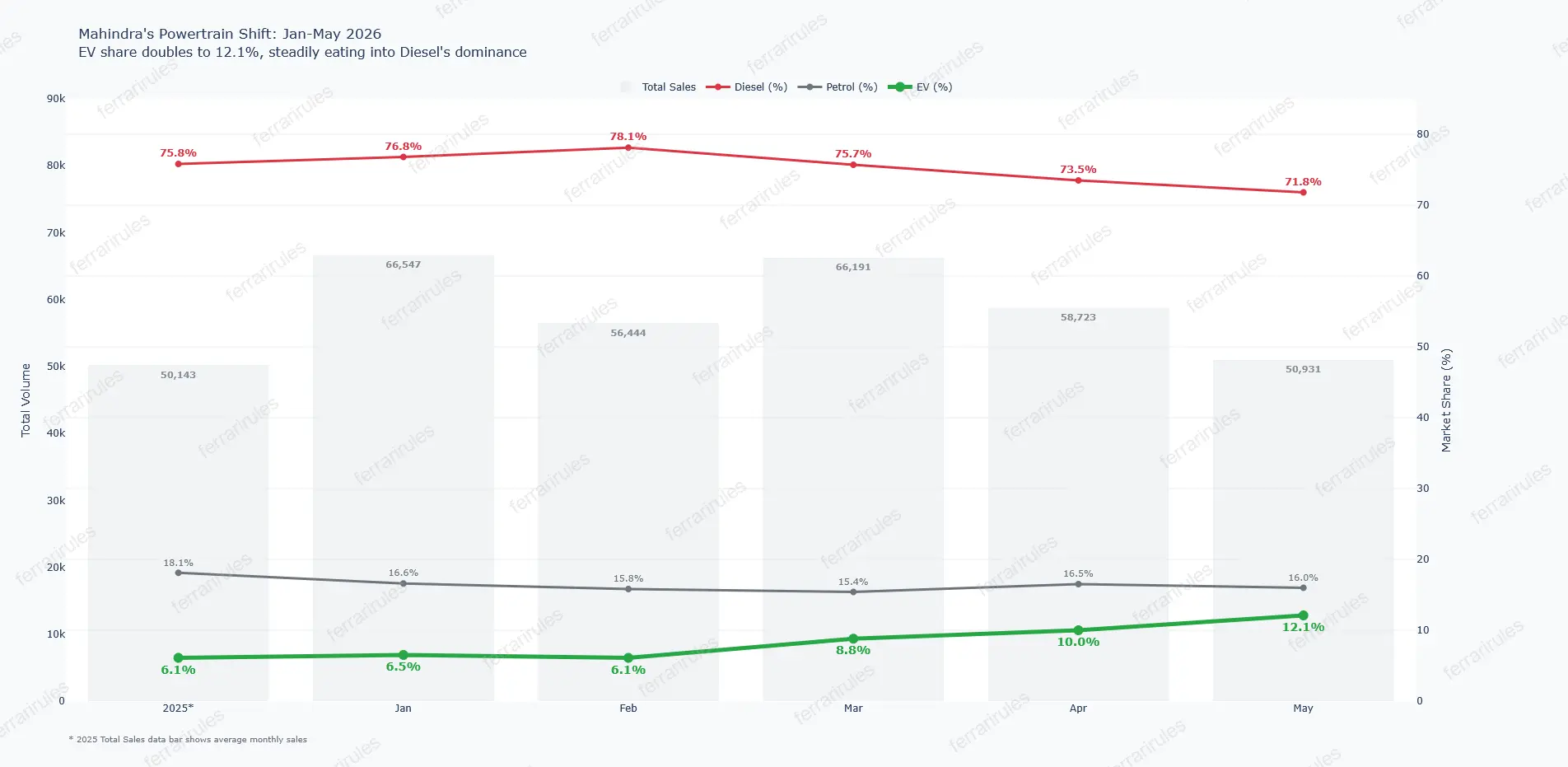
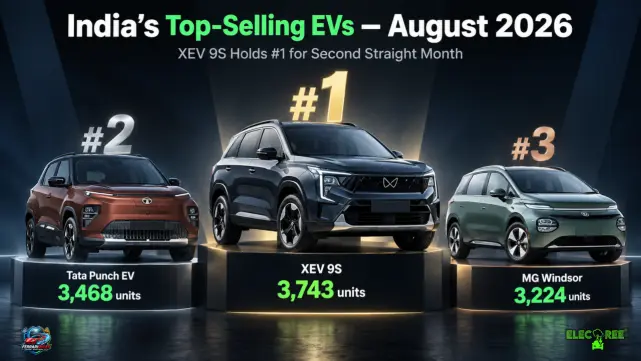
Mahindra now sells four mass-market EVs — XUV3XO EV, BE 6, XEV 9e, and XEV 9S — and its powertrain mix reflects a clear EV build-up through 2026. EV share moved from 6.1% in the 2025 baseline to 12.1% in May, while diesel eased from 75.8% to 71.8%. Petrol ended May at 16.0%.
This points to a meaningful transition inside the portfolio. EVs are steadily moving from the edge of the mix toward a much more material role in monthly volumes, though Mahindra’s ability to scale faster will depend on production capacity. The company has already outlined a roadmap to raise EV output to 12,000 units per month over the next year.
OEMs with single mass-market EV models
We look at the OEM which have single mass-market EV models on sale and how their powertrain mix is looking
Hyundai
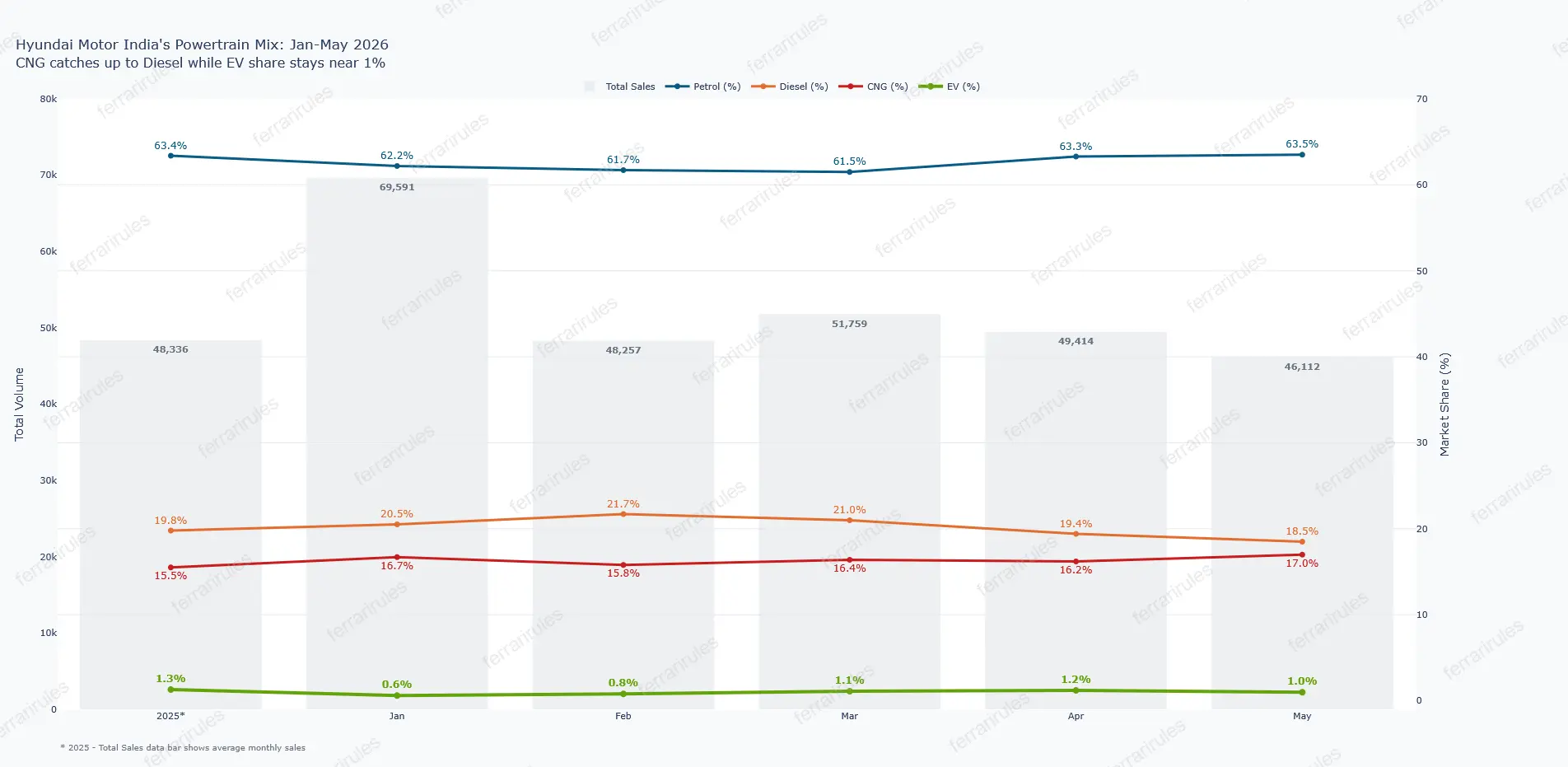
Hyundai now sells one mass-market EV, the Creta Electric, along with one premium EV, the IONIQ 5. Even so, the brand’s powertrain structure remains firmly petrol-led, with the real movement still happening inside the conventional fuel mix. In May, petrol stood at 63.5%, diesel at 18.5%, and CNG at 17.0%, while EV share remained at just 1.0%.
The more important story is the narrowing gap between diesel and CNG. Hyundai’s EV presence is visible, but the Creta Electric is priced at a significant premium to both Hyundai’s own ICE models and other EVs in the same battery class, which limits its volume potential for now. Hyundai is expected to launch another EV this year, and pricing will be critical to how quickly the brand can build momentum.
Kia
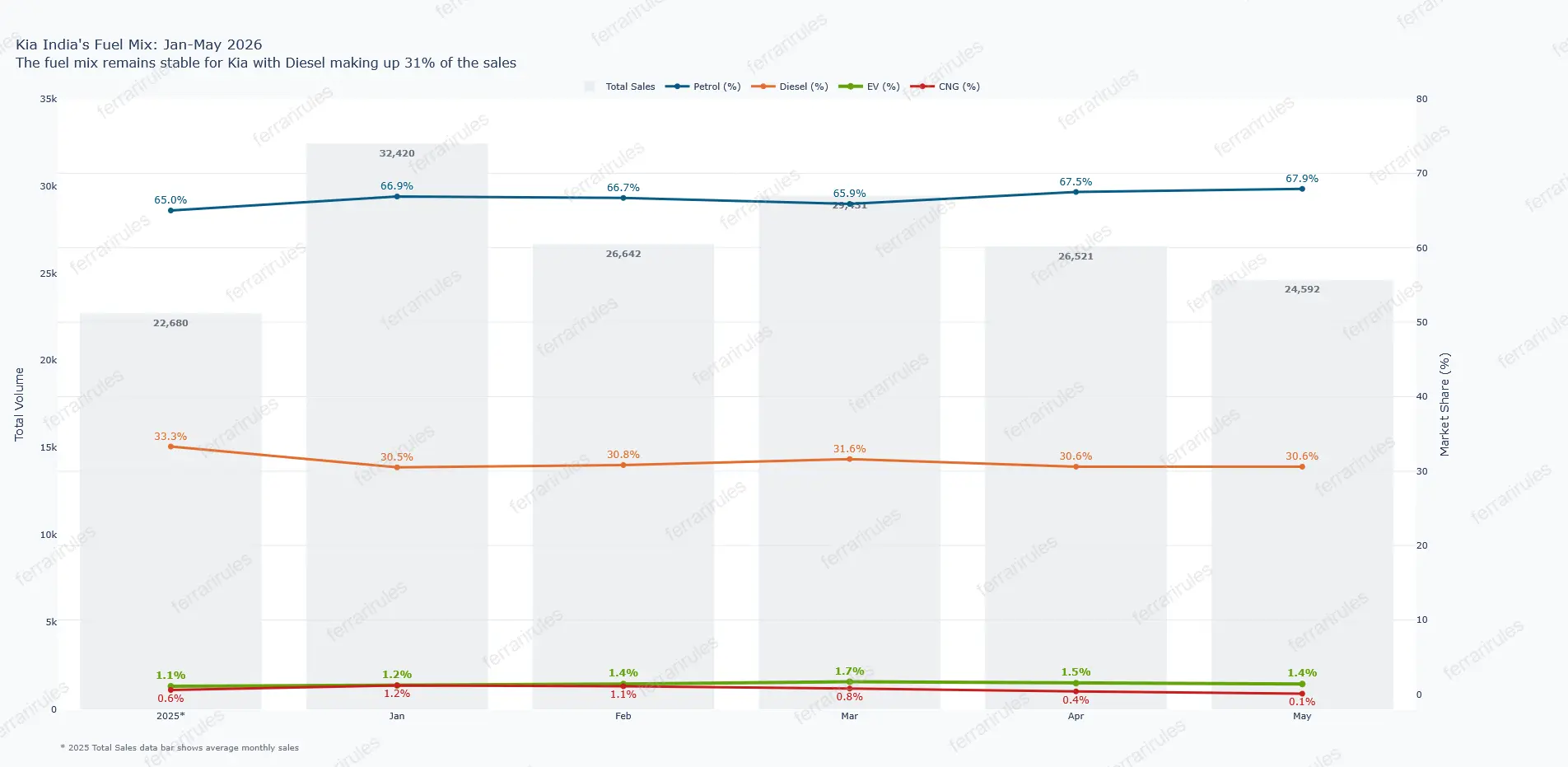
Kia now sells one mass-market EV, the Carens Clavis EV, and two premium EVs, EV6 and EV9. Its powertrain mix has remained largely stable through 2026, with petrol at 67.9% in May, diesel at 30.6%, EV at 1.4%, and CNG at just 0.1% in May
That leaves Kia with a clearly conventional profile for now. The portfolio is still anchored by petrol and diesel, while EVs remain too small to materially alter the overall mix. The Carens Clavis EV has also been positioned at a premium for its battery size, and Kia is expected to launch the Syros EV later this year, making pricing another key variable to watch.
OEMs with more Hybrid models than EVs
This section looks at OEMs that currently have more hybrid models than EVs on sale, and how that shows up in their powertrain mix.
Maruti
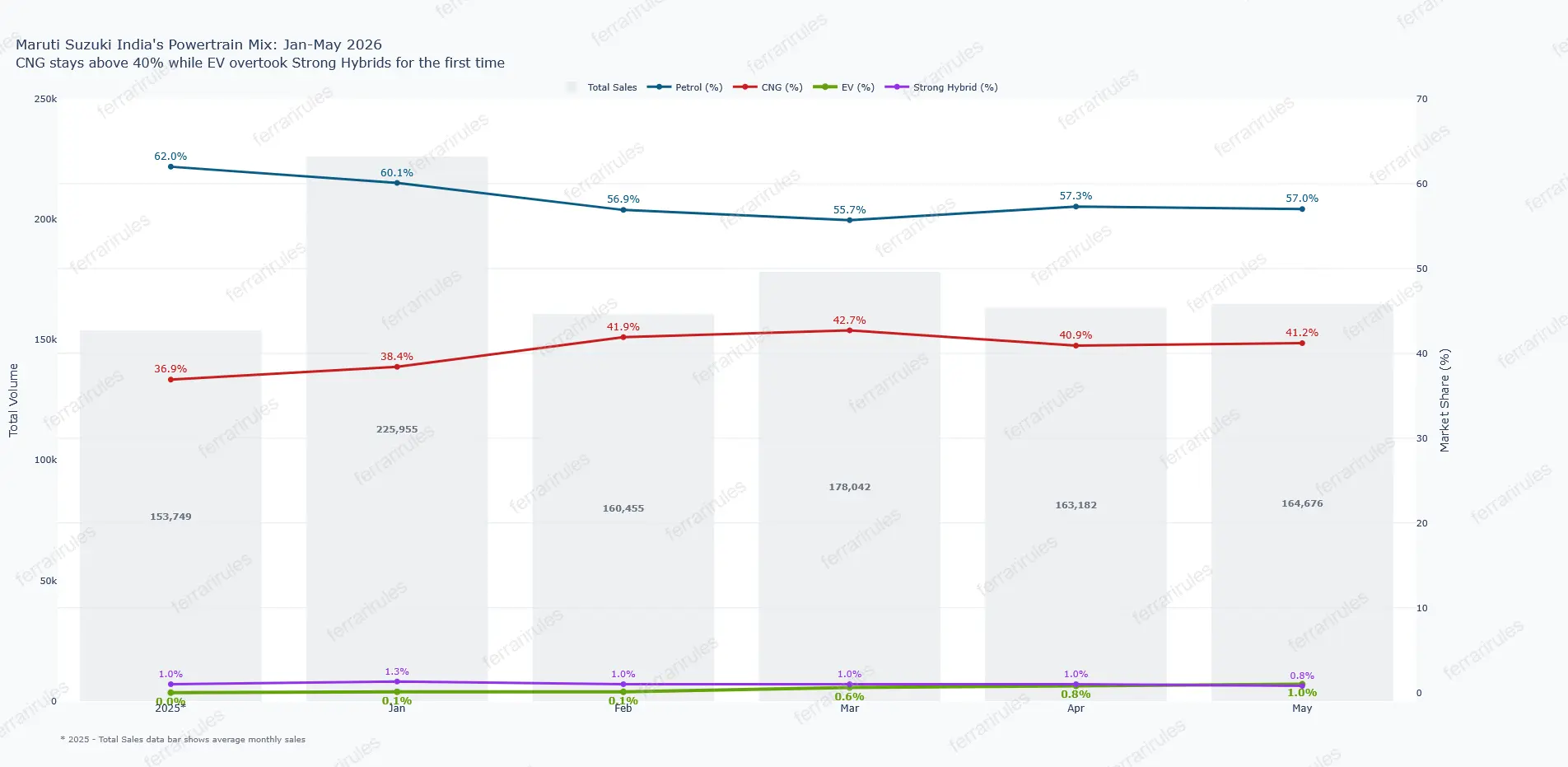
Maruti Suzuki currently sells three strong hybrid models — Grand Vitara, Victoris, and Invicto — along with one EV, the eVitara. Even so, the brand’s powertrain mix remains overwhelmingly driven by petrol and CNG. In May, petrol accounted for 57.0% of sales, while CNG stood at 41.2%. EV share reached 1.0%, and strong hybrids were slightly lower at 0.8%.
The key point is that EVs have now edged ahead of strong hybrids, even if both remain small in absolute terms. But the broader picture has not changed: Maruti’s volume engine is still powered almost entirely by petrol and CNG. The CNG share has increased to 41.2%
Toyota
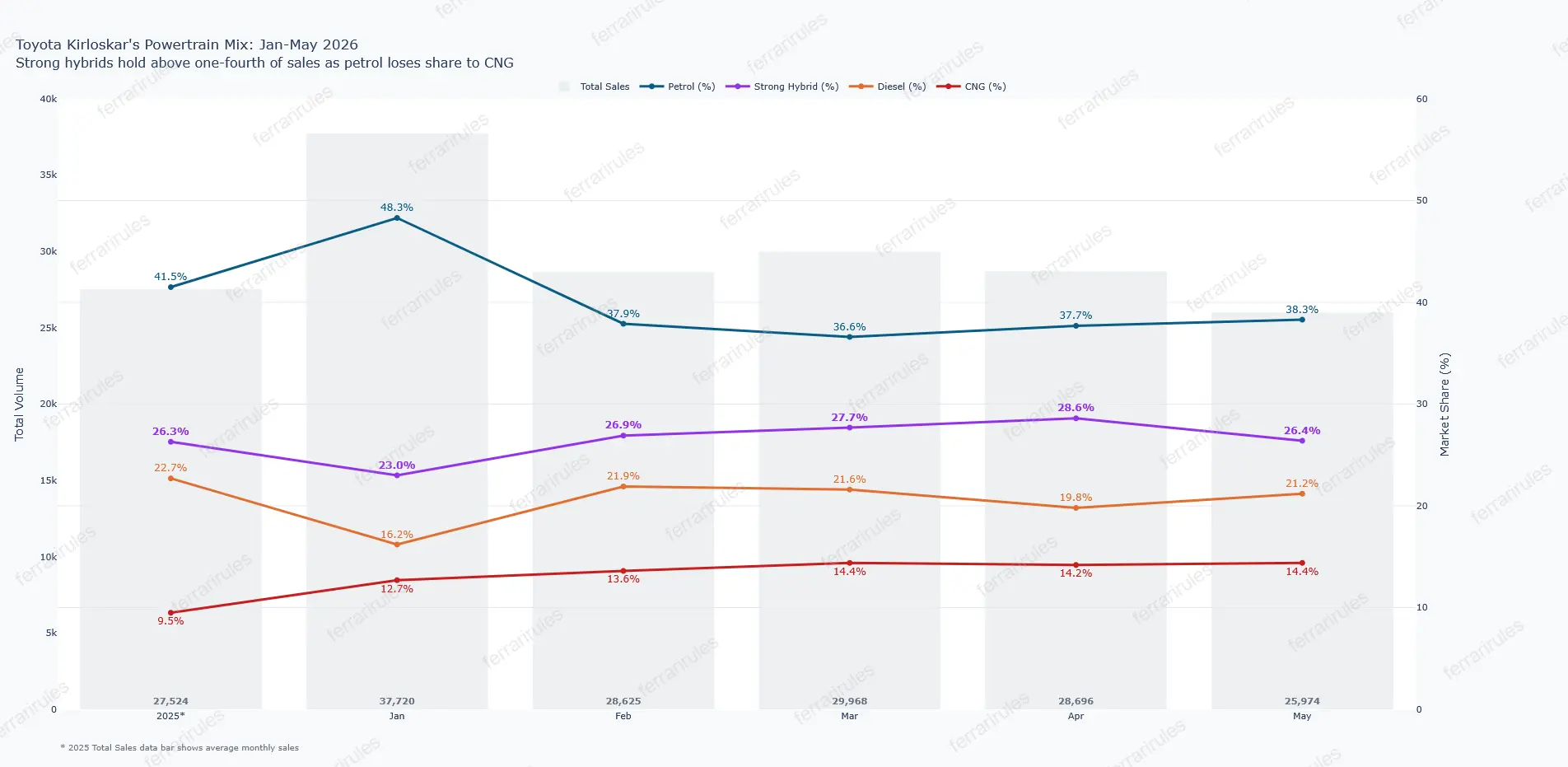
Toyota sells two strong hybrid models — Innova Hycross and Hyryder — and its mix continues to show the importance of hybrids in its portfolio. Strong hybrids accounted for 26.4% of sales in May, while petrol stood at 38.3%, diesel at 21.2%, and CNG at 14.4%.
Toyota’s transition path remains distinct. Strong hybrids continue to hold more than a quarter of the mix, but that share has not meaningfully expanded during the current fuel crisis. The recent pricing of the eBella suggests Toyota is also being careful not to let EVs compete too aggressively with its hybrid line-up
Summary
India’s passenger vehicle powertrain mix is shifting, but not in a single direction. Petrol still leads overall, yet its share is easing, while CNG and EVs are gaining ground and diesel continues to lose share. Strong hybrids remain relatively small and have not yet shown the same traction as the other alternative powertrains.
The trend is also playing out differently across OEMs. JSW MG is already overwhelmingly EV-led; Tata and Mahindra are seeing clear EV momentum, Toyota continues to lean on strong hybrids, Maruti is still powered mainly by petrol and CNG, and Hyundai and Kia remain largely conventional with EVs still at an early stage. Overall, the market is moving toward a more fragmented and multi-path transition, where each OEM is following a different route to electrification.
The global data also suggests that there is a huge transition towards EVs. Read our article on the same here
Disclaimer: All charts have been created by the author with Vahan as the data source. Digitally removing the ElecTree logo or any watermarks and repurposing the charts will amount to copyright infringement. Cite this article as a source and provide the link if sharing details on social media or a news publication.
To comment and participate in discussion Click Here
Recent Articles
Trending Articles
Kerala Makes EVs More Affordable: Revised Road Tax Structure to Accelerate Adoption
No Fire Safety Certificate Will Be Declined Over EV Chargers, Says Haryana Fire Department
India Car Sales by Fuel Type — March 2026: EV Share Hits New High, CNG Surges, Petrol Loses Ground
Haryana Releases Draft Fire Safety Guidelines for EV Charging