
Goa Announces Up to 50% EV Subsidy for Motorcycle Pilots and Auto-Rickshaw Operators
Goa has directed its energy department to draft a scheme offering up to 50% EV subsidy for licensed motorcycle pilots and auto-rickshaw operators, alongside 70 new charging stations under PM E-DRIVE. Here's what's confirmed, what's pending, and how it compares to Delhi, UP and Kerala's EV incentives.


Category:
Tag:
- Goa EV Subsidy
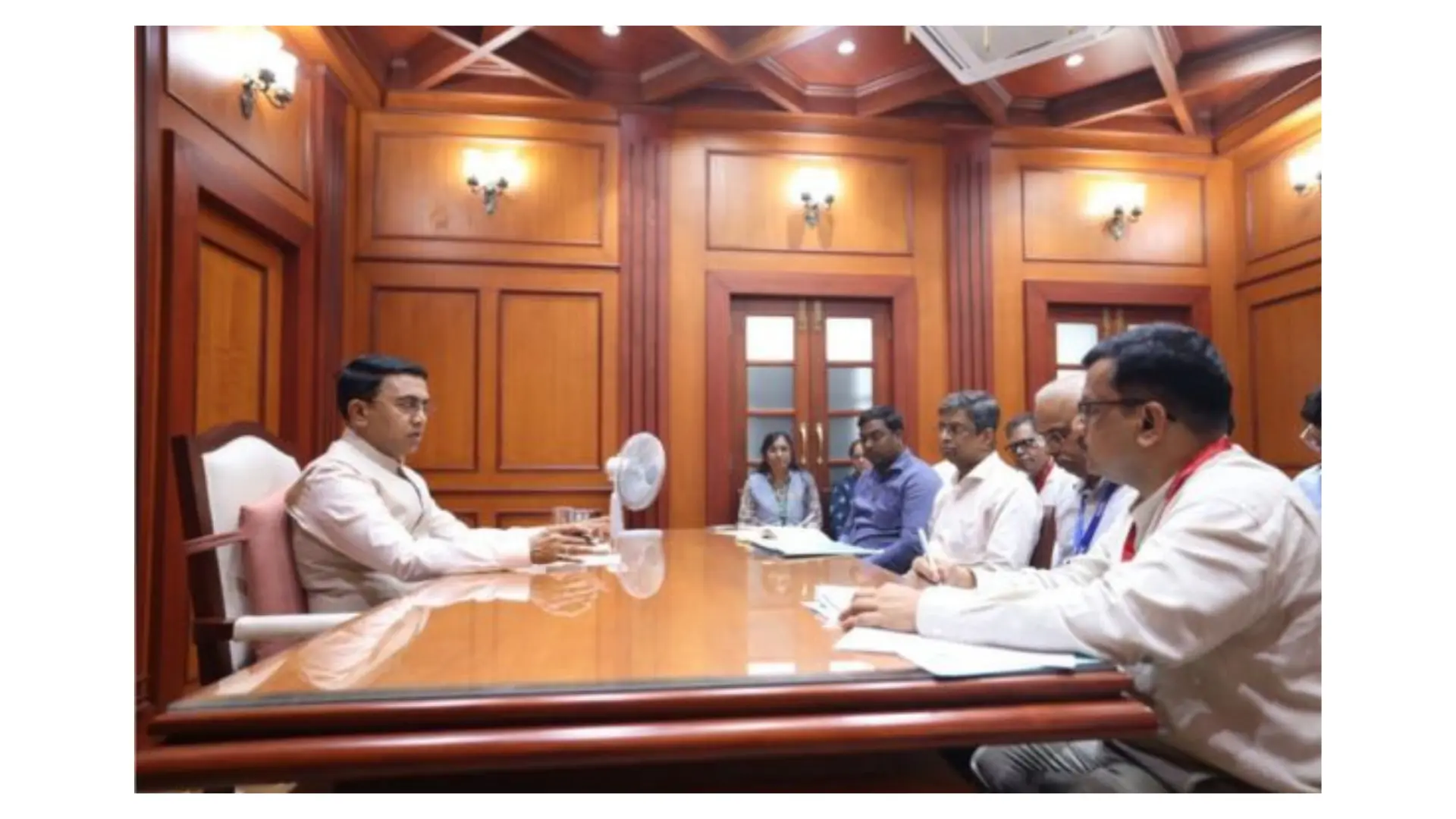
The Goa government has announced plans to provide a subsidy of up to 50% on the purchase of electric vehicles for licensed motorcycle pilots and auto-rickshaw operators. The announcement was made by Chief Minister Pramod Sawant during a meeting on Fuel Management and Sustainable Transport Strategy, held at his official residence in Altinho.
The Department of New and Renewable Energy (DNRE) has been directed to formulate the scheme. At this stage, the announcement is a policy directive rather than a notified, applicable scheme.
What was announced
Three decisions came out of the meeting:
- A subsidy of up to 50% on EV purchases for licensed motorcycle pilots and auto-rickshaw operators. DNRE has been asked to prepare a comprehensive scheme for existing licensed operators, aimed at encouraging a shift away from petrol vehicles. The subsidy is targeted at commercial operators, not the general public.
- 70 new EV charging stations across Goa, to be set up by DNRE under the central government's PM E-DRIVE scheme.
- Retrofitting of Kadamba Transport Corporation (KTC) diesel buses, roughly 10 years or older, with CNG engines. A separate policy will address the phased replacement of diesel generator (DG) sets in industrial and commercial establishments with alternatives such as Battery Energy Storage Systems (BESS), solar-plus-storage systems, and gas-based systems where feasible.
According to the government, the final policy will include an implementation roadmap, financial incentives, stakeholder consultations and regulatory measures. A formal notification from DNRE is expected in the coming weeks.
Goa's existing EV subsidy scheme
Goa currently runs a state EV subsidy through the Goa Energy Development Agency (GEDA), under the Scheme for Promotion of Electric Vehicles in the State of Goa. The scheme was first notified in December 2021, discontinued on July 31, 2022, and relaunched on February 29, 2024, applicable to vehicles purchased between August 1, 2022, and December 31, 2024. It calculates the subsidy per kWh of battery capacity, with the rate reducing each year:
| Financial Year | Subsidy per kWh |
|---|---|
| 2021–22 | ₹10,000 |
| 2022–23 | ₹8,000 |
| 2023–24 | ₹6,000 |
| 2024–25 | ₹4,000 |
| 2025–26 | ₹2,000 |
The subsidy is capped at ₹30,000 for two-wheelers (limited to the first 3,000 vehicles), ₹60,000 for three-wheelers (capped at 50 vehicles), and ₹3 lakh for four-wheelers (capped at 300 vehicles). A scrapping incentive of up to ₹5,000-₹10,000 is also available for surrendering an old ICE vehicle.
For an electric scooter with a 3 kWh battery, the current scheme provides roughly ₹6,000, against a typical scooter price of ₹90,000 to ₹1.2 lakh. A flat 50% subsidy, if calculated as a share of vehicle cost rather than per-kWh, would represent a significantly larger benefit for this category of buyer.
Why the scheme targets pilots and auto operators
Goa was the first Indian state to legalise motorcycles as licensed commercial passenger vehicles, in 1979-81, and the "pilot" system remains most developed there; roughly 10,000 licensed motorcycle pilots are currently active in the state, according to the Directorate of Transport. Pilots and auto-rickshaw operators typically cover higher daily mileage than private vehicle owners, meaning the fuel and emissions impact of shifting this segment to EVs is proportionally larger per vehicle. This group is also more sensitive to running costs, given that the vehicle is used for income generation rather than personal commuting.
The state has one of the highest vehicle-density figures in the country, at approximately 625 vehicles per 100 people, according to GEDA data, a figure the state has cited in past EV policy documents.
The 70 charging stations
The charging stations are part of the central government's PM E-DRIVE Scheme, which targets nearly 72,300 public EV charging stations nationwide. Under the scheme's guidelines, government offices, residential colonies, hospitals and educational institutions are eligible for 100% subsidy on charging equipment, provided free public access is maintained. Goa's 70 stations form the state's allocation under this central rollout, to be administered by DNRE. Locations, charger specifications, and commissioning timelines have not yet been announced.
Comparison with other states
Several Indian states currently run EV incentive programmes for two- and three-wheelers, with differing structures:
| State | Two-wheeler subsidy | Three-wheeler / auto subsidy | Key feature |
|---|---|---|---|
| Goa (proposed, July 2026) | Up to 50% of EV cost for licensed pilots (scheme under formulation) | Up to 50% of EV cost for licensed auto operators | Limited to licensed commercial operators; existing GEDA scheme (₹2,000/kWh, capped at ₹30,000) remains in effect separately |
| Delhi (EV Policy 2.0, notified effective July 1, 2026) | ₹10,000/kWh capped at ₹30,000 for e-two-wheelers priced under ₹2.25 lakh in Year 1, stepping down to ₹20,000 in Year 2 and ₹10,000 in Year 3; a separate scrappage incentive applies for scrapping an old BS-IV or older two-wheeler | Purchase incentive for e-three-wheelers; new petrol/CNG auto registrations to end from January 1, 2027 | New petrol two-wheeler registrations to end from April 1, 2028; total budget of roughly ₹15,000 crore projected over the policy period (to March 2030), covering both subsidies and infrastructure |
| Uttar Pradesh (policy since Oct 2022, revised Oct 2025) | 15% of ex-factory price, capped at ₹5,000 | Higher caps for three- and four-wheelers, category-dependent | 100% road tax and registration fee waiver, extended into a 4th and 5th year (Oct 2025-Oct 2027) only for EVs manufactured or assembled in Uttar Pradesh |
| Kerala | No confirmed statewide cash subsidy; 50% road tax concession for five years | ₹30,000 annual subsidy for electric passenger auto-rickshaws under the Motor Vehicles Department's E-Subsidy scheme, historically capped at a limited number of applicants per year | Incentive structure leans on tax concessions rather than direct purchase subsidy for private two- and four-wheelers |
Delhi's policy includes the most defined regulatory timeline among the four, with a fixed end date for new petrol two-wheeler registrations and a larger stated budget. Uttar Pradesh's revised policy, effective from October 2025, restricts its road tax and registration fee waiver in the policy's fourth and fifth years to vehicles manufactured or assembled within the state, linking continued tax relief to in-state production rather than purchase alone. Kerala's confirmed state programme centres on a 50% road tax concession for five years and a dedicated e-auto rickshaw subsidy administered by the Motor Vehicles Department, rather than a blanket cash subsidy for all vehicle categories; reported figures for two- and four-wheeler cash subsidies in Kerala vary across sources and could not be confirmed against an official notification at the time of writing.
Goa's proposed subsidy, if implemented as a flat percentage of vehicle cost, would represent a higher per-vehicle benefit than the other three states' two-wheeler schemes. However, it applies only to licensed commercial operators, not the general public, making it narrower in scope than Delhi's or Uttar Pradesh's broader consumer-facing schemes.
Trending Articles
Recent Articles

India Clears ₹1.86 Lakh Crore Green Energy Corridor Plan With ₹50,000 Crore for Battery Storage
Porsche Cayenne Electric Launched in India at ₹1.77 Crore: 642 Km Range, 400 kW Charging and More
Government's CAFE III Norms Give EVs a 3x Credit, PHEVs 2.5x
Creta Electric Owners Approach Hyundai - File Petition for Lifetime Battery Warranty