
A German-backed EV charging research project aims to cut charging times through better thermal management and battery optimization. The implications could be significant for India’s growing highway EV adoption.

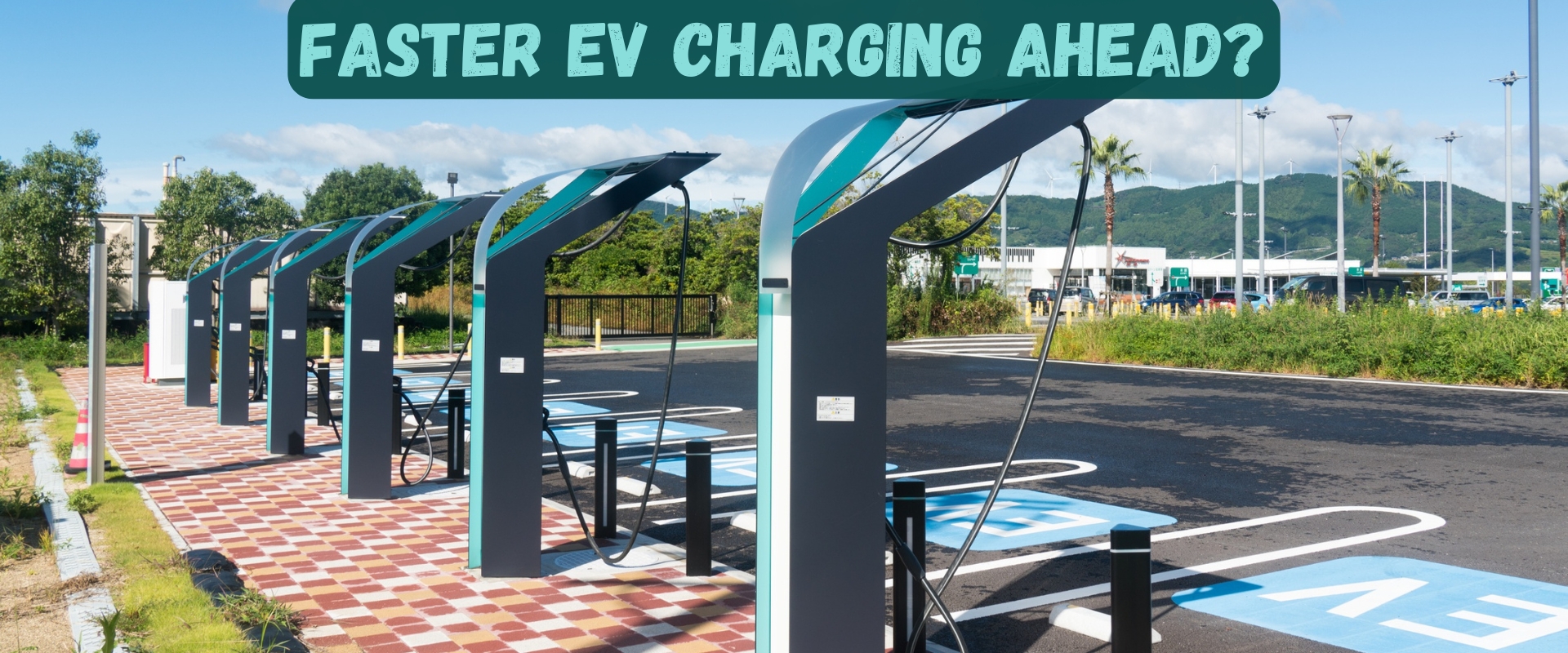
For many electric vehicle owners, the biggest psychological barrier isn’t range — it’s charging time. While modern EVs can now comfortably travel 350–500 km on a single charge, long highway journeys still depend on how quickly a vehicle can recharge. That is where global research efforts are beginning to focus. A government-backed research initiative in Germany is working on significantly reducing EV charging times, not by simply increasing charger power, but by improving how batteries manage heat and accept high current safely. The goal is simple: enable EVs to charge from low to 80% in dramatically shorter time windows without compromising battery health.
And that has clear implications for India.
Fast charging isn’t just about plugging into a 150 kW or 350 kW charger. The real bottleneck lies inside the battery pack. When high current flows into lithium-ion cells, heat builds up rapidly. To prevent degradation or safety risks, charging software reduces power as the battery warms or as the state of charge crosses certain thresholds — often around 60–70%. That’s why many EVs charge quickly at first and then slow down sharply. The German research project is focused on solving this exact problem. By optimizing thermal management systems, coolant circulation, charging algorithms and battery architecture, researchers aim to keep cell temperatures under control even during high-power charging. If successful, the result would not just be faster charging — but more consistent high-power charging.
India’s EV ecosystem is expanding rapidly, especially along highways connecting major cities. Fast chargers are being installed at fuel stations, rest stops and expressways. However, charging performance often varies depending on battery temperature, ambient conditions and vehicle software limits.
In Indian summers, where ambient temperatures can exceed 40°C in several regions, thermal management becomes even more critical. A battery that heats up quickly under high charging loads may reduce charging speed more aggressively in such climates. Improved thermal engineering could therefore be even more beneficial in India than in temperate European conditions. Shorter and more predictable charging stops would make highway EV travel more convenient, especially for families and commercial users covering long intercity routes.
India has been focusing heavily on building public charging infrastructure — and rightly so. But charger availability alone does not guarantee faster travel. If vehicles cannot consistently accept high power due to thermal or software limitations, even a 150 kW charger may deliver much lower real-world charging rates. Research like the German initiative highlights an important shift in thinking: future EV progress may depend as much on battery engineering as on infrastructure rollout. For Indian manufacturers such as Tata Motors, Mahindra et al. expanding their EV portfolios — advancements in battery cooling and high-power charge acceptance could become competitive differentiators.
For Indian EV owners, long highway journeys typically involve one or two charging stops. Reducing each stop by even 10–15 minutes could significantly improve the overall travel experience. Imagine an EV that can reliably charge from 10% to 80% in around 12–15 minutes under Indian highway conditions, without aggressive power drop-offs after 60%. That would narrow the practical gap between EV refueling and traditional petrol stops. Commercial fleets, ride-hailing operators and logistics providers would benefit even more, as reduced downtime directly translates into higher utilization and revenue.
Germany is not alone in pursuing faster, thermally optimized charging. Across Asia, Europe and the United States, research institutions and automakers are investing in battery materials, cooling systems and predictive software models designed to push charging performance safely. While such projects may take years to reach production vehicles, they signal the direction of future EV development. India, which is building both its EV manufacturing ecosystem and public charging network simultaneously, stands to benefit from these global advances — whether through domestic innovation or technology transfer.
As EV adoption rises in India, charging time will increasingly become the next frontier of competition. Range figures are stabilizing. Infrastructure is expanding. The next leap will likely come from batteries that can accept power faster without compromising safety or longevity. Global research efforts to tame battery heat during ultra-fast charging may not make headlines every day. But for India’s highway EV future, they could quietly shape the road ahead.
Suhail Gulati
Suhail Gulati is the founder of ElecTree and an economist by training. He holds a Master's degree in Economics from the Delhi School of Economics and has worked in credit, retail banking, and financial stress testing at Barclays and American Express. He founded ElecTree in 2023 — building it into India's dedicated platform for 4-wheeler EV data, sales analysis, and original reporting. His work sits at the intersection of economic analysis and electric mobility — bringing a banker's rigour to a sector that deserves it.