
China will prohibit hidden and retractable door handles on vehicles from January 1, 2027, mandating mechanical door releases to improve emergency access and passenger safety.

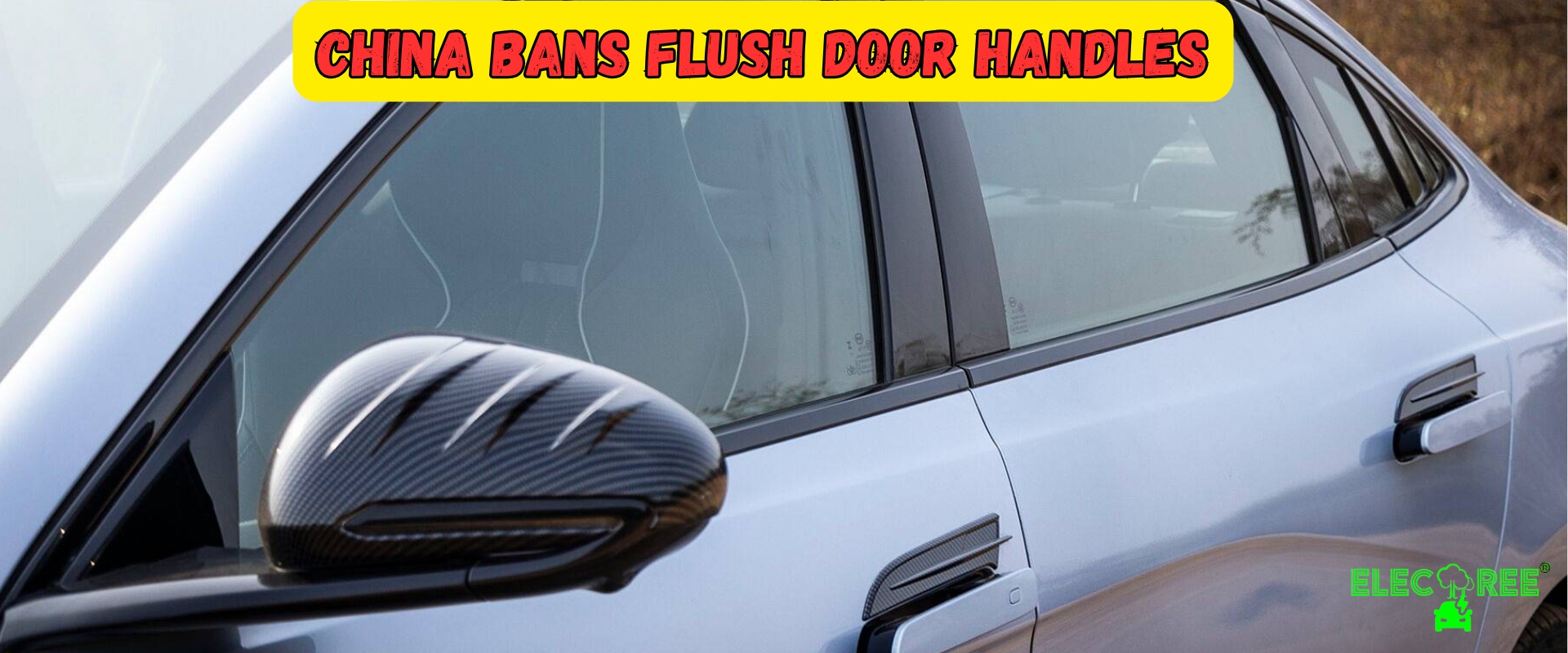
China has announced a new automotive safety regulation that will prohibit the use of hidden, flush or retractable door handles on vehicles sold in the country starting January 1, 2027. The rule applies to electric and internal combustion vehicles alike and mandates that all passenger doors be equipped with mechanical release systems that function independently of electrical power.
The regulation, issued by China’s Ministry of Industry and Information Technology (MIIT), requires that vehicles provide both internal and external mechanical door access in case of electrical failure or post-crash scenarios.
Flush and electronically actuated door handles have become increasingly common in modern EVs due to their aerodynamic and design benefits. However, regulators cited safety concerns in emergency situations, particularly where power loss or system failure may prevent doors from being opened quickly.
Under the new rules, automakers will be required to ensure mechanical overrides are accessible and functional even if the vehicle’s electrical systems fail. Existing approved models will be given a transition window until 2029 to comply.
China is the first major automotive market to introduce a nationwide prohibition specifically targeting flush door handle designs.
Flush door handles gained popularity for reducing drag, improving efficiency marginally, and enhancing premium aesthetics. Several global EV models — including some sold in India — use concealed or semi-retractable handle designs.
While manufacturers often include hidden mechanical overrides, these are sometimes less intuitive or not immediately visible to rescuers.
China’s move signals a shift in regulatory priorities from design-led aerodynamics toward crash and rescue accessibility.
At present, India has no specific regulation banning flush or retractable door handles.
However, the question arises: could Indian regulators consider similar safety norms in the future?
India’s automotive safety standards are largely governed by the Central Motor Vehicles Rules (CMVR) and Bharat NCAP protocols. While these focus heavily on crashworthiness, airbag deployment and structural integrity, there is currently no dedicated guideline addressing door handle accessibility during power failure scenarios.
If China’s rule demonstrates measurable safety benefits, other markets — including India — may evaluate whether additional emergency-access standards are required for both domestic and imported vehicles.
Given that several premium EVs sold in India feature flush handle designs, any regulatory change would impact both locally manufactured models and CBU imports.
For now, there has been no indication from Indian authorities about adopting similar requirements.
China’s decision to ban flush and retractable door handles from 2027 marks a notable intervention in modern EV design philosophy. While the regulation is currently limited to the Chinese market, it may influence global automotive engineering standards over time.
Whether India follows suit remains an open question — but the development highlights how EV-era design trends are increasingly being evaluated through a safety-first lens.
Suhail Gulati
Suhail Gulati is the founder of ElecTree and an economist by training. He holds a Master's degree in Economics from the Delhi School of Economics and has worked in credit, retail banking, and financial stress testing at Barclays and American Express. He founded ElecTree in 2023 — building it into India's dedicated platform for 4-wheeler EV data, sales analysis, and original reporting. His work sits at the intersection of economic analysis and electric mobility — bringing a banker's rigour to a sector that deserves it.