
India’s E100 & Flex-Fuel Push: Will It Actually Deliver Savings for Consumers?
India is pushing E85 and E100 flex-fuel vehicles with Maruti’s WagonR Flex Fuel launch and IOCL’s first E85 station. However, due to 25-30% lower efficiency than petrol and higher vehicle cost, real savings per kilometre are often negligible. EVs still offer far better running economics.


Category:
Tag:
- Flex Fuel E85 E100 Maruti WagonR Flex Fuel Ethanol Blending
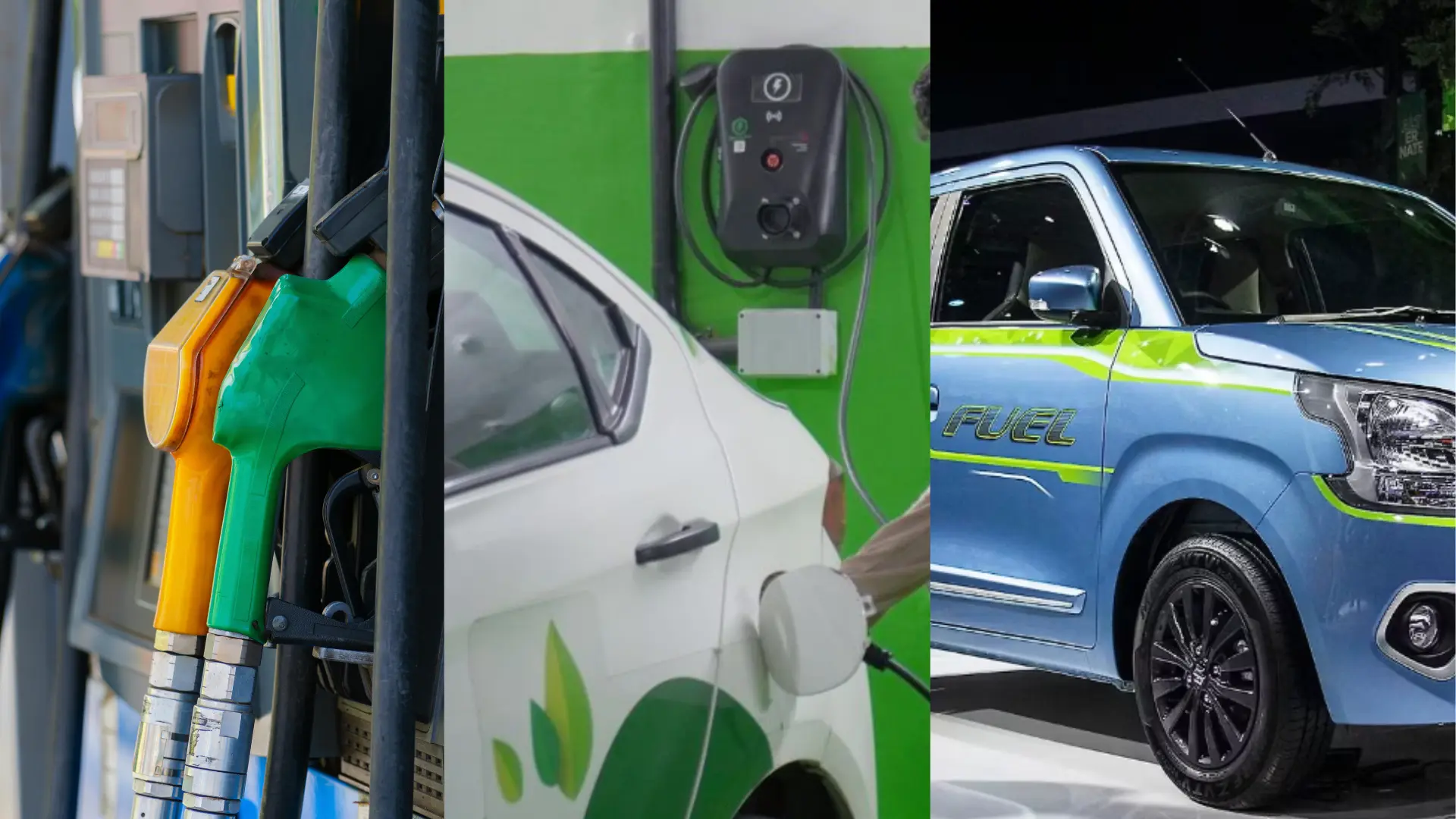
In a significant development for India’s energy security and alternative fuels push, the government has officially approved the regulatory framework of E100 (100% ethanol) as a viable vehicular fuel. This move, announced by Union Minister Nitin Gadkari, clears the regulatory framework for ethanol-only vehicles. While countries like Brazil have long pioneered flex-fuel technology with widespread use of E100, followed by the United States, Canada, and Sweden, India is now positioning itself to expand options beyond pure electric vehicles in its transition away from fossil fuels.
India is accelerating its ethanol blending programme to cut crude oil imports and support the agricultural sector. After successfully implementing E20 across the country, the government is now moving towards higher ethanol blends. The launch of Maruti Suzuki’s WagonR Flex Fuel, India’s first mass-market flex-fuel passenger vehicle and the inauguration of IOCL’s first E85 dispensing station in Delhi are significant steps in this direction.
The key question on everyone’s mind is: Will flex-fuel vehicles genuinely reduce running costs for average consumers compared to regular petrol or electric vehicles?
Efficiency Reality Check
Ethanol contains less energy per litre than petrol. Independent tests and real-world data from Brazil, the world’s largest flex-fuel market, consistently show that E85 typically delivers 25-30% lower fuel efficiency than regular petrol.
For instance, a car that achieves 20 km/l on petrol may see mileage drop to roughly 14-15 km/l on E85. The drop is even steeper on E100. Because of this, even if E85 is sold at a 15-25% discount to petrol, the net savings per kilometre are often marginal or non-existent for many users.
Higher Upfront Cost of Flex-Fuel Vehicles
Flex-fuel technology requires reinforced fuel tanks, ethanol-compatible materials, upgraded injectors, and special sensors. As a result, Maruti’s WagonR Flex Fuel carries a noticeable price premium over the standard petrol model. When this higher purchase cost is combined with reduced mileage, the Total Cost of Ownership (TCO) often ends up higher than a regular petrol car for moderate daily drivers.
Rising Fuel Prices vs Real Savings
With petrol prices staying elevated, cheaper E85 looks attractive on the surface. However, the significant efficiency penalty means the actual savings are limited. As many analysts have pointed out, “If flex fuel is 20% cheaper but efficiency drops by 30%, there is effectively no real saving, and in some cases, higher cost per kilometre.”
Lessons from Brazil
Brazil has successfully run a flex-fuel programme for over four decades. Brazilian drivers have learned to calculate “cost per kilometre” instead of just looking at pump prices and frequently switch between ethanol and petrol based on which is more economical on a given day. India is still early in this journey and will need time to build similar consumer awareness and widespread E85/E100 infrastructure.
EVs vs Flex Fuel: A Clear Running Cost Advantage
Electric vehicles maintain a significant edge in running economics. Even after accounting for domestic electricity tariffs, EVs typically offer 70-80% lower cost per kilometre compared to petrol vehicles and clearly better economics than flex-fuel options. This gap becomes even more pronounced as fuel prices rise.
The recent surge in EV registrations (as reflected in Vahan data) appears driven mainly by high fuel prices rather than any shift away from flex fuel. Public opinion on flex fuel remains mixed, some view it as a practical bridge for energy security and farmer support, while many consumers remain concerned about mileage loss and limited fuelling infrastructure.
Why EVs Make Sense Right Now
Beyond lower running costs, EVs offer clear performance advantages over both traditional ICE vehicles and flex-fuel options. Electric motors deliver instantaneous torque from zero RPM, providing quicker acceleration and a more responsive driving experience compared to petrol, diesel, or even E100 flex-fuel engines, which need time to build revs. This immediate power delivery, combined with smoother operation and lower maintenance, makes EVs particularly appealing for daily commuting and urban driving conditions in India.
Government’s Strategic Choice
India needs to reduce its dependence on imported oil and create demand for surplus ethanol. Flex fuel and higher blends support both goals. However, if the ultimate objective is to provide meaningful cost savings and lower emissions to consumers, EVs currently offer a much stronger proposition in terms of running cost and efficiency.
Conclusion: E85 and E100 are positive additions to India’s energy diversification strategy. But for the average buyer, flex-fuel vehicles may not deliver the substantial savings many are hoping for. In the end, real-world efficiency, total cost of ownership, and infrastructure availability will determine which technology wins consumer confidence.
Sources
To comment and participate in discussion Click Here
Recent Articles

Trending Articles
Kerala Makes EVs More Affordable: Revised Road Tax Structure to Accelerate Adoption

India Car Sales by Fuel Type — March 2026: EV Share Hits New High, CNG Surges, Petrol Loses Ground
No Fire Safety Certificate Will Be Declined Over EV Chargers, Says Haryana Fire Department

Haryana Releases Draft Fire Safety Guidelines for EV Charging