Real-World Charging Speeds: Tata Sierra EV vs Harrier EV vs Mahindra XEV 9S
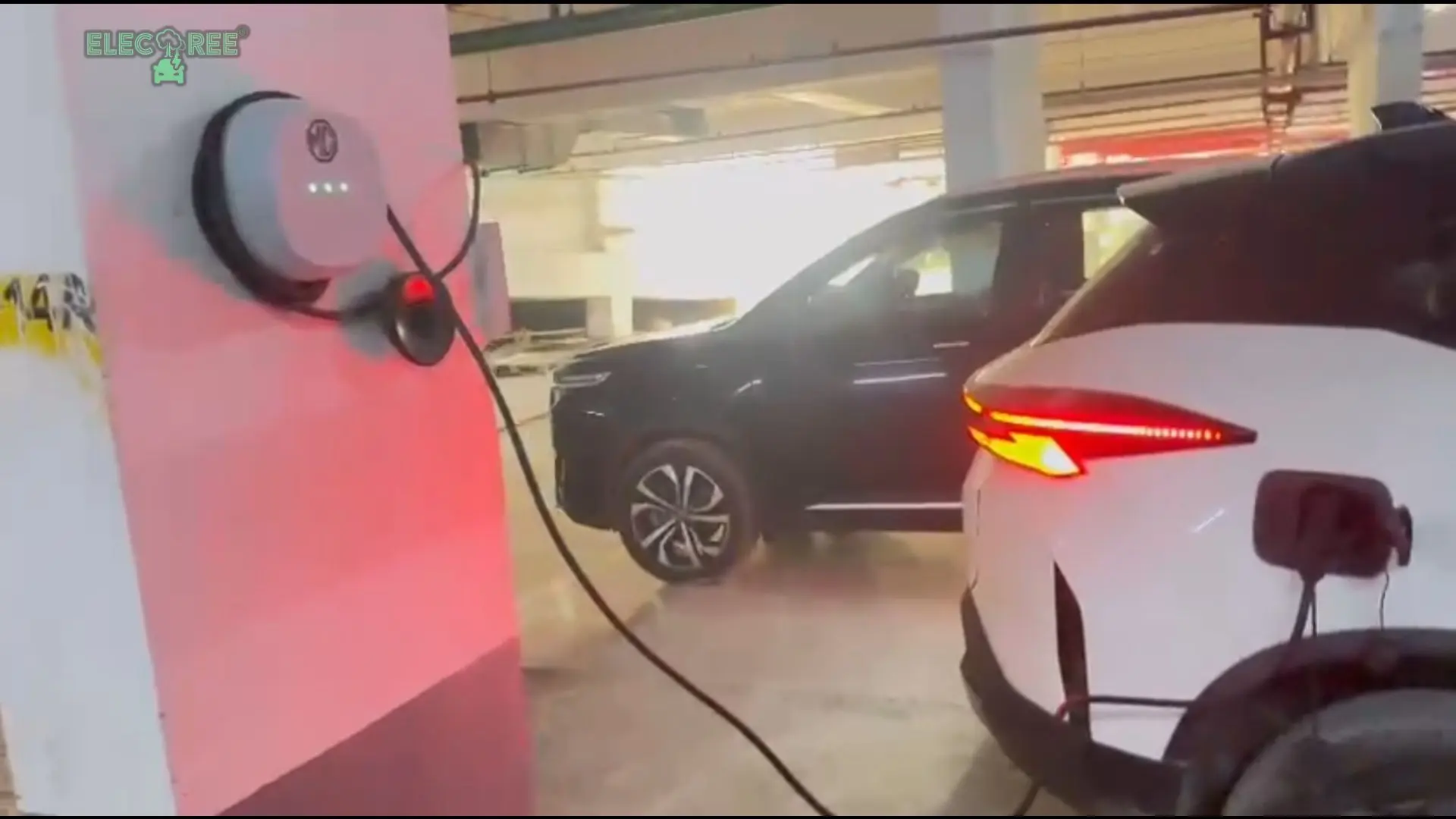
The Tata Sierra EV, Harrier EV and Mahindra XEV 9S all advertise fast charging near or above 120kW, but what a buyer actually gets depends on the charger's current rating, not just its kW badge. Here's how each performs at the 200A and 250A guns most commonly found in India.


Category:
Tag:
- Tata Sierra EV
- Tata Harrier EV
- Mahindra XEV 9S
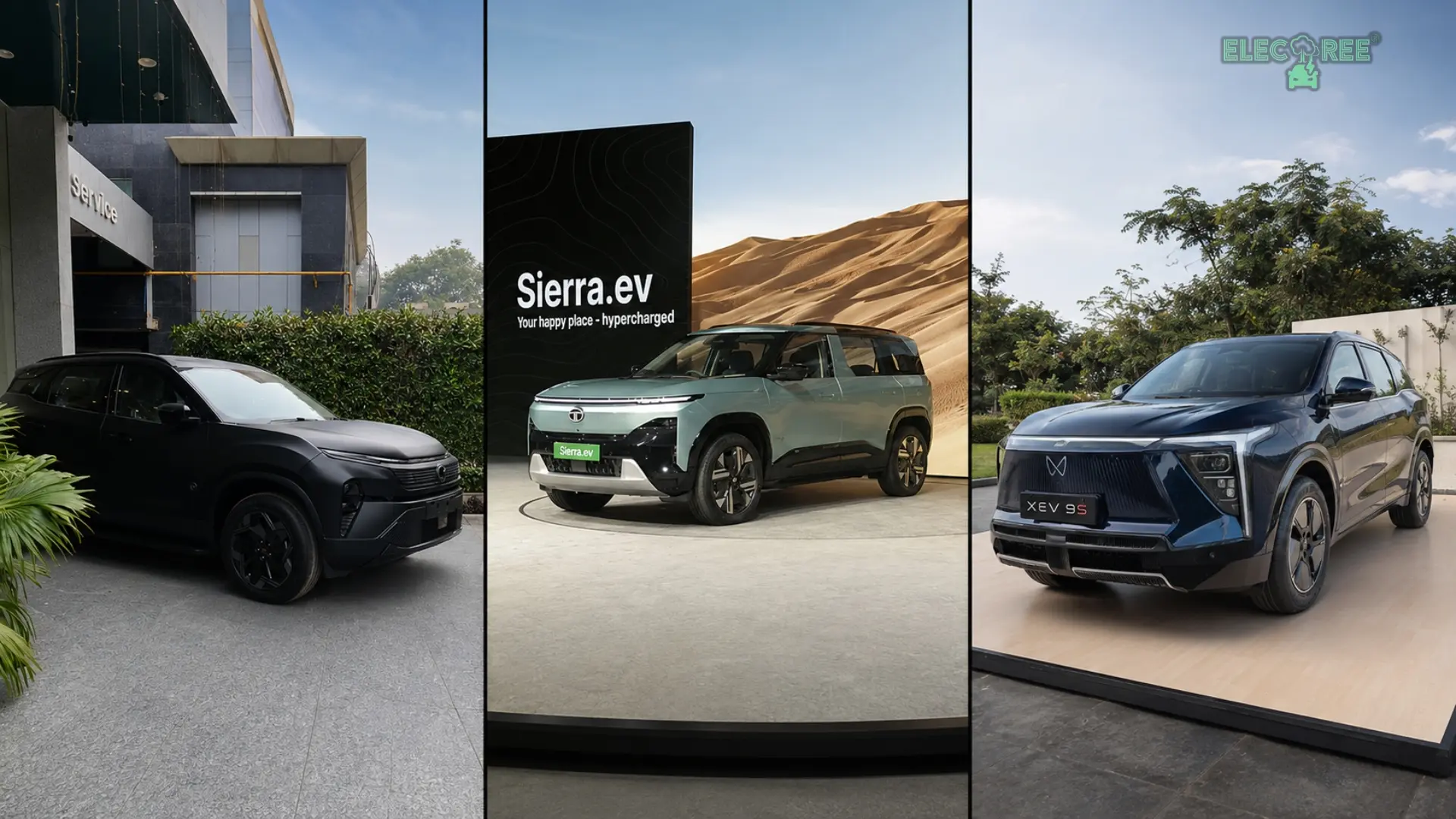
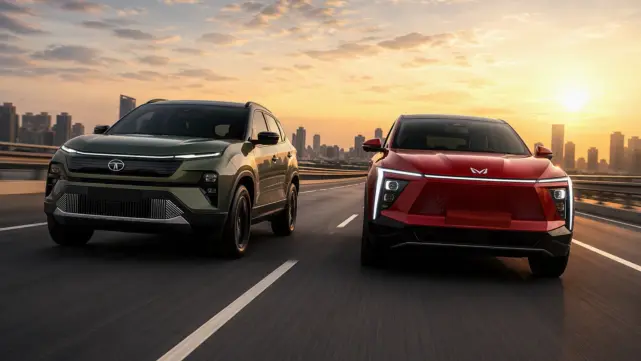
With the Tata Sierra EV joining the Tata Harrier EV and the Mahindra XEV 9S, India now has three electric SUVs with their top battery variants priced under ₹25 lakh. All three are natural highway cars, and for a highway buyer, charging speed matters more than almost any other spec. Each is advertised with a fast-charging figure; 120kW for Sierra and Harrier and 180 kW for the XEV9s, and the assumption most buyers make is simple: pull up to a 120kW charger (which is now becoming common), and get 120kW.
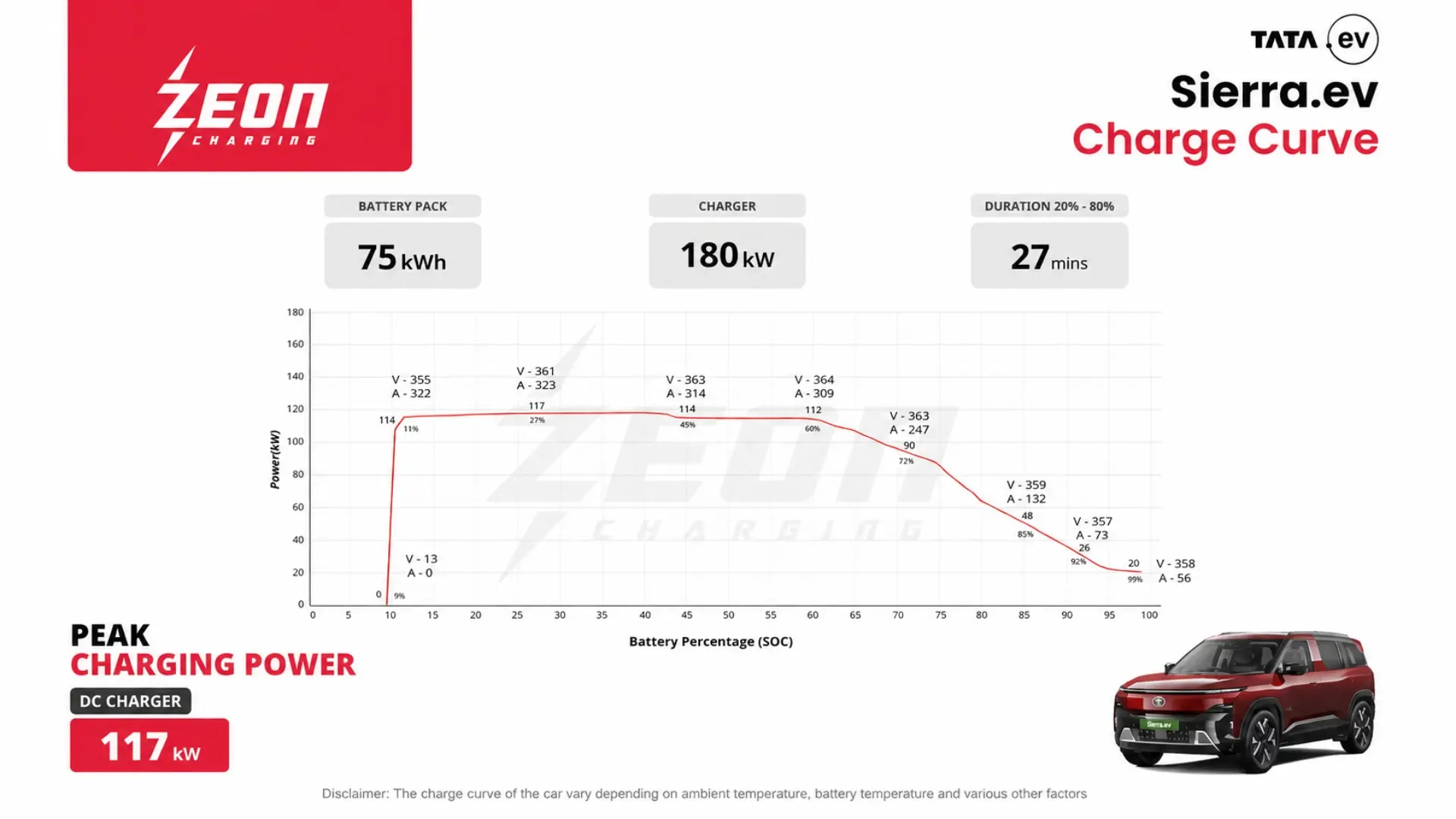
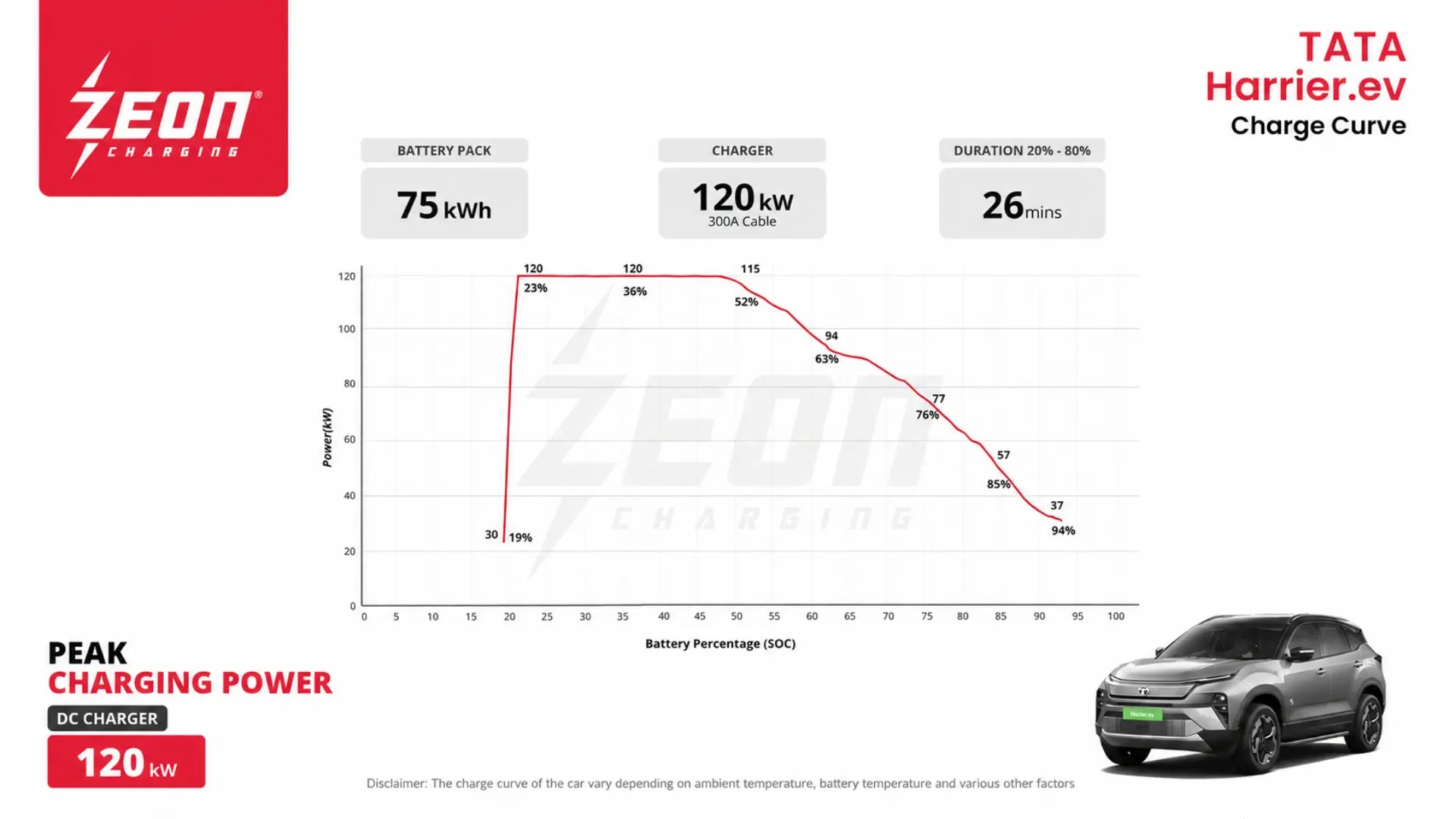
In practice, that is rarely what happens. Most public fast chargers in India are rated 120kW, but the charging gun attached to them is usually limited to 200A, with some stations offering 250A. The car's actual charging speed is a function of both that current limit and the car's own charging voltage — and the three SUVs here run at meaningfully different voltages. That difference decides how close each one actually gets to its rated peak at a real charger.
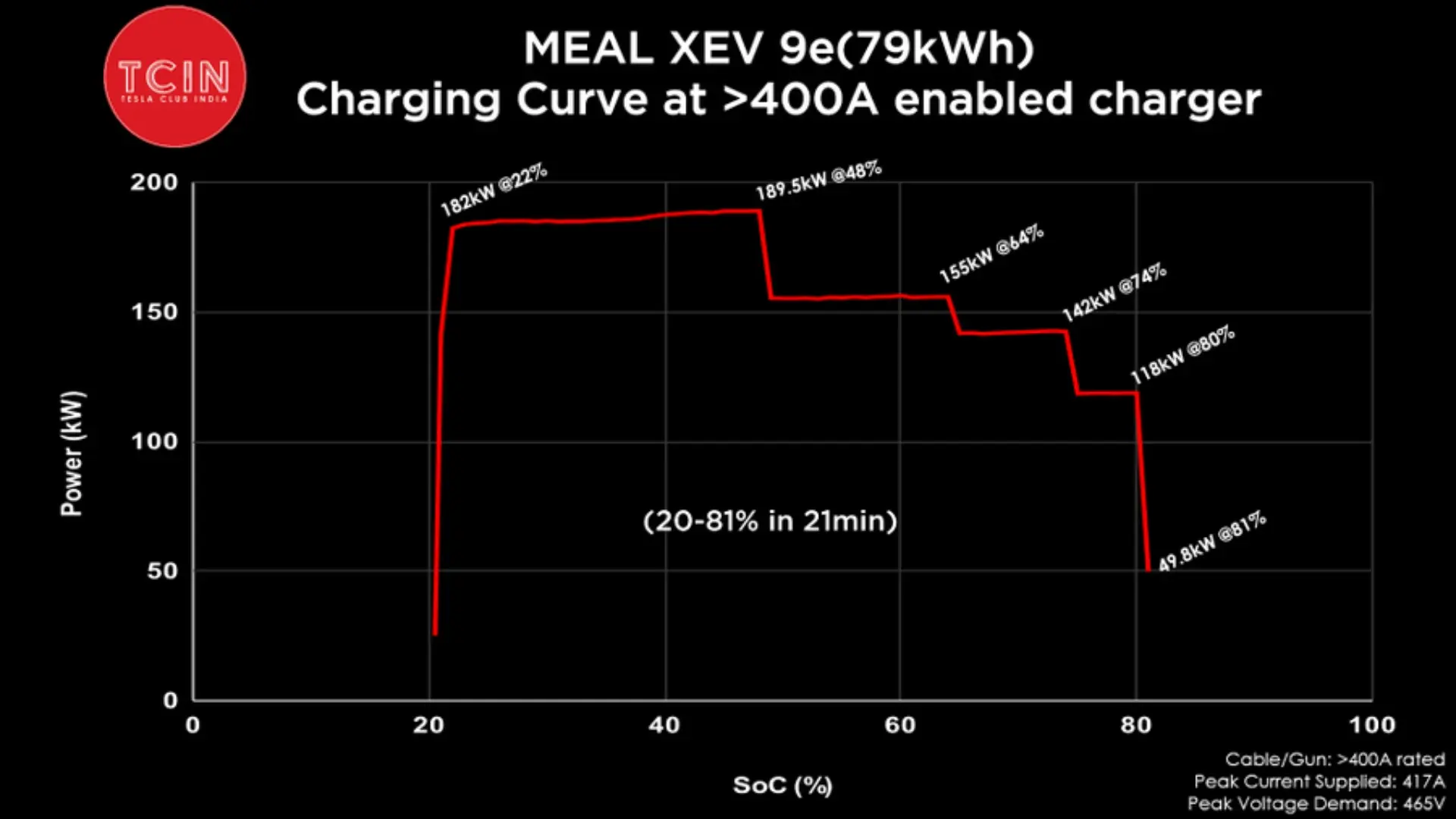
At a 200A Charger
A 200A gun is the most common fast charger encountered on Indian highways today.
- The Tata Sierra EV, which charges at 363-364V, delivers approximately 73kW at 200A gun.
- The Tata Harrier EV, which charges at around 400V, delivers approximately 80kW at 200A.
- The Mahindra XEV 9S, which charges at a higher 465V, delivers approximately 93kW at 200A
All three SUVs will charge short of the 120kW capacity of the charger with Mahindra's XEV 9S delivering the highest speed.
Real-world numbers back this up. Harrier EV owner Saurabh Singh, replying to our post on X, shared his own experience: "Quite True! Most of the chargers I have experienced in northern part of India are max 200A. Just yesterday I used a Chargezone Tata.Ev charger rated 120Kw on my Harrier.EV. But I was getting a peak of 79.8 KW due to 200A." That figure lines up almost exactly with the math above.
At a 250A Charger
Some newer stations offer 250A instead.
- The Sierra EV rises to approximately 91kW — an improvement, but still the lowest of the three.
- At 250A, the Harrier EV's output rises to approximately 100kW — better, but still short of its 120kW rating.
- The XEV 9S rises to approximately 116kW — essentially the charger's full rated charging speed, achieved even without needing the highest-current guns available.
What This Means for Buyers
The gap comes down to voltage. The XEV 9S's higher-voltage architecture lets it draw strong power even through a current-limited gun, so it consistently comes closest to delivering the charging speed printed on its spec sheet. The Harrier EV and Sierra EV need a higher-current gun — closer to 300A — to unlock what they are actually capable of.
For a highway buyer choosing between these three, the practical takeaway is this: the "120kW charging" badge on a spec sheet is only half the story. What matters just as much is the current rating of the gun at the charger you actually use — and on that count, these three cars do not behave the same way.
To comment and participate in discussion Click Here
Recent Articles
PM Modi's Message to India's Auto Industry: The Next Race Is About Technology, Not Just Sales
Range Rover Electric Bookings Open in India: 600 km Range, 118.5 kWh Battery
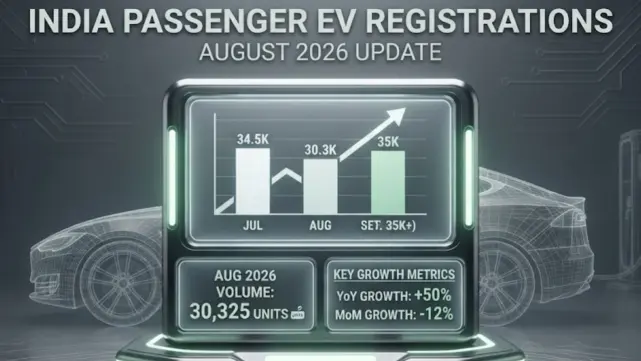
Indian passenger EV Registrations Hit 30,325 Units in August - Signs of stagnation or maturity?
Is EV the Way Indian Consumers Finally Experience Affordable Performance?
Which 7 seater EV will you buy?
Trending Articles
Kerala Makes EVs More Affordable: Revised Road Tax Structure to Accelerate Adoption
No Fire Safety Certificate Will Be Declined Over EV Chargers, Says Haryana Fire Department
India Car Sales by Fuel Type — March 2026: EV Share Hits New High, CNG Surges, Petrol Loses Ground