
Mercedes CLA Electric Is Here: How It Compares to the Tesla Model Y L
The CLA Electric is Mercedes' most affordable car in India. At ₹59 lakh for the long range variant, it goes up against the Tesla Model Y L at ₹62 lakh. Here is what the numbers say.


Category:
Tag:
- Mercedes CLA 250+
- Tesla Model Y LWB
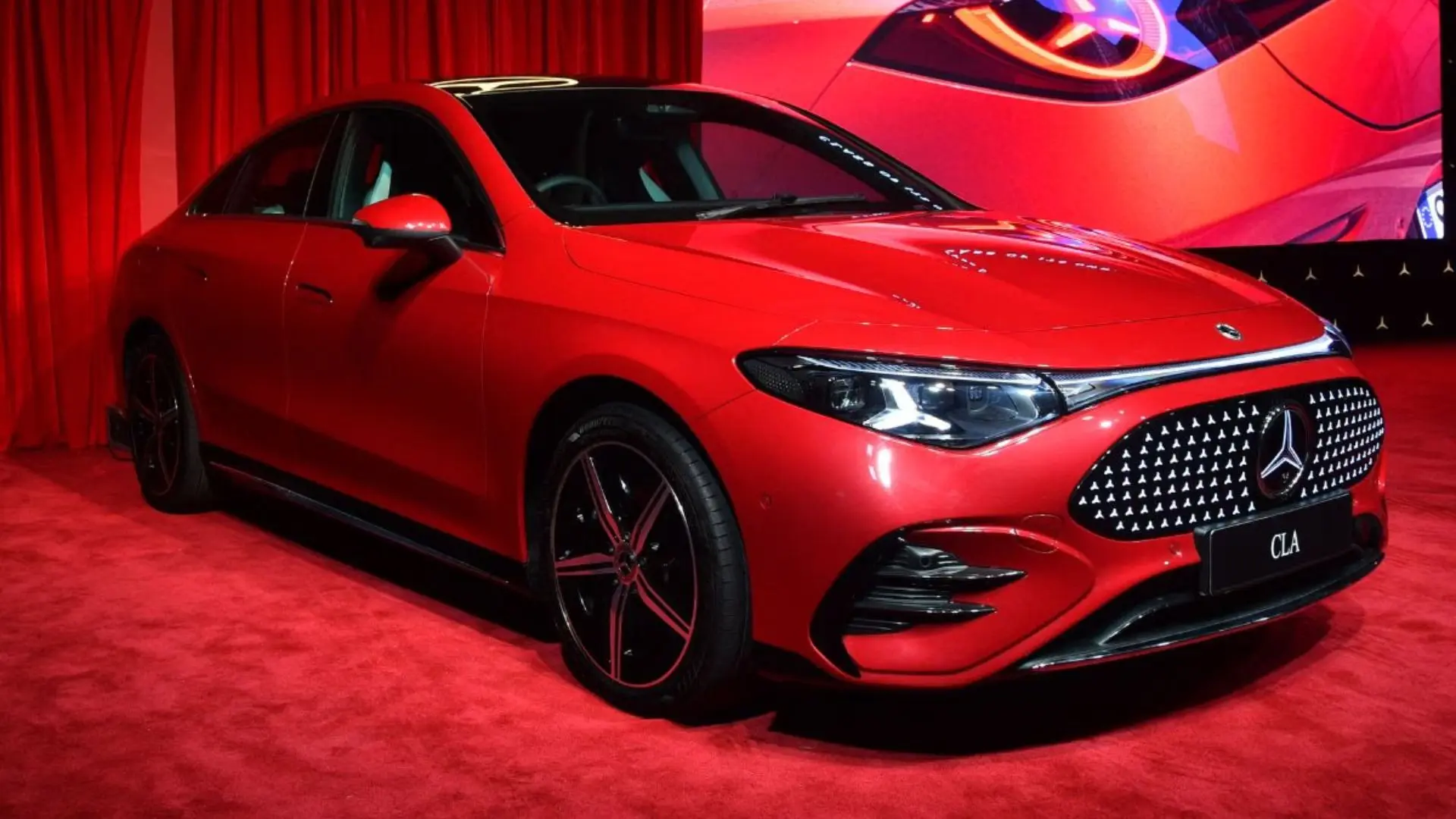
Mercedes launched the CLA Electric in India on 24 April at ₹55 lakh. It is the most affordable Mercedes on sale here right now, and it comes in two variants — the CLA 200 Standard Range at ₹55 lakh and the CLA 250+ Long Range at ₹59 lakh. There is also a Launch Edition at ₹64 lakh for those who want the full package from day one. Deliveries of the 250+ have already begun. The 200 Standard Range follows in June 2026.
The CLA is not a new name in India. It was sold here before as a petrol and diesel car. It is back now as a fully electric vehicle, and this version is a much more interesting machine than its predecessor.
What Makes the CLA Worth Paying Attention To
The CLA 250+ Long Range sits on Mercedes' new MMA platform — built from scratch for electric vehicles. The battery is 85 kWh NMC and the WLTP-claimed range is 792 km. That is an exceptional number for a car at this price. The efficiency behind it is real — the CLA has a drag coefficient of 0.21, and it uses a two-speed gearbox similar to what Porsche uses in the Taycan. Most electric cars use a single fixed ratio. The two-speed setup keeps the motor in its efficiency sweet spot at highway speeds, which is a significant reason for that range figure.
The 200 Standard Range uses a 58 kWh LFP battery, 224 bhp, and has a WLTP range of 542 km. Both variants use 800V architecture. Mercedes has raised the ground clearance and specifically retuned the suspension for Indian road conditions — worth noting because the CLA sits low at 160 mm.
The outside is clean and aerodynamic — a fastback roofline, flush door handles, and Mercedes' three-pointed star woven into the headlights, taillights, and a front grille panel with 142 backlit stars.
How It Compares to the Tesla Model Y L
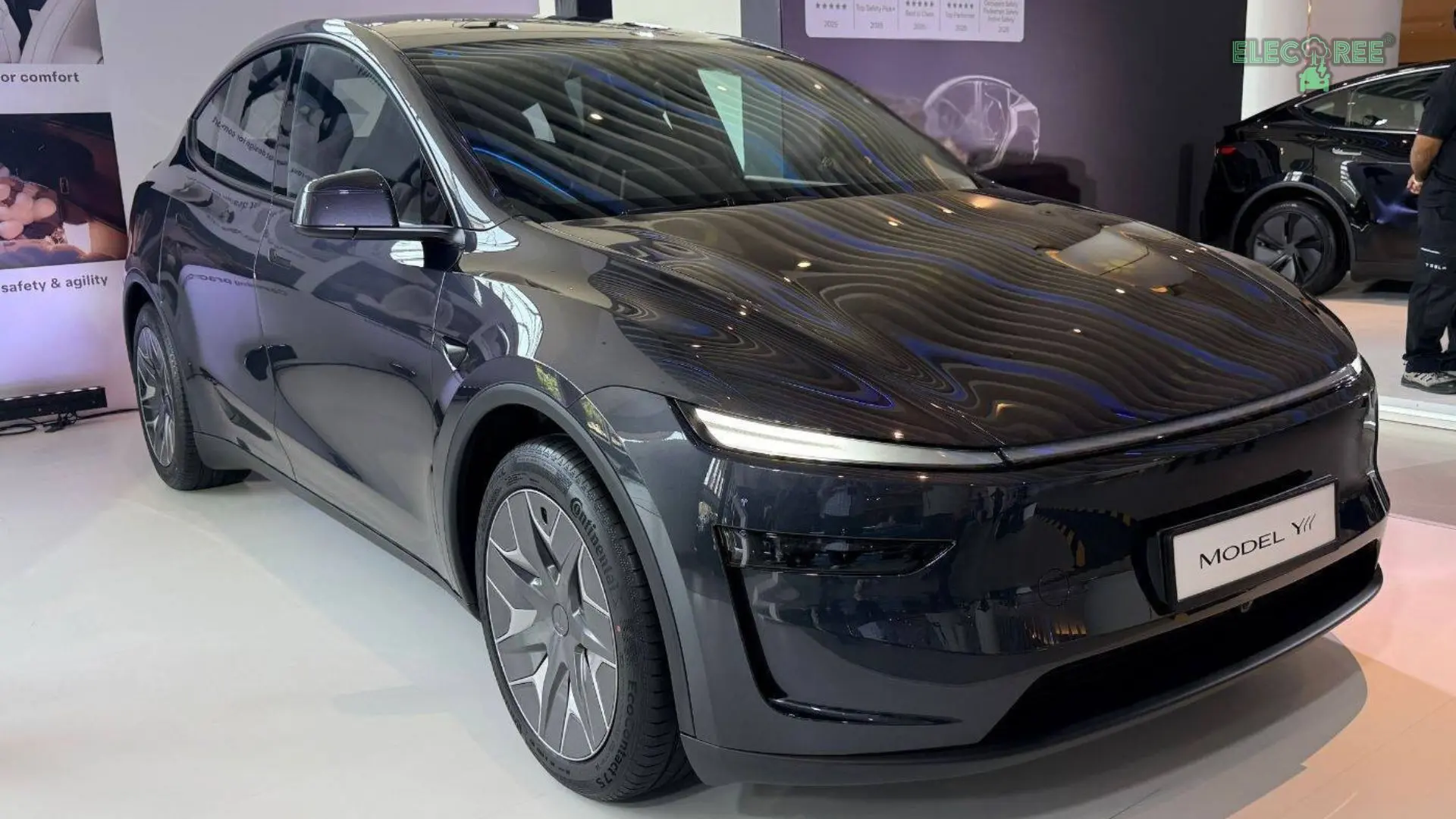
The natural comparison in this price range is the Tesla Model Y L at ₹62 lakh which was launched in April 2026 in India. In a recent article we had mentioned Tesla has sold 345 units in India between September 2025 and March 2026 — a market still finding its feet with the brand. The two cars are priced within ₹3 lakh of each other but are built on genuinely different philosophies.
Dimensions
| Metric | CLA 250+ LR | Model Y L |
|---|---|---|
| Length | 4,723 mm | 4,969 mm |
| Width (with mirrors) | 2,021 mm | 2,129 mm |
| Height | 1,468 mm | 1,668 mm |
| Wheelbase | 2,790 mm | 3,040 mm |
| Ground Clearance | 160 mm | 169 mm |
The size difference is significant. The Model Y L is 246 mm longer, 108 mm wider and 200 mm taller. For Indian parking and city driving, the CLA will feel noticeably more manageable. On ground clearance, both are on the lower side for Indian roads — 160 mm for the CLA and 169 mm for the Model Y L. Neither car is particularly high off the ground despite how tall the Model Y L looks.
Performance and Powertrain
| Metric | CLA 250+ LR | Model Y L |
|---|---|---|
| Battery | 85 kWh NMC | 88 kWh NMC |
| WLTP Range | 792 km | 681 km |
| Power | 268 bhp | 507 bhp* |
| Torque | 335 Nm | 590 Nm* |
| Drive | RWD | AWD |
| 0-100 kmph | 6.7 sec | 5.0 sec* |
| Architecture | 800V | 400V |
| Peak DC Charging | 320 kW | 250 kW |
*Estimated as per Autocar India based on Australian spec. Tesla does not officially publish these figures for India.
The CLA has a meaningful range advantage — 111 km more on WLTP which can be attributed to the low drag coefficient. The Model Y L has a meaningful power and performance advantage — 507 bhp versus 268 bhp mainly due to the dual motor setup ; AWD versus RWD. On charging architecture, the CLA's 800V system is a generation ahead of the Model Y L's 400V setup.
Features and Practicality
| Metric | CLA 250+ LR | Model Y L |
|---|---|---|
| Price | ₹59L | ₹62L |
| Seats | 5 | 6 |
| Frunk | 101 L | 113 L |
| Boot | 405 L | 420 L |
| V2L | No | Yes |
| ADAS | Level 2 | Level 2 |
The seat count difference is the most practical distinction between these two cars. The Model Y L has a third row with captain chairs in the middle row — a genuine six-seater. The CLA seats five. For a family that needs that sixth seat, the Model Y L is the only answer here.
Interiors — Two Different Philosophies
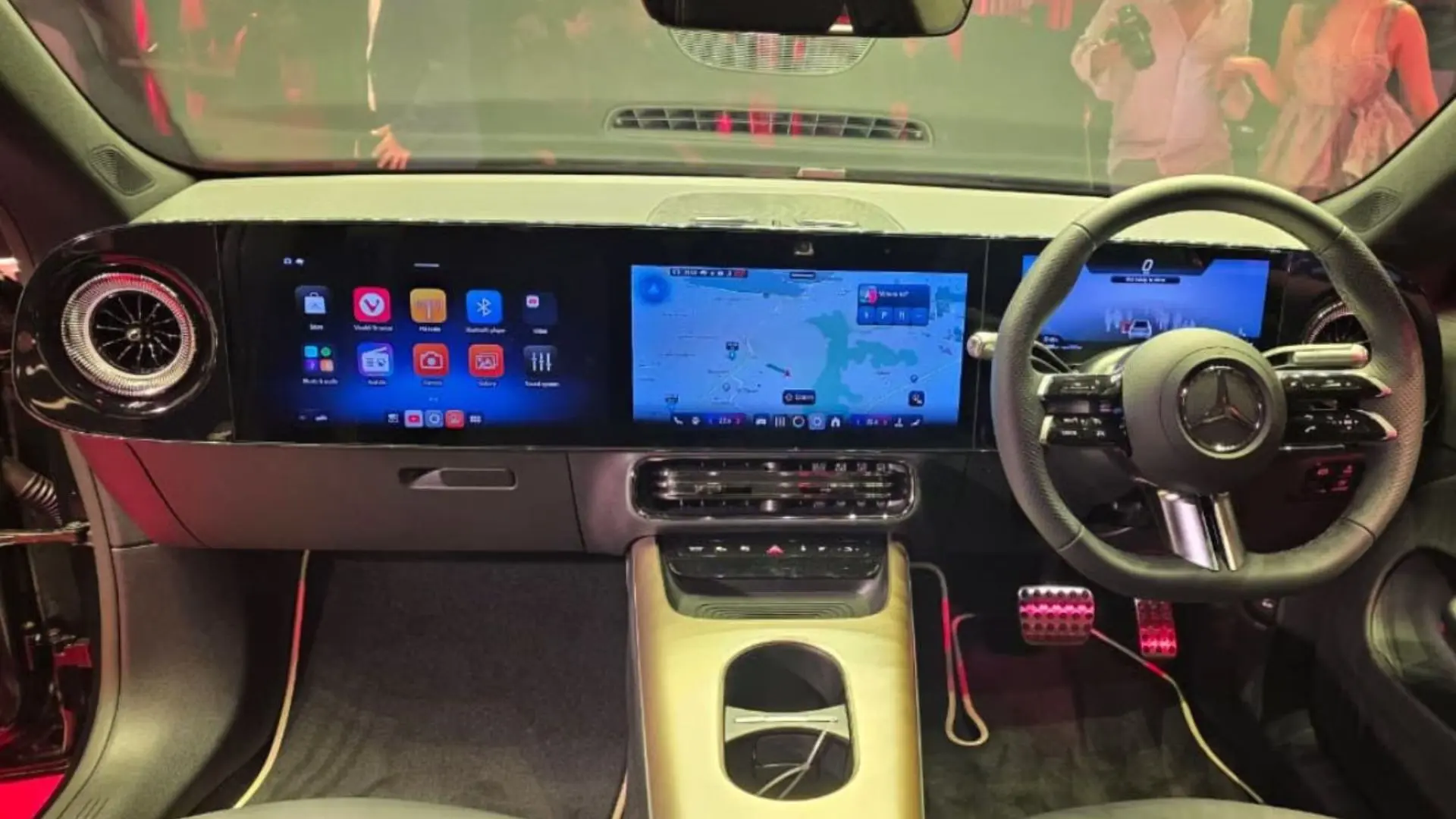
Step inside the CLA 250+ and the dashboard immediately makes its intent clear. A full-width glass panel stretches across the entire front — a 14-inch central touchscreen and a 10.25-inch digital driver display sit within it seamlessly, with no physical break between them. The AMG flat-bottom steering wheel, metal pedals, and dual-tone leatherette upholstery with contrast stitching add to the premium feel. Powered front seats with heating and massage function, dual-zone climate control, a Burmester 3D audio system, panoramic roof, and ambient lighting complete the package. It seats five, with a fold-down armrest and cupholders in the rear. It is a cabin that is deliberately expressive — it wants you to know you are in a Mercedes.
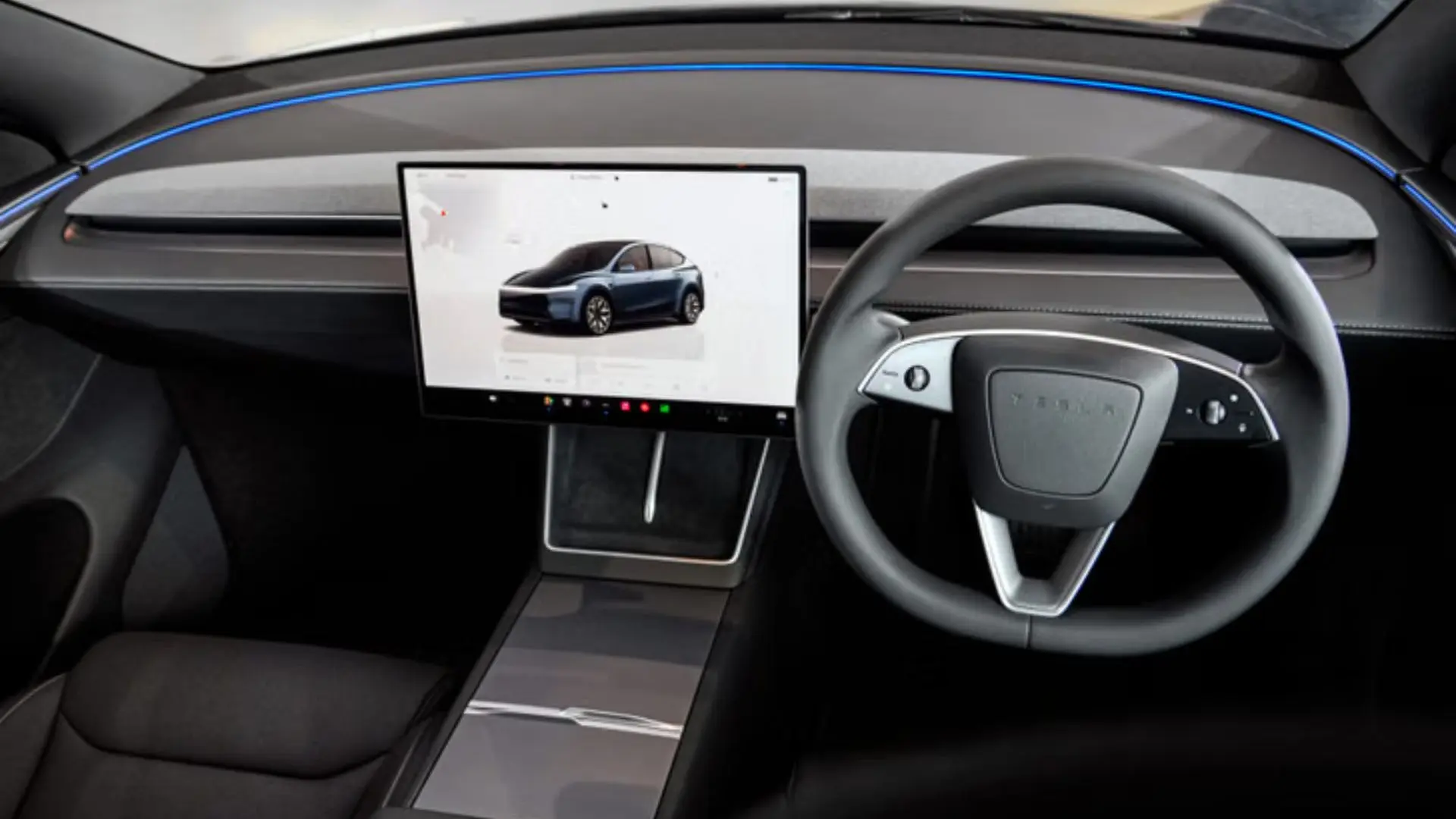
The Model Y L takes the opposite approach. The entire dashboard is a single clean surface with one 15.6-inch central touchscreen. There is no separate instrument cluster — speed, navigation and everything else lives on that one screen. No physical buttons, no layered surfaces. The middle row has captain chairs rather than a bench, freeing up floor space and making access to the third row easier. That third row is the Model Y L's defining practical feature — it genuinely seats six. The interior is calm to the point of being austere. Whether that reads as sophisticated minimalism or a lack of warmth depends entirely on the person sitting in it.
The Value Metrics
Two numbers we look at on ElecTree for any EV:
Price per kWh — what you are paying for battery capacity:
- CLA 250+: ₹59L ÷ 85 kWh = ₹69,412 per kWh
- Model Y L: ₹62L ÷ 88 kWh = ₹70,294 per kWh
Both are almost identical. The CLA edges it marginally. However the important caveat is that at a similar price per kWh, the CLA brings 800V architecture while the Model Y L brings AWD, significantly more power, a sixth seat, and V2L. These serve genuinely different needs.
Range per kWh — how efficiently the car uses its battery:
- CLA 250+: 792 ÷ 85 kWh = 9.3 km per kWh
- Model Y L: 681 ÷ 88 kWh = 7.7 km per kWh
The CLA's efficiency advantage here is real. In practical terms it costs less to run per kilometre.
The Charging Question
The CLA supports up to 320 kW DC charging on its 800V architecture. Reports from markets like the UK raised questions about whether early CLA units could charge on 400V infrastructure. That concern does not apply in India.
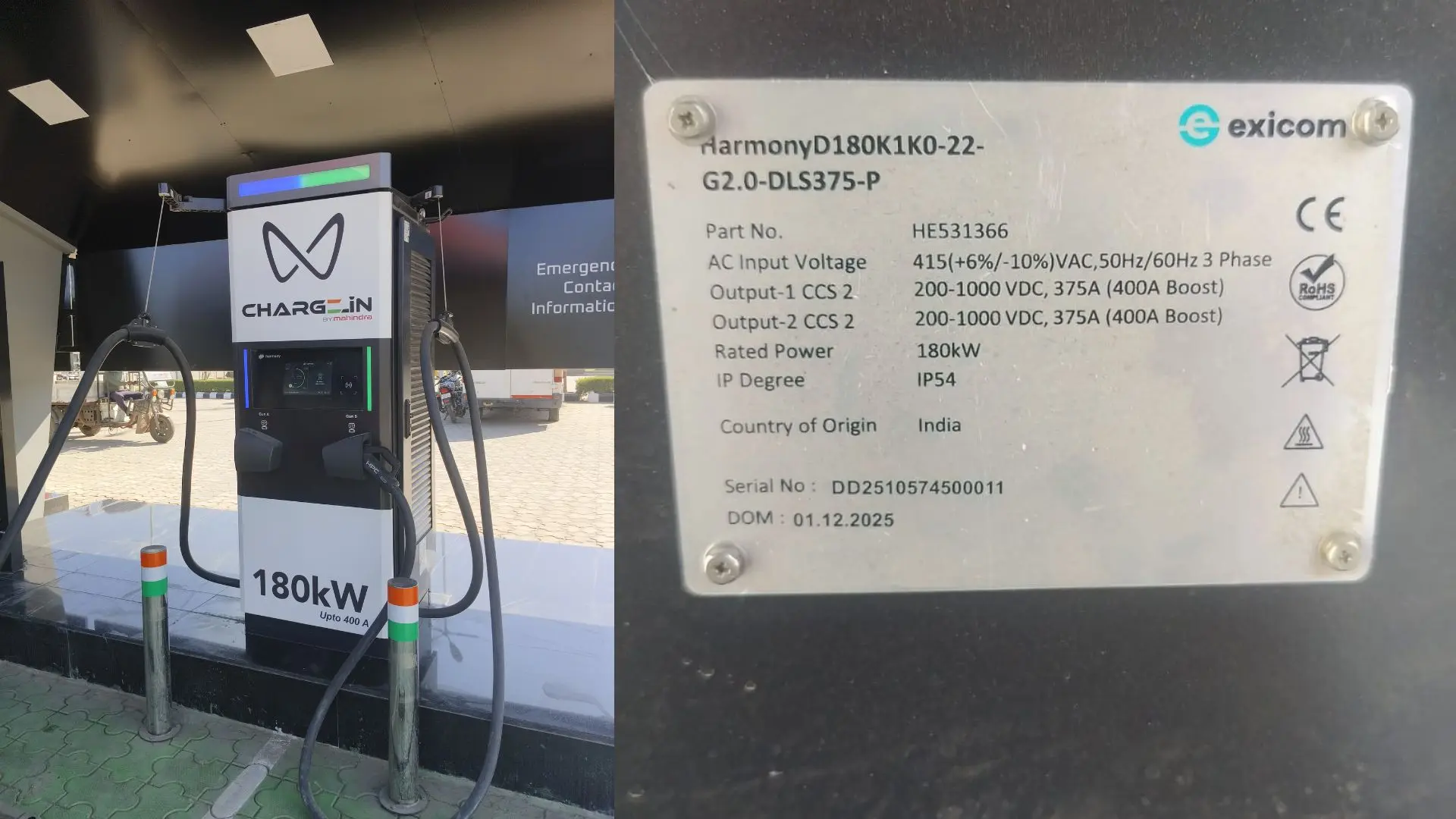
We have primary evidence. The above photo is the rating Mahindra's Charge_iN charger at Mannat Paota, and currently operational in India. These chargers are 180 kW and output 375A current which can be boosted to 400A. It confirms output of 200-1000 VDC on CCS2. India's charging hardware already supports the CLA's 800V requirement with headroom to spare. The important part to mention here is the gun ampere rating. For the CLA to achieve its maximum input capacity the the connectors will need to be 400A.
Chargers capable of 300 kW and above are currently scarce in India. Most widely deployed DC fast chargers deliver around 180 kW today. At that speed, both the CLA and Model Y L are drawing well below their peaks. How each car performs at 180 kW — and how many kilometres a 15 or 20-minute stop adds — is the test that matters for Indian highway travel. That data does not exist yet for either car under Indian conditions.
Our ask to Mercedes — like Tesla install ultra-fast chargers at key highway locations but unlike them keep those chargers open to all CCS2 vehicles. The infrastructure that makes the CLA's best feature actually usable for Indian owners needs to come from the brand itself. A step which OEMs like Mahindra Tata and Hyundai are taking or have executed in the past.
Recent Articles

Trending Articles
Kerala Makes EVs More Affordable: Revised Road Tax Structure to Accelerate Adoption
India Car Sales by Fuel Type — March 2026: EV Share Hits New High, CNG Surges, Petrol Loses Ground
No Fire Safety Certificate Will Be Declined Over EV Chargers, Says Haryana Fire Department
Haryana Releases Draft Fire Safety Guidelines for EV Charging