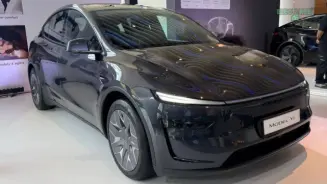
Mahindra BE 6 to Niti Valley: One of India's Most Remote EV Road Trips
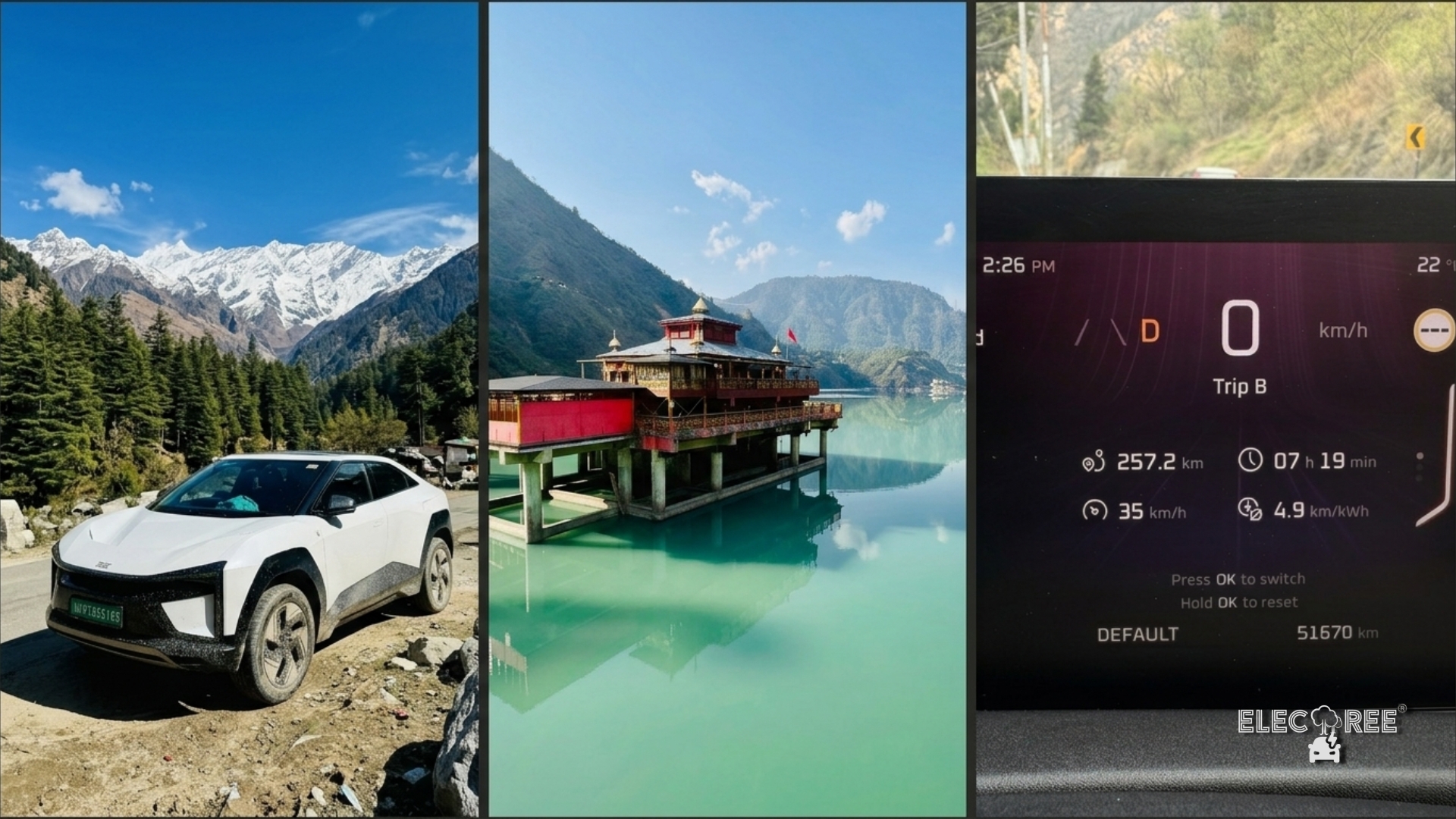
Rishi J. Tripathi drove his Mahindra BE 6 from Rishikesh to Niti Valley — one of India's last inhabited villages near the Indo-Tibetan border. This is what the data, the terrain, and the mountains actually looked like.


Category:
Tag:
- Niti Valley Road Trip
This road trip account is based on the first-hand experience of Rishi J. Tripathi, shared originally on the Electree Surge community forum. Republished here with his permission. All photos by Rishi J. Tripathi.
Niti Valley is not a weekend destination. Tucked in Uttarakhand's Chamoli district near the Indo-Tibetan border, it is one of the last permanently inhabited villages in India before the mountains close in completely. No network coverage beyond the first 10-15 kilometres into the stretch. No shops. Often no other vehicles. Army checkposts requiring SDM-issued permits to proceed further.
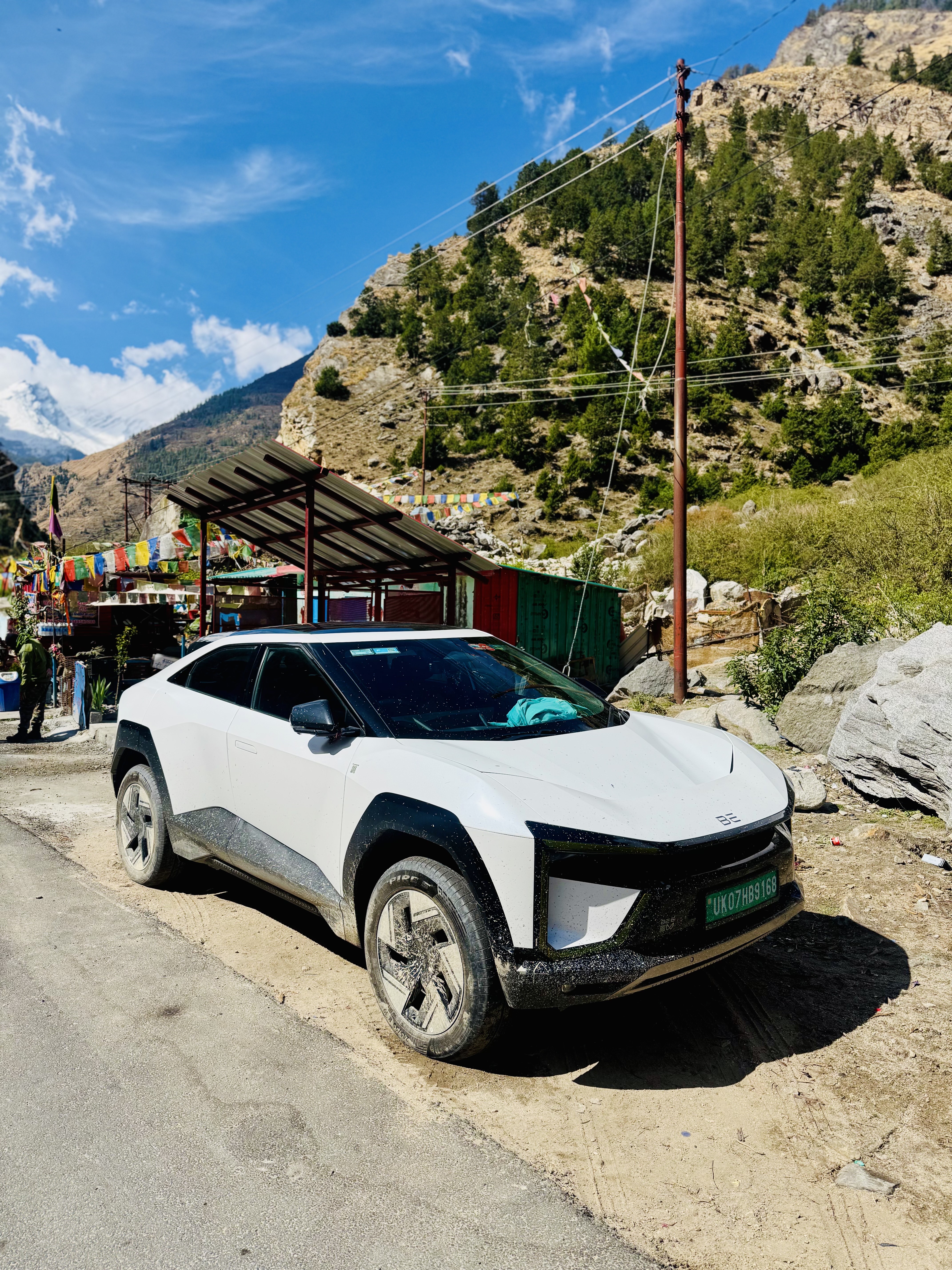
Rishi J. Tripathi drove there in a Mahindra BE 6. The eyebrows this raised were predictable. The results were not.
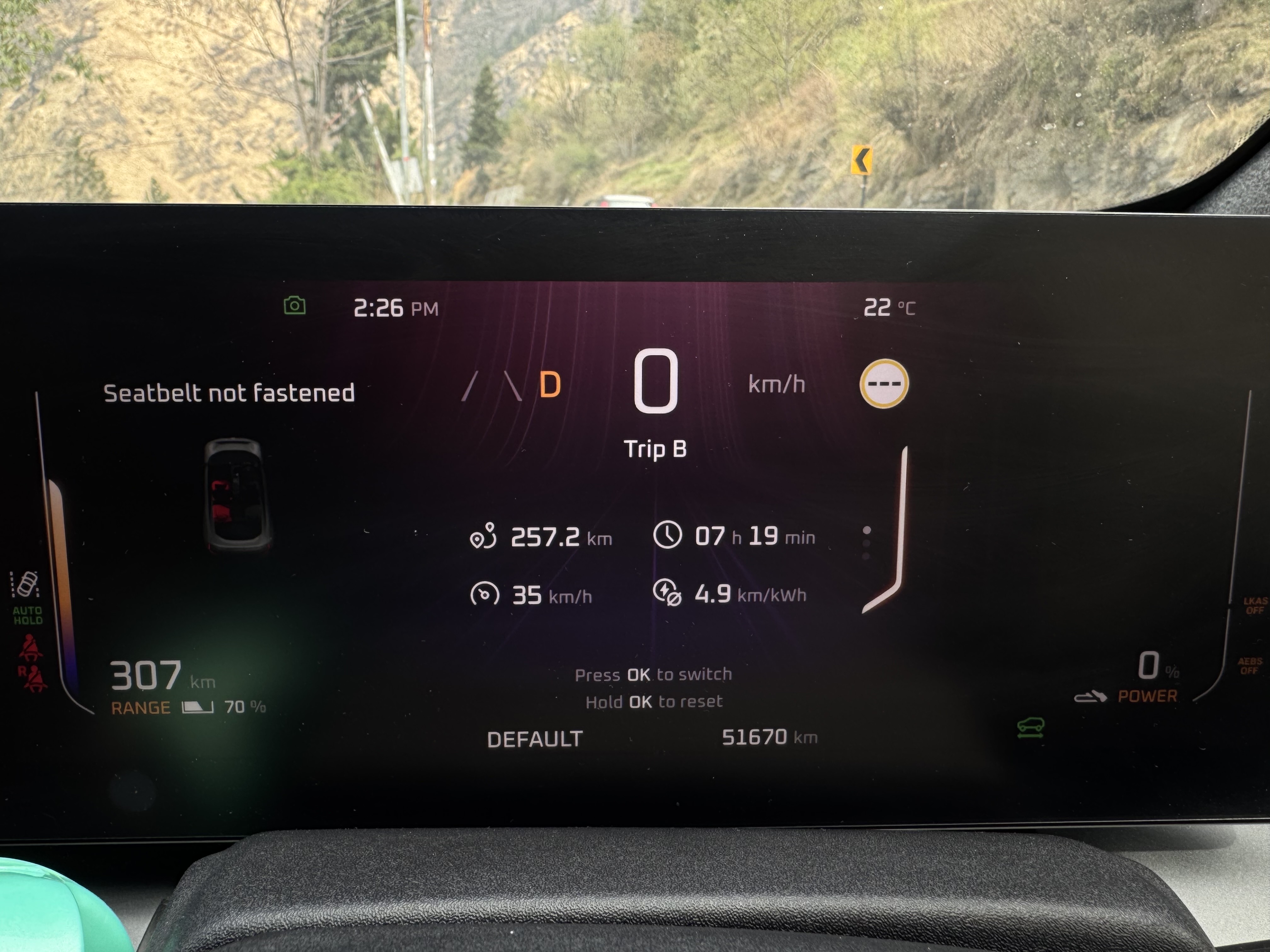
Day 1: Rishikesh to Badagaon — 257 km, 70% SOC on arrival
The trip began at 4 AM from Rishikesh — three people, a loaded boot, and the kind of pre-dawn quiet that makes mountain driving feel like a different activity entirely. The target for the day was Joshimath, roughly 250 kilometres away.
The first stop was Dhari Devi Temple — the Guardian Deity of Uttarakhand, whose idol was controversially relocated before the 2013 Kedarnath floods. A quiet moment of reverence before the real driving began.
At GMVN Kaleshwar, approximately 180 km in, the BE 6 showed 57% SOC — more than enough to reach Joshimath comfortably. Rishi opted for a short top-up at a Statiq 60kW DC fast charger priced at Rs 12.99/kWh. The food took longer than the charging. By the time breakfast was done, the car was at 100%.
The day ended at Badagaon near Joshimath, arriving at 2:30 PM with 70% SOC remaining after 257.2 km — an efficiency of 4.9 km/kWh in mountain terrain.
Day 2: Into Niti Valley — Where Range Estimates Stop Making Sense
By 9:30 AM the following morning, after the overnight thunderstorm cleared, they were moving again toward Niti Valley. Network coverage disappears within the first 10-15 km of the stretch. Beyond that point there are no settlements, no shops, and in large sections, no other vehicles.
Rishi managed the BE 6's regeneration settings deliberately throughout — switching to L0 on uphill sections to reduce resistance, relying on one-pedal driving on descents to recover energy. In terrain like this, efficiency management becomes instinctive rather than calculated.
The most demanding section came without announcement: a landslide had partially washed away a corner of the road, leaving wet red mud and very little margin for error. Rishi switched to Ice Mode, kept throttle inputs minimal, and committed to the line. The car moved through without drama.
The Range Data That Matters
At 70% SOC near Joshimath, the BE 6 indicated 304 km of range. After covering approximately 70 km to Niti Valley, the car showed 34% SOC with 138 km indicated. That's a consumption of 36% SOC over 70 km of continuous elevation gain in cold conditions — nearly double what flat-road driving would consume.
This is the number that EV buyers considering Himalayan drives need to understand. Indicated range on flat roads means very little above 2,500 metres. Plan for 40-50% of your flat-road range figure when climbing continuously.
Beyond Niti Valley, an Army checkpost marks the limit for civilian access. Rishi had secured SDM permits in advance and was allowed to proceed. Within 5 km past the checkpost, 2% battery and 30 km of indicated range were gone. Snowfall had begun. He found a safe spot, stepped out for a moment, took it in, and turned back.
The Return: Regeneration Does What It Promises
Descending from high altitude in an EV is a different experience from the climb. Rishi arrived back at Badagaon at 40% SOC with 195 km indicated — the round trip of approximately 150 km had consumed roughly 30% net of battery, with regeneration recovering a meaningful portion on the way down.
At Joshimath, he attempted to charge at an ElectriFi unit — but it repeatedly failed with an over-voltage error. The fix, eventually found in the vehicle settings, was switching the charging current to "low." The charger is priced at Rs 20.99/kWh — expensive relative to Statiq, but options at that altitude are what they are. He added 15% and headed back to the Airbnb.
What the BE 6 Proved
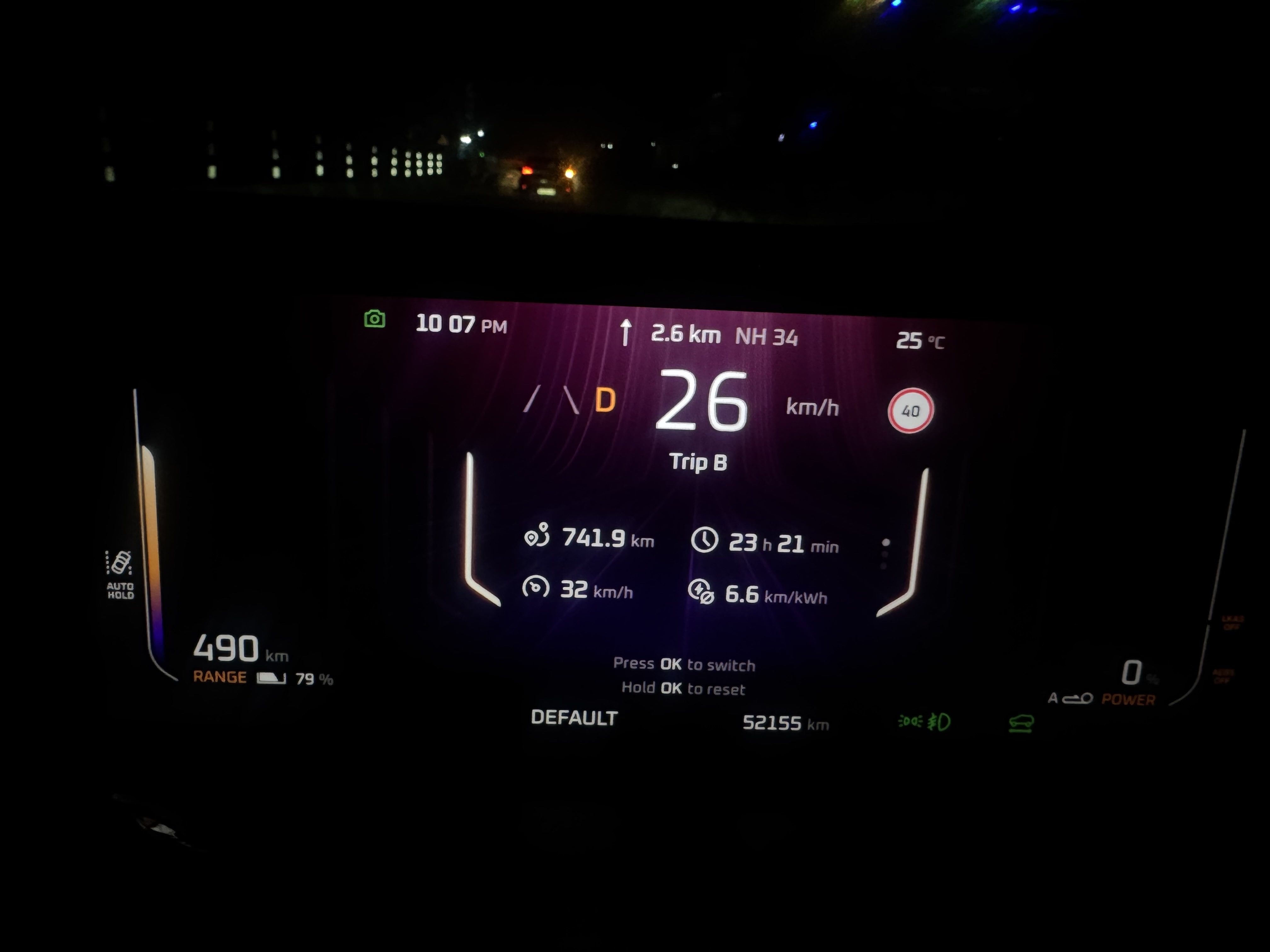
By the time Rishi reached Rishikesh on the return leg, the trip meter read 741.9 km over 23 hours 21 minutes of driving. He dropped off his brother-in-law and continued to Delhi with 79% SOC and 490 km of indicated range remaining.
The BE 6 had already proven itself on a long-distance Goa trip. Niti Valley was a different kind of test — unpredictable terrain, active landslide zones, no network, no charging infrastructure beyond Joshimath, and snowfall at the furthest point. It met all of it without mechanical drama, on standard Apollo Aspire 5 tyres replacing the stock Goodyears.
The suspension, on default mode throughout, handled the terrain with only one or two genuinely uncomfortable moments on the worst road sections.
Read Rishi's complete first-hand account — including the Bhavishya Badri Temple visit, the Airbnb after the 30-minute uphill trek, and the full charging log — on the Electree Surge forum.
Trending Articles