Karnataka's EV Road Tax: Will It Kill Sales or Barely Dent Them?
Karnataka just introduced road tax on EVs below ₹25 lakhs. Before panicking, look at the data. Kerala taxed EVs, and sales grew 67%. Haryana equalized EV tax with ICE, and sales crashed 23%. The difference? Whether EVs remain cheaper than petrol cars at the registration stage. A data-driven look at what Karnataka's new policy really means for EV buyers.


Category:
Tag:
- Karnataka EV Policy
- EV Road Tax India
History from Kerala and Haryana gives us two very different answers.
Karnataka is the latest state to introduce road tax on electric vehicles priced below ₹25 lakhs — a move that has drawn sharp criticism from the EV community and automotive media alike. But before jumping to conclusions, the data from two other states that have already walked this path tells a far more nuanced story.
Background: Karnataka's EV Journey
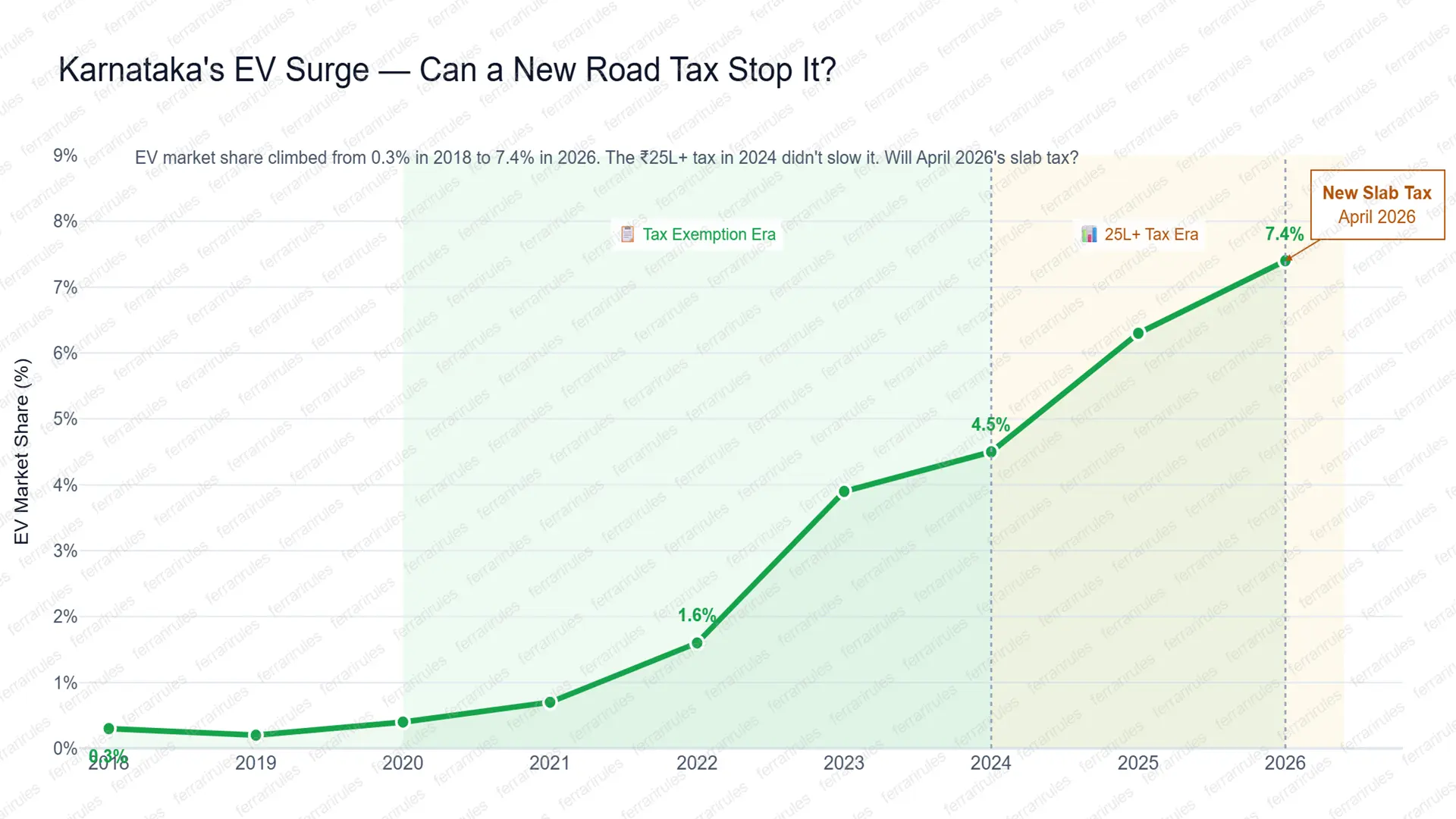
Karnataka has long been one of India's most enthusiastic early adopters of electric vehicles. Chronic traffic congestion and long office commutes made EVs an attractive proposition for urban buyers, and the state's EV market share touched 6.3% in 2025 — well above the national average.
The state's pro-EV policy journey has gone through three distinct phases:
- April 2020 – March 2024: Full Road tax exemption on all EVs.
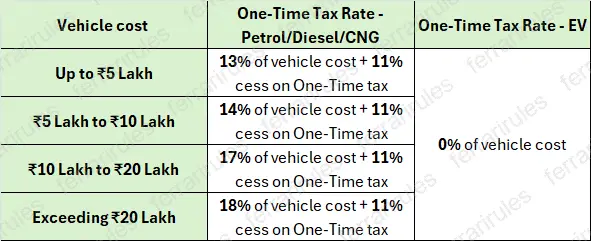
- April 2024 - March 2026: A 10% road tax introduced, but only for EVs priced above ₹25 lakhs.
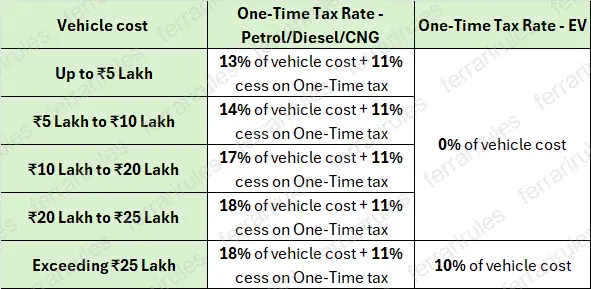
- April 2026: Slab-wise road tax extended to EVs below ₹25 lakhs as well — the move is currently making headlines. Read the article here
The Two Case Studies That Matter
Rather than speculate, we looked at the only two states that have previously charged road tax on EVs: Kerala and Haryana. Their outcomes could not be more different.
Kerala: Higher Tax, Higher Sales
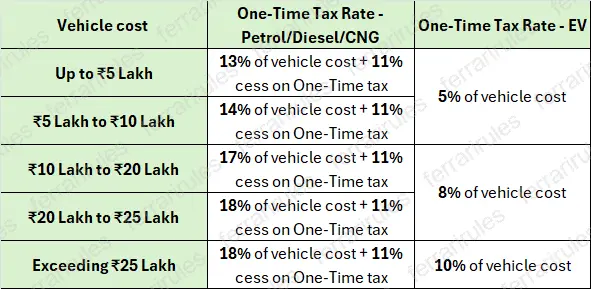
From April 2020 to March 2025, Kerala charged a flat 5% road tax on all EVs. In April 2025, this was revised to a slab-wise structure — rates went up but still remained meaningfully lower than what ICE vehicle buyers pay.
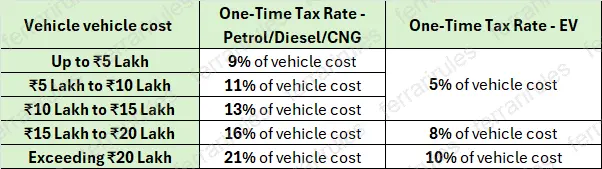
The result? EV sales in Kerala didn't fall — they grew 67% year-on-year in FY2025-26. The key reason is straightforward: even with the revised tax, buying an EV in Kerala was still significantly cheaper at the registration stage than buying a petrol or diesel equivalent. The relative financial advantage was preserved.
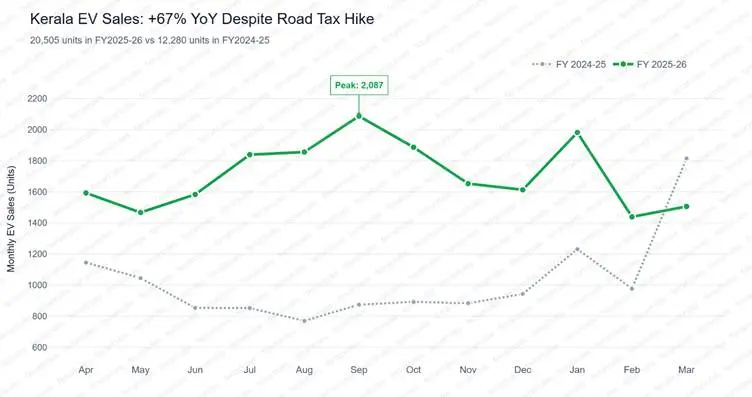
Takeaway: When road tax on EVs remains lower than ICE rates, buyers still choose electric.
Haryana: Tax Parity Triggered a Sales Collapse
Haryana's story is a cautionary tale. When the state notified its EV policy in July 2022, it offered a 75% rebate on road tax for the first 10,000 four-wheeler EV buyers — valid for five years until July 2027.
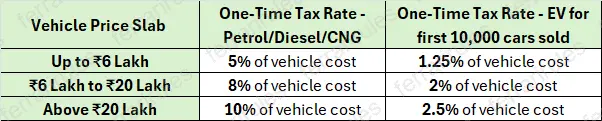
The 10,000-unit threshold was crossed by July 2025. Once the rebate was removed, road tax on EVs jumped to the same level as ICE vehicles — eliminating the cost advantage.
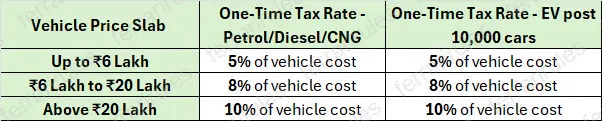
The fallout was swift. EV sales in Haryana dropped 23%, and buyers began registering their vehicles in neighbouring states — all of which continue to offer full road tax exemption on EVs.
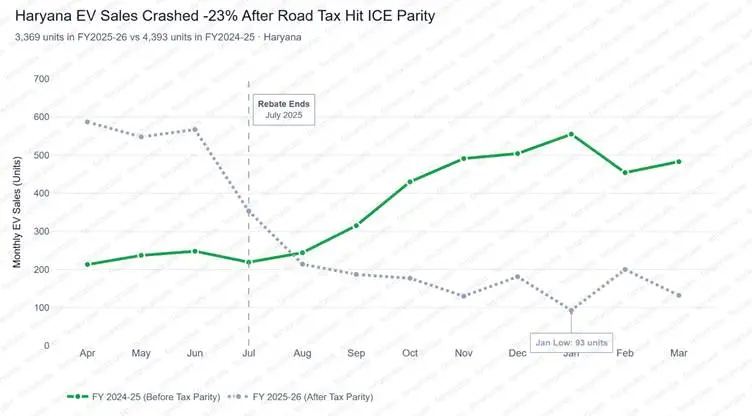
Takeaway: When EV Road tax reaches parity with ICE, buyers find workarounds — or simply don't buy.
So, What Happens in Karnataka?
Karnataka's new slab-wise structure more closely resembles Kerala's model than Haryana's. EV tax rates remain lower than those charged on petrol and diesel vehicles, and the slabs are wider. If Kerala is any guide, the long-term impact on EV sales should be limited.
That said, consumer perception matters. Even a tax that is lower than ICE rates can feel like a punishment to buyers who were previously paying zero. The first few months of data post-April 2026 will be critical in revealing whether Karnataka follows the Kerala model of resilience — or triggers a Haryana-style dip.
The bottom line: Road tax doesn't kill EV adoption when the relative advantage over ICE is preserved. It kills it when that advantage disappears entirely.
So, what do you think — will Karnataka go the Kerala way, or the Haryana way? Drop your take in the comments.
Trending Articles